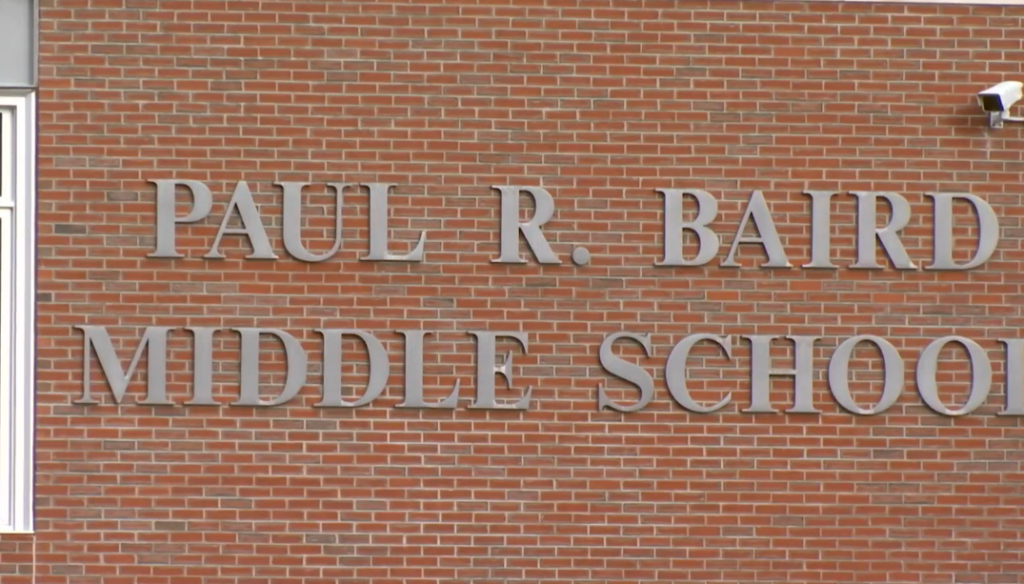
In Ludlow, Massachusetts, a town of about 21,000 people in Hampden County, about eight miles from Springfield, there is a building called Baird Middle School. Without anyone’s knowledge or intention, it became the focal point of a major national legal dispute. In 2022, two parents filed a lawsuit against their child’s school district after learning that teachers had been using a different name and pronouns for their child at school, at the child’s request, without telling them. This case made it to the Supreme Court this week, which the justices declined to hear on Monday.
The student, who was only identified as B.F. in court documents, had emailed school administrators to say, “I am genderqueer” and to request that teachers adopt a different name and pronouns. Additionally, the child had explicitly requested that school personnel communicate with the parents using the student’s original name and female pronouns. The school granted that request in accordance with Massachusetts state guidelines, which recognize that some transgender and gender nonconforming students are not out at home because of safety concerns or a lack of acceptance. The parents, Stephen Foote and Marissa Silvestri, stated that they had specifically requested that the school refrain from having private discussions with their child about these subjects because they wanted to handle the issue as a family with the proper experts. That request was turned down by the school.
| Category | Details |
|---|---|
| Case Name | Foote v. Ludlow School Committee |
| Plaintiffs | Stephen Foote and Marissa Silvestri |
| Defendants | Ludlow School Committee and officials |
| Student Involved | “B.F.” (middle-school age, identified as genderqueer) |
| School | Baird Middle School, Ludlow, Massachusetts |
| Lawsuit Filed | 2022 |
| Legal Representation | Alliance Defending Freedom (ADF) |
| Federal District Court | Dismissed the case (2022) |
| 1st Circuit Court of Appeals | Upheld dismissal (February 2025) |
| Supreme Court Action | Declined to hear the appeal (April 20, 2026) |
| Constitutional Claims | 14th Amendment Due Process; parental right to direct upbringing |
| School’s Position | Policy followed Massachusetts state guidance; actions taken in response to student’s own request |
| Key Justices Who Previously Flagged Issue | Samuel Alito, Clarence Thomas, Neil Gorsuch (in earlier Colorado case) |
| Related Cases | California pronoun notification law (blocked, March 2026); Maryland LGBTQ storybook case (2025) |
| Number of Similar School Districts | 1,000+ nationally with comparable policies |
A federal lawsuit was then filed, claiming that the school’s actions had violated the parents’ due process rights under the 14th Amendment, particularly the long-standing constitutional right of parents to oversee their children’s care and upbringing. The Alliance Defending Freedom, on behalf of Foote and Silvestri, was careful to present their objection as moral rather than religious, contending that nonreligious parents who object to what they described as detrimental interventions by school personnel should be equally protected by the Constitution’s protections for parental rights. The case was dismissed by a federal district court. In February 2025, the 1st U.S. Circuit Court of Appeals upheld that dismissal, ruling that parents could not use the Constitution to “create a preferred educational experience for their child in public school” and that the school had the right to handle the needs of a diverse student body. On Monday, the Supreme Court decided not to proceed with the case.
In actuality, the 1st Circuit’s decision is upheld when the Supreme Court declines to hear a case, even though this is not technically a decision on the merits. Additionally, the language of that ruling has significant implications for the approximately 1,000 school districts nationwide that have implemented comparable regulations. According to the 1st Circuit, children can “express their identity without worrying about parental backlash” when school administrators defer to students when it comes to revealing gender identity to parents. Additionally, it stated unequivocally that “parents remain free to strive to mold their child according to the parents’ own beliefs”—just not in court or at school. Future disputes will refer to that framing.
Legal observers believe that while this specific chapter is closed, the larger question remains open. When a similar Colorado case was dismissed last fall, Justice Samuel Alito, along with Justices Clarence Thomas and Neil Gorsuch, stated that parental rights in public schools are a matter of “great and growing national importance.” A California law limiting parental notification regarding gender identity was blocked by the court in March while the lawsuit is still pending. The Supreme Court has yet to rule in a comparable Florida case. The justices seem content to leave lower court decisions in place for the time being, gathering cases and possibly waiting for the ideal vehicle—one with clearer legal issues, cleaner facts, or a circuit split that compels them to act.
It’s difficult to ignore how much Ludlow’s outcome depended on one particular detail: the child made the initial request. The email was sent by the student. The pupil requested that a different name be used. The student requested that the school keep the parents in the dark. Thousands of parents nationwide feel that the lower courts’ response to the question of whether that fact modifies the constitutional analysis—that is, whether a child’s own request significantly changes what the school’s legal obligations to parents are—was incorrect. For now, the Supreme Court has merely refused to comment.
Disclaimer
Nothing published on Creative Learning Guild — including news articles, legal news, lawsuit summaries, settlement guides, legal analysis, financial commentary, expert opinion, educational content, or any other material — constitutes legal advice, financial advice, investment advice, or professional counsel of any kind. All content on this website is provided strictly for informational, educational, and news reporting purposes only. Consult your legal or financial advisor before taking any step.