

The fact that Google’s own spam detection is filtering the email informing you that Google owes you money out of your inbox is especially ridiculous. That is not a conspiracy theory; rather, it is what people learned in the days following the announcement of the settlement in Taylor v. Google LLC in early April 2026. People reported the same thing in threads on Reddit’s r/ClassActionSettlement: the official settlement administrator’s notice ended up in Gmail junk mail. “Is it strange that Gmail’s spam filter is protecting Google’s interest?” a user wrote. Many responded that they only discovered their notice after being instructed to manually check their spam. It hardly needs to be pointed out because the irony is so neat.
The case at hand is Taylor v. Google LLC, which was filed in the Northern District of California in 2020 and is finally nearing resolution six years later. According to the lawsuit, Android devices were made to continuously send user data to Google’s servers over cellular networks, even when the phone was locked, the screen was dark, and all of the apps were closed. Through their mobile carriers, users paid for that cellular data. The plaintiffs claimed that Google was using it to support its targeted digital advertising business, which brings in billions of dollars a year, without providing any meaningful disclosure or consent. The complaint used the legal term “conversion” to describe the unlawful taking of another person’s property with the intention of claiming control over it.
Important Information: Taylor v. Google LLC Settlement
| Detail | Information |
|---|---|
| Case Name | Joseph Taylor, et al. v. Google LLC |
| Case Number | 5:20-cv-07956-VKD |
| Court | U.S. District Court, Northern District of California, San Jose Division |
| Defendant | Google LLC |
| Lawsuit Originally Filed | 2020 |
| Preliminary Approval Granted | March 5, 2026 |
| Settlement Amount | $135 million (non-reversionary fund) |
| Estimated Eligible Class Members | ~100 million U.S. Android users |
| Maximum Individual Payout | $100 per class member |
| Eligibility Period | November 12, 2017 — date of final settlement approval |
| Eligibility Requirements | U.S. resident; Android device with cellular data plan; not in Csupo v. Google LLC California class |
| Excluded | California residents (covered under Csupo v. Google LLC — $350M settlement) |
| Objection / Exclusion Deadline | May 29, 2026 |
| Final Approval Hearing | June 23, 2026 |
| Settlement Administrator | Angeion Group |
| Settlement Website | federalcellularclassaction.com |
| Administrator Phone | 1-844-655-4255 |
| Google’s Position | Denied all wrongdoing; called allegations a mischaracterization of standard practices |
| Google Spokesperson | José Castañeda |
| Lead Plaintiff Attorney | Glen Summers |
| Core Allegation | Android OS caused background cellular data transfers without user permission — even when device was idle, apps closed, screen locked |
| Legal Theory | “Conversion” — wrongful taking of another’s property (users’ paid cellular data) |
| Required Behavioral Changes | Google to update Help Center; update Android setup screens re: background data use; stop collecting data when “allow background data usage” is toggled off |
| Payout Method | Electronic payment (PayPal, Venmo, Zelle, ACH, virtual prepaid card) |
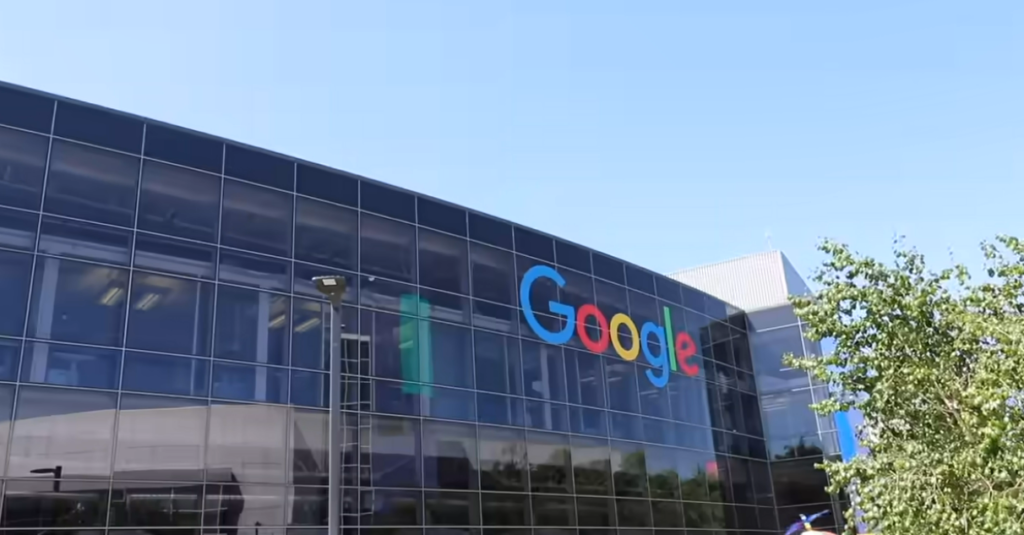
Everything was denied by Google. A representative for the company, José Castañeda, described the case as a misrepresentation of “standard industry practices that keep Android safe.” The lawsuit is resolved without any admission of wrongdoing thanks to the settlement, which was reached on preliminary approval terms in March 2026. That is the norm. Courts approve the arrangement because it’s cleaner than years of further litigation, and companies write big checks while simultaneously claiming they did nothing wrong. About 100 million eligible Android users in the United States who used an Android device with a cellular data plan at any time between November 12, 2017, and the date the court grants final approval will be covered by the $135 million fund. In Csupo v. Google LLC, which resulted in a $350 million settlement after a jury awarded $314 million at trial in July 2025, residents of California are excluded and have their own distinct and larger settlement.
Open discussions on the internet have been sparked by the computation of individual payouts. The plaintiffs’ lead lawyer, Glen Summers, informed the court that he thought the $135 million fund was the biggest ever in a conversion case—a significant legal turning point. However, the division has been carried out by the r/ClassActionSettlement community on Reddit. One hundred million members of the class are eligible. $135 million. The amount per person decreases significantly when taxes, administrative expenses, and legal fees are subtracted. “We’re lucky to get 90 cents,” a user commented. Another person pointed out that because class action participation rates are usually low, frequently in the single digits, the payout per person for those who actually file could be significantly higher than the worst-case estimates. Regardless of participation rates, no one is receiving more than the $100 cap.
Eligible users must visit federalcellularclassaction.com and choose their preferred payment method in order to claim payment. A notice ID and confirmation code from the email or mailed settlement notice—the one that might have ended up in spam—are needed for the procedure. If you think you qualify but haven’t heard anything, call the settlement administrator at 1-844-655-4255. PayPal, Venmo, Zelle, ACH bank transfers, and virtual prepaid cards are among the available payment methods. You have until May 29 to object or withdraw from the settlement. June 23, 2026 is the date of the final approval hearing.
In addition to the money, the settlement includes behavioral adjustments that might be more significant in the long run. In order to make it more obvious that background data transfers happen even when the device is idle and that cellular data may be used when Wi-Fi is unavailable, Google has agreed to update its Help Center and Android device setup screens. More specifically, when users turn off the “allow background data usage” option—a setting that, according to the previous design, did not do what users reasonably assumed it would—Google will completely cease collecting data.
As this case is resolved, it’s difficult to avoid thinking about something bigger than the settlement. The operating system that powers the smartphone in your pocket was created by a company whose main line of business is targeted advertising. Hundreds of millions of devices continuously provide the data that makes that advertising valuable. The majority of users of those devices have never read the terms of service that control background operations. Cellular transfers during idle states are one particular category of that data flow that the Taylor settlement assigns a monetary value to and refers to as compensable harm. $135 million cannot adequately address whether that results in any structural changes to Android’s future operations or whether a few updated setup screens amount to true reform.
Disclaimer
Nothing published on Creative Learning Guild — including news articles, legal news, lawsuit summaries, settlement guides, legal analysis, financial commentary, expert opinion, educational content, or any other material — constitutes legal advice, financial advice, investment advice, or professional counsel of any kind. All content on this website is provided strictly for informational, educational, and news reporting purposes only. Consult your legal or financial advisor before taking any step.
