

It’s easy to forget how much everything costs on a powder morning at Park City Mountain, with the lifts spinning smoothly against a blue Utah sky and fresh snow on the groomed runs. It has already been paid for by you. Before anyone knew whether the snow would be good, the lift ticket—or, more likely, the season pass—was bought weeks or months in advance. That’s the entire layout. In a 75-page federal complaint, four skiers from Colorado and Massachusetts now claim that this design is an antitrust violation masquerading as a loyalty program.
Vail Resorts and Alterra Mountain Company are named as defendants in the lawsuit, Goloja v. Vail Resorts Inc., which was filed in U.S. District Court in Denver on March 24, 2026. The lawsuit accuses the two biggest ski resort operators in North America of manipulating daily lift ticket prices to entice customers to buy their respective season passes, the Epic and Ikon. The businesses collectively own or run about 60 ski areas in the US. According to the complaint, there is no competition in this market. It is a duopoly that has been purposefully created through decades of partnerships, acquisitions, and pricing tactics that have progressively eliminated independent ski areas.
The complaint’s numbers are frightening. For the 2025–2026 season, a full Epic Pass cost between $1,051 and $1,089, a 37% increase from the 2021–2022 season. A complete Ikon Pass increased by 40% during that time, from $1,329 to $1,399. Nowadays, single-day lift tickets at upscale resorts frequently cost more than $350. This is not an accident, according to the lawsuit. The complaint states, “Both the lift ticket and the mega pass are overpriced,” arguing that both are inflated in comparison to what a competitive market would produce. Lift tickets are priced high enough to make the season pass appear like a deal.
Important Information: Skiers Lawsuit — Goloja v. Vail Resorts Inc.
| Detail | Information |
|---|---|
| Case Name | Goloja v. Vail Resorts Inc. |
| Case Number | 1:26-cv-01191 |
| Court | U.S. District Court for the District of Colorado, Denver |
| Date Filed | March 24, 2026 |
| Plaintiffs | Four skiers — three Colorado residents, one Massachusetts resident |
| Defendants | Vail Resorts, Inc. and Alterra Mountain Company |
| Law Firm (Plaintiffs) | DiCello Levitt; Berger Montague; Salahi PC |
| Lead Attorney | Gregory Asciolla (DiCello Levitt) |
| Complaint Length | 75 pages |
| Core Allegation | Antitrust violations — artificially inflating daily lift ticket prices to coerce purchase of season passes; bundling practices suppressing competition |
| Epic Pass (2025-26) | $1,051–$1,089 full price (up 37% since 2021-22 season) |
| Ikon Pass (2025-26) | $1,329–$1,399 full price (up 40% since 2021-22 season) |
| Daily Lift Ticket Price | Exceeding $350/day at top-tier resorts |
| Vail Resorts — Resorts Owned/Operated | 42 owned + ~30 contracted = ~72 worldwide |
| Alterra Mountain Company — Resorts | 18 owned + ~70 contracted = ~88 worldwide |
| Combined Resorts (U.S.) | ~60 ski areas |
| Vail Annual Epic Pass Sales | ~2 million |
| Alterra Annual Ikon Pass Sales | ~1 million (estimated) |
| Vail Net Income (Q2 2026) | ~$210 million (down from $244.4M prior year) |
| Skier Visits (Season-to-Date) | Down 11.9% at North American ski areas |
| Vail CEO | Rob Katz |
| Damages Sought | Unspecified monetary damages + court injunction dismantling bundling practices |
| Both Companies’ Position | Claims are without merit; intend to defend vigorously |
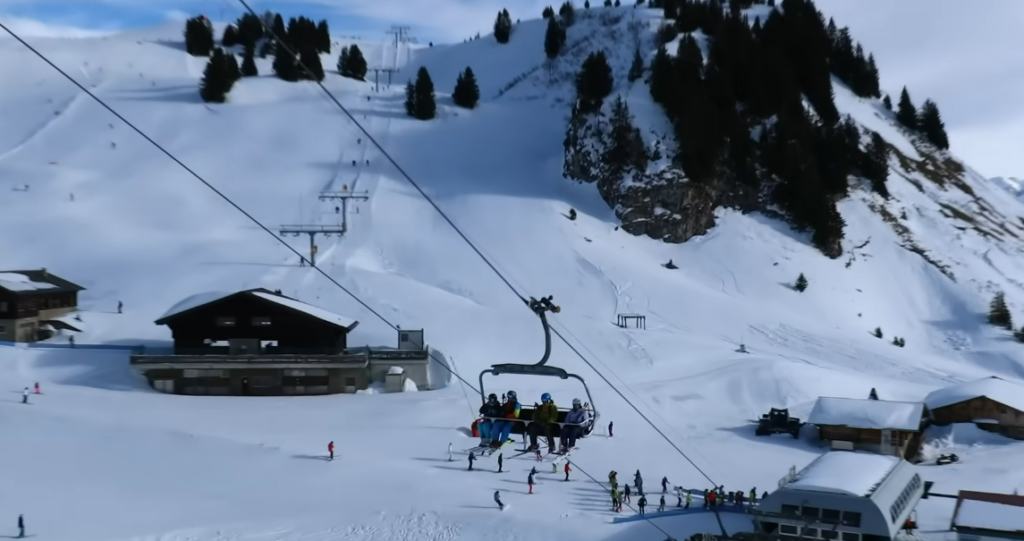
All of this began with Rob Katz, CEO of Vail, who unveiled the Epic Pass in 2008. Prior to that, skiing was mostly a resort-by-resort activity and season passes were pricey. The Epic Pass, which offered access to several mountains and was initially sold for significantly less than conventional season passes, was truly disruptive. After selling it for a low price, Vail used the dedicated revenue stream it produced to buy additional resorts and increase day ticket prices at already-existing ones. In public remarks, Katz has been remarkably open about this tactic. “The idea was to make the season pass the absolute best opportunity you could have, and then make the lift ticket more expensive,” he said to the Wall Street Journal. In 2018,
Alterra introduced the Ikon Pass, and a second portfolio of resorts followed suit. This includes Alta, Snowbird, Brighton, Solitude, Deer Valley, and Snowbasin on the Ikon and Park City Mountain on the Epic Pass in Utah.
The antitrust argument is based on what the plaintiffs refer to as “bundling”—the practice of combining access to several popular resorts into a single season pass product and then charging so much for individual day tickets that purchasing a pass seems practically required for anyone who skis more than twice or three times a year. The complaint claims that because the pass ecosystems diverted customer loyalty and spending to only Epic and Ikon-affiliated mountains, independent ski areas were unable to effectively compete. The lawsuit argues that skiers were not given the freedom to choose. They were being directed.
Vail has consistently responded by saying that the claims are unfounded, that the Epic Pass lowered season pass prices by 60% at launch, and that access has been increased by new, less expensive options like the Epic Day Pass and regional passes. A representative for Alterra stated that the Ikon Pass “provides the best value” and referred to the lawsuit as a “baseless claim.” Both businesses have made it clear that they plan to mount a vigorous defense. The question that will determine whether this case has real teeth is whether that defense survives a motion to dismiss, as well as what discovery might reveal about internal pricing discussions.
As this develops in tandem with Vail’s own financial disclosures, it appears that the lawsuit came at a challenging time for the business. In March, Vail released its second-quarter fiscal report, which revealed net income of roughly $210 million, a decrease from $244.4 million in the same period last year. North American ski areas saw an 11.9% decrease in skier visits so far this season. Revenue from lifts, including season passes, decreased by 3.6%. Much of the blame was placed on a terrible snow year in the Rockies, which Katz claimed was the worst in over 30 years. However, antitrust lawyers will almost certainly use the declining skier visits and pass revenue as evidence that something has changed in the market’s relationship with its customers when both companies’ most devoted customers are skiing less and paying more.
It will probably take years to settle the case. It is rare for federal antitrust cases involving two significant corporate defendants to proceed swiftly. However, the response from the skiing community, which is divided between skeptics who believe the lawsuit has no realistic way forward and skiers who are just worn out by the expense of doing what they love, reveals a real tension that has been developing for more than ten years. Democratization was the selling point of the mega pass model. It turned into the opposite, according to the lawsuit.
Disclaimer
Nothing published on Creative Learning Guild — including news articles, legal news, lawsuit summaries, settlement guides, legal analysis, financial commentary, expert opinion, educational content, or any other material — constitutes legal advice, financial advice, investment advice, or professional counsel of any kind. All content on this website is provided strictly for informational, educational, and news reporting purposes only. Consult your legal or financial advisor before taking any step.
