

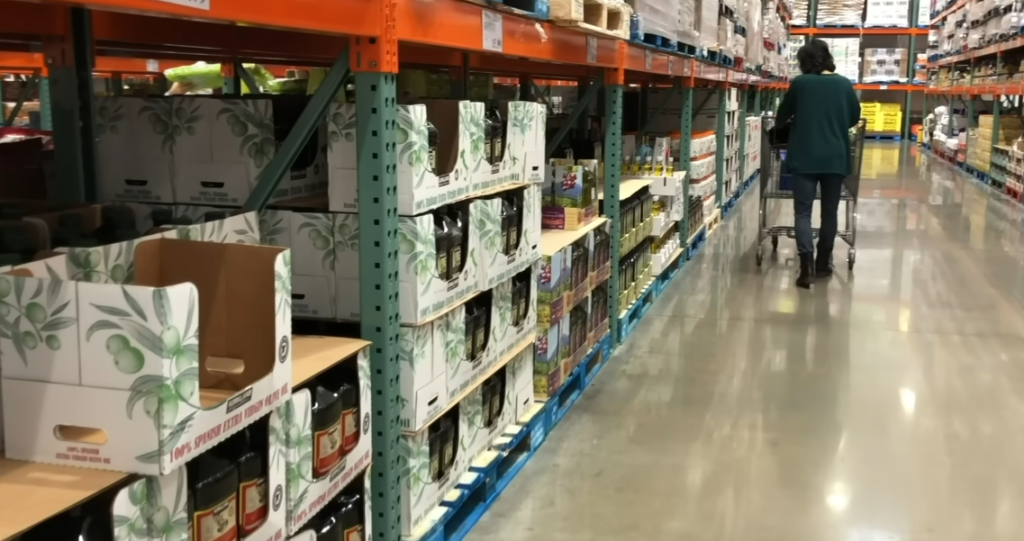
When you walk into any Costco on a Saturday afternoon, you’ll see the same scene everywhere: flatbed carts filled with forty-packs of paper towels and bulk olive oil, the smell of rotisserie chickens wafting from the back, and a certain type of customer who has made the conscious or unconscious decision that this is their store. Their wallet’s membership card serves as a kind of identity marker. Costco isn’t the only place people shop. They are a part of it. It turns out that this feeling of community is also a business model, and a man from California named Russell George has chosen to contend in federal court that the mechanics of that model violate the law.
On the surface, the lawsuit, which was filed in California in March 2026, appears to be fairly straightforward. George claims that by sending membership renewal notices 60 days prior to charging customers’ credit cards, Costco broke the state’s Automatic Renewal Law. According to California law, notice must be given no later than 15 days and no earlier than 45 days prior to renewal. The complaint contends that sixty days is outside of that window, giving customers ample time to receive the notice, completely forget about it, and still be charged. George claims that’s precisely what occurred to him. According to the complaint, he doesn’t use his membership enough to warrant keeping it, and if he had been given timely notice, he would have canceled before the charge was made.
Important Information: Costco Automatic Renewal Lawsuit
| Detail | Information |
|---|---|
| Company Name | Costco Wholesale Corporation |
| Headquarters | Issaquah, Washington, USA |
| Founded | 1983 |
| Industry | Warehouse Retail / Membership-Based Shopping |
| Membership Tiers | Gold Star: $65/year; Executive: $130/year |
| Total Members (Approx.) | 130+ million cardholders worldwide |
| Plaintiff | Russel George (California resident) |
| Lawsuit Filed | March 2026 (California) |
| Case Type | Federal Class Action |
| Core Allegation | Renewal notice sent 60 days in advance — outside California’s required 15-to-45-day window |
| Laws Cited | California Automatic Renewal Law (ARL); Unfair Competition Law (UCL); additional consumer protection statutes |
| Preliminary Hearing | June 2026 |
| Costco’s Auto-Renewal Policy | Membership fees charge annually on the first day of the renewal month |
| Cancellation Method | Toll-free number or in-store visit |
| Related FTC Rule | Proposed 2024 nationwide auto-renewal rule — struck down by federal appeals court, July 2025 |
| Costco’s Response | No public comment issued as of filing date |
It sounds almost insignificant. 45 days as opposed to sixty. However, because the entire logic of California law is behavioral rather than merely administrative, there is something genuinely intriguing hidden within that timing argument. A 45-day window was not arbitrarily created by the legislature. The idea is that people tend to forget things. When a two-month warning arrives in an inbox, it gets lost among dozens of other emails, and by the time the renewal charge is processed, the customer has already moved on. Whether on purpose or not, Costco seems to have developed a notification system that falls just outside the legal bounds intended to guard against precisely that pattern.
Russell George is the sole named plaintiff in this case. However, given that Costco has over 130 million cardholders worldwide, the potential scope of the proposed class action is not insignificant and could include a sizable number of California customers. The Gold Star membership, which costs $65 a year, and the Executive membership, which costs $130, are the two membership tiers that Costco offers. The lawsuit specifically targets the automatic charge mechanism that activates without a customer’s active decision, and neither amount is insignificant for someone who shops infrequently. June 2026 is the date of the preliminary hearing.
This lawsuit seems to be coming at a specific point in the larger consumer narrative surrounding auto-renewals. Under the Biden administration, the FTC tried to implement national regulations in 2024 that would have standardized cancellation processes. These regulations would have required, among other things, that canceling a subscription be at least as easy as signing up for one. In July 2025, a federal appeals court overturned that decision, ruling that the agency had not followed the correct procedures for rulemaking. At least at the federal level, the regulatory route came to a standstill. Much of the work that could have been covered by a national rule is now carried out by state-level enforcement.
For years, California has been assertive in this area. Its Automatic Renewal Law has teeth, and businesses in a variety of sectors, including software providers, gym chains, and streaming platforms, have encountered comparable difficulties. The company’s unique cultural stance is what makes the Costco case worthwhile to watch. Costco is not an anonymous online retailer. The $1.50 hot dog combo, which has notably never changed in price, is a sort of symbolic proof of its reputation for being straightforwardly fair with customers, which has been carefully cultivated over decades. In an era of corporate mistrust, the company has managed to maintain genuine popularity. Even if the underlying allegation is specific, a billing timing lawsuit stands in awkward opposition to that image.
It’s also important to note that Costco’s cancellation policy, which necessitates either calling a toll-free number or physically visiting a warehouse, presents an intriguing conflict with California’s consumer protection regulations, which mandate that cancellation be accessible via the same method a customer used to enroll. A lot of members register online. The June hearing may need to address whether the phone-and-store-only cancellation pathway meets that standard.
As this plays out, it’s difficult to ignore the fact that the case is actually about something that most people come across but seldom question: the email they look at, mentally file away, and eventually forget. Inertia is what makes auto-renewals function, and the law exists to break that inertia at the appropriate time. It remains to be seen if George’s argument ultimately persuades a California court or if 60 days is actually too early to do that. However, the question of how much notice is truly sufficient to make a decision feel like a choice goes far beyond paying a warehouse membership fee.
Disclaimer
Nothing published on Creative Learning Guild — including news articles, legal news, lawsuit summaries, settlement guides, legal analysis, financial commentary, expert opinion, educational content, or any other material — constitutes legal advice, financial advice, investment advice, or professional counsel of any kind. All content on this website is provided strictly for informational, educational, and news reporting purposes only. Consult your legal or financial advisor before taking any step.
