

Every few years, a certain type of film emerges that bears the burden of a cherished franchise, the expectations of a three-generational fan base, and a marketing campaign so intense that the movie itself nearly takes a backseat to the cultural event that surrounds it. That type of movie is the Super Mario Galaxy movie. Depending on how you felt about the final product, the opening on April 1st felt either perfectly timed or slightly ironic. It had raised $372.5 million worldwide by Sunday. Meanwhile, the majority of critics were elsewhere.
The Super Mario Bros. Movie, which came out in 2023, was successful because it didn’t try too hard. With enough energy to keep things moving and enough Jack Black to make them memorable, it was loose, bright, and propulsive, and it knew exactly what it was: an introduction to a visual world that the majority of its audience already knew by heart. It made $1.4 billion. The goal of the sequel was to travel. to construct. To create something worthy of a theater screen by utilizing the unique emotional architecture of Super Mario Galaxy, the 2007 Wii game that is still regarded as one of the most critically acclaimed Nintendo games ever produced, with its melancholic Rosalina plot and its cosmic sense of wonder. Most of the time, it turns down the chance.
Instead, the movie provides spectacle. Planets illuminated in rich purples and golds, gravity-bending chase scenes that employ the spherical world-design of the game with genuine visual inventiveness, and an opening set piece that lands with the kind of kinetic charge that momentarily makes you think the entire film might deliver are all examples of the animation’s true beauty. What transpires in between those moments is the issue. The plot, which revolves around another kidnapping, this time with Rosalina as the prisoner instead of Peach, is so flimsy that the movie’s 98-minute running length still manages to drag in its middle third. RogerEbert.com’s Clint Worthington described it as “rock-stupid,” which is harsh but somewhat accurate. The Guardian referred to it as a “bland screensaver.” Variety chose “threadbare adventure.”
| Title | The Super Mario Galaxy Movie |
|---|---|
| Release Date | April 1, 2026 (USA) |
| Running Time | 1 hour 39 minutes (98 minutes) |
| Rating | PG |
| Directors | Aaron Horvath, Michael Jelenic |
| Writer | Matthew Fogel |
| Producers | Chris Meledandri, Shigeru Miyamoto |
| Production | Illumination Entertainment / Nintendo |
| Distributor | Universal Pictures |
| Key Voice Cast | Chris Pratt (Mario), Jack Black (Bowser), Anya Taylor-Joy (Peach), Charlie Day (Luigi), Donald Glover (Yoshi), Brie Larson (Rosalina), Benny Safdie (Bowser Jr.) |
| Rotten Tomatoes | 42% (critics) / 90% audience approval |
| Metacritic | 36 |
| CinemaScore | A- |
| Opening Weekend (North America) | $130.9 million (3-day); $190.1 million (5-day) |
| Global Debut | $372.5 million |
| Production Budget | ~$110 million |
| Based On | Super Mario Galaxy (Nintendo, 2007) |
| Reference Links | Rotten Tomatoes — The Super Mario Galaxy Movie / Fortune — Box Office Report |
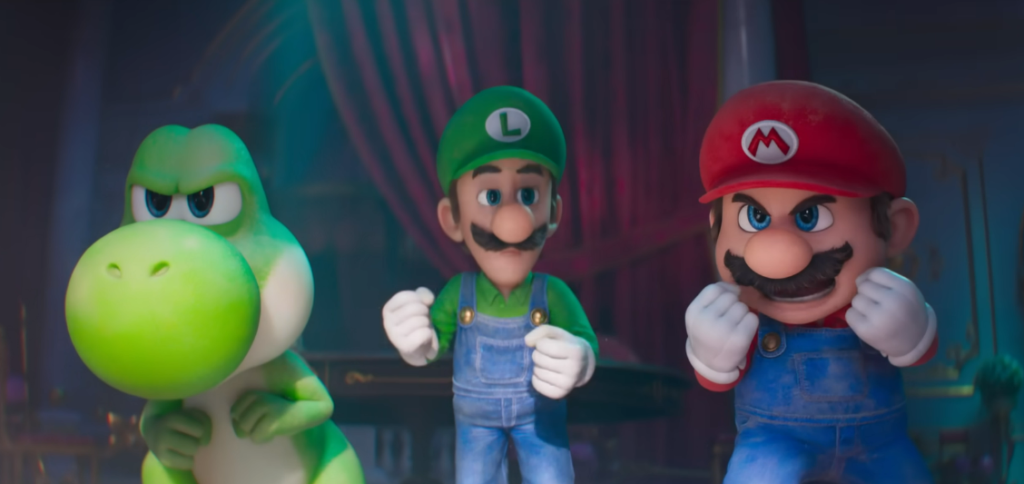
Bowser’s casting choice is the one that hurts the most. The first movie’s best feature was probably Jack Black’s portrayal of the character, a villain with enough genuine menace and comic self-awareness to carry entire scenes, complete with a power ballad that turned into an unlikely cultural touchstone. Here, Bowser is reduced to a supporting role after being defanged early, shrunk, and imprisoned in Peach’s castle. Benny Safdie’s portrayal of Bowser Jr., the main antagonist, shows obvious effort in the role, but he is unable to make the character feel more than a stand-in. A film with a thin plot and a one-dimensional villain is not something that the visual spectacle can adequately make up for.
There was real excitement prior to the film’s release when Donald Glover joined the cast as Yoshi, and it is disappointing to see the part reduced to enthusiastic repetitions of a single name. Rosalina is brought to life in the vocal booth by Brie Larson, whose portrayal has a quiet dignity. However, the character is kept mostly passive, responding to events rather than initiating them. Luigi, played by Charlie Day, continues to be the most endearing character in the movie, which should give the writers of the sequel some insight into where to concentrate going forward.
The difference between the movie’s 42% Rotten Tomatoes critics score and its 90% audience approval rating is truly remarkable, so it’s important to pay attention to what viewers actually think. It received an A-minus from CinemaScore. Families gave it five stars, according to exit polls. One box office analyst simply stated that children adore the film. The movie fulfills the needs of the audience it truly aims to reach, and it’s possible that the critics’ dissatisfaction reveals more about the film’s shortcomings than it does about what they anticipated from the original work. The story of Rosalina and her connection to the universe was genuinely moving in the original Super Mario Galaxy game, which had an emotional depth uncommon for its franchise. Critics who are familiar with the game will be affected by the film adaptation’s decision to prioritize a kidnapping plot over that content.
As you watch the film’s more intricate scenes, you get the impression that it has all the resources and most of the technique but has decided not to use them to create anything. The worlds are lovely. The animation is clear. The action pieces touch down. However, as several reviewers pointed out, the film stops rather than ends, and you leave the theater somewhat amused but unmoved. which is a smaller outcome than it ought to have been given what the source material provided.
Disclaimer
Nothing published on Creative Learning Guild — including news articles, legal news, lawsuit summaries, settlement guides, legal analysis, financial commentary, expert opinion, educational content, or any other material — constitutes legal advice, financial advice, investment advice, or professional counsel of any kind. All content on this website is provided strictly for informational, educational, and news reporting purposes only. Consult your legal or financial advisor before taking any step.
