

Something that many scientists quietly assumed would not happen—at least not there, and not yet—took place in East Antarctica in mid-March 2022.
In a matter of weeks, the Conger Ice Shelf, a floating slab of ice about the size of New York City, broke apart. The change was visible in satellite photos, which showed a solid white platform breaking into a mosaic of floating shards against the dark ocean water. East Antarctica was thought to be the continent’s stable half for many years; it was a chilly, sheltered region that was impervious to the kind of spectacular collapses that occurred on the Antarctic Peninsula. I no longer feel secure in that assumption.
A heatwave so intense it seemed almost unreal preceded the collapse. Temperatures up to 40 degrees Celsius above normal were recorded in some areas of the East Antarctic plateau. Thermometers rose toward -10°C in an area where late-summer temperatures usually hover around -50°C. By most standards, it was still freezing, but it was incredible for Antarctica. According to a glaciologist, it was “off-scale.” Even experienced researchers seemed to be blinking twice as they watched the data move across climate dashboards.
| Category | Details |
|---|---|
| Event | Conger Ice Shelf Collapse |
| Location | East Antarctica |
| Date of Collapse | March 2022 |
| Ice Shelf Size | ~1,200 sq km (460 sq miles) |
| Temperature Spike | Up to 40°C above normal during heatwave |
| Mechanisms Involved | Surface meltwater, hydrofracturing, warm ocean currents |
| Key Glacier at Risk | Denman Glacier |
| Antarctic Data Source | https://nsidc.org |
| Climate Assessment Authority | https://www.ipcc.ch |
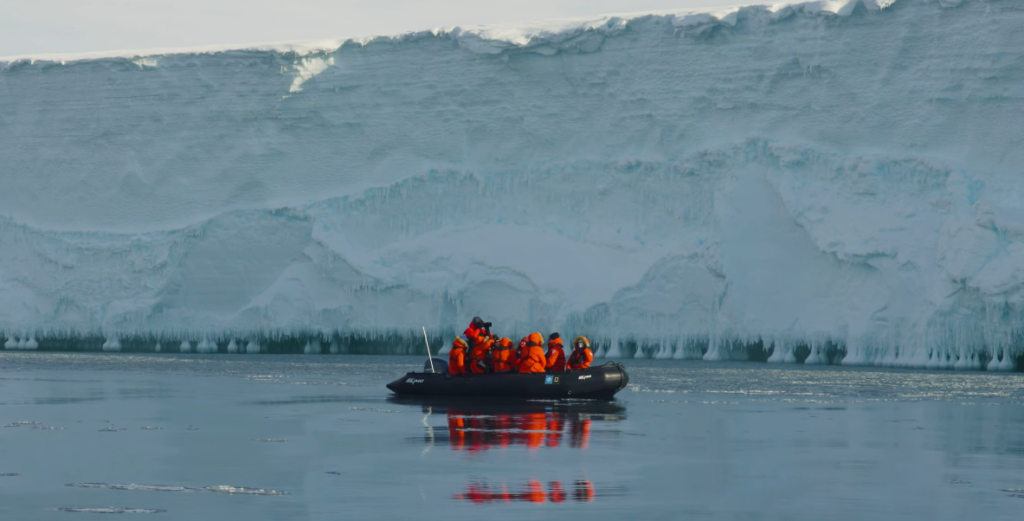
As slightly warmer ocean currents edged closer to the coast, the Conger shelf had been steadily eroding from below for years. Seldom does that gradual deterioration make news. A single bad day does not cause ice shelves to collapse; rather, decades of stress cause them to do so. However, it appears that the March heatwave, which was caused by a strong atmospheric river that directed warmth and moisture southward, has pushed the shelf past its tipping point. It’s possible that the incident exposed the vulnerability rather than creating it.
Many people refer to ice shelves as “doorstops” that keep inland glaciers at bay. The metaphor is straightforward but precise. The flow of grounded ice into the ocean is slowed by these floating extensions pressing up against islands and seabed ridges. Sea level rise can be directly caused by the acceleration of glaciers behind them once they break. By Antarctic standards, Conger’s shelf was comparatively small. Its collapse, according to some scientists, would not significantly change the sea levels worldwide. However, that assurance seems incomplete.
Experts were uneasy not only about the extent of the loss but also about where it occurred. Because it contains a lot more ice than its western counterpart, East Antarctica has long been referred to as a “sleeping giant.” The consequences could last for centuries if destabilization spreads there. The Denman Glacier, which is nearby, has enough ice in it to raise sea levels by about 1.5 meters if it were completely released. Whether Conger’s collapse is an isolated fracture or a sign of deeper instability is still unknown.
The collapse’s mechanics are reminiscent of past occurrences. The Antarctic Peninsula’s Larsen B Ice Shelf collapsed in three weeks in 2002, shocking scientists who had underestimated the speed at which meltwater could take advantage of surface fissures. Ponds are formed on top of ice shelves by warm air. In a process called hydrofracturing, that water seeps into crevasses and forces them open. Warm ocean currents, meanwhile, thin the structure from below by eroding the underside. Rapid disintegration may result from the combination of strong winds and the melting of sea ice that buffers ocean swells.
It’s difficult not to visualize the scene from above: fractures spreading like spiderwebs, meltwater pooling in sapphire patches, wind sweeping across a brittle white plain. Conger’s last days were captured by satellites in a nearly cinematic sequence. In one picture, the ice was intact. The next showed an archipelago in ruins.
The unease was heightened by the timing. At the end of the austral summer, when things are usually stabilizing rather than getting worse, the collapse happened. East Antarctica was described as remote, austere, and nearly unexplored by scientists who had flown over it in past seasons. According to many accounts, witnessing that landscape fragmentation felt personal.
According to recent assessments, sea levels are already rising—roughly 3.7 millimeters annually worldwide. The majority of that increase is caused by melting mountain glaciers and the thermal expansion of warming oceans. Although Antarctica’s contribution is still relatively small, it is increasing. The trajectory is more concerning than the current increment. Inland ice flow may accelerate more quickly than current models anticipate if ice shelves continue to deteriorate.
It seems as though Antarctic science is about to undergo a period of reorientation. East Antarctica was once considered to be relatively stable on human timescales by models. Researchers are now reexamining presumptions and adding fresh information from ocean sensors and satellites. Whether Conger was an early warning sign of greater vulnerability or an anomaly brought on by unusual atmospheric conditions is still unknown. It’s unsettling in and of itself.
Observing this from a distance makes it seem less like a singular disaster and more like a subdued but clear warning. There is no dramatic collapse of Antarctica. Silently, thousands of kilometers away from the majority of human lives, it breaks apart and drifts into open water that only scientists and satellites can see.
However, if they worsen, the effects won’t be far away. Rising seas are already being planned for along coastlines from Miami to Mumbai. Infrastructure resilience is a topic of discussion among investors. Budgets for adaptation are compared to mitigation commitments by governments. Shorelines might not change tomorrow as a result of the collapse of a single 1,200-square-kilometer ice shelf. The belief that some regions of the world are impervious to swift change, however, is altered.
Disclaimer
Nothing published on Creative Learning Guild — including news articles, legal news, lawsuit summaries, settlement guides, legal analysis, financial commentary, expert opinion, educational content, or any other material — constitutes legal advice, financial advice, investment advice, or professional counsel of any kind. All content on this website is provided strictly for informational, educational, and news reporting purposes only. Consult your legal or financial advisor before taking any step.
