

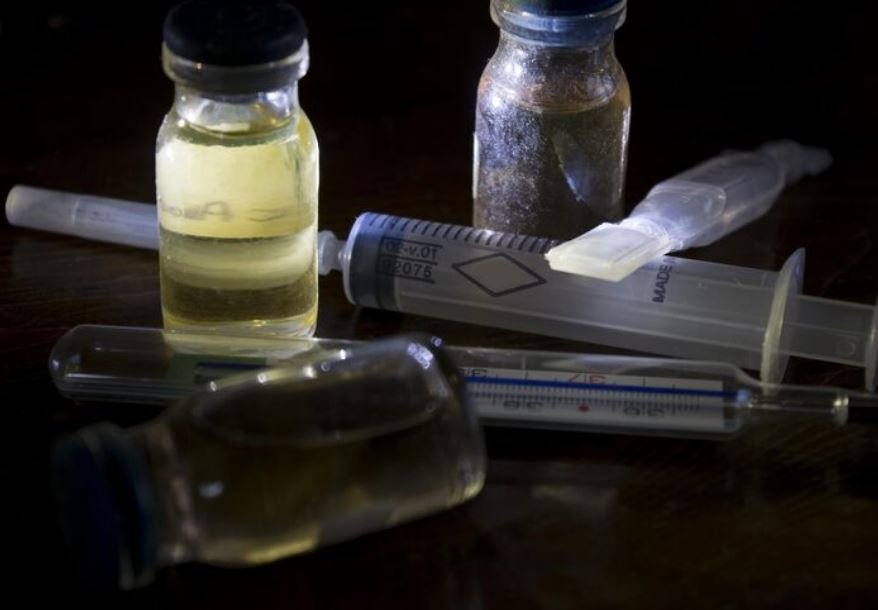
Each glass vial in a sterile lab at the University of Houston, lit by fluorescent lights, contains something that some researchers secretly hope could alter the course of the overdose epidemic in the United States. At first glance, the concept of a fentanyl vaccine seems almost unbelievable.
The brain—its receptors, cravings, and withdrawal—has been the main focus of addiction treatment for many years. That reasoning is reversed by this new method. Colin Haile created the fentanyl vaccine, which is licensed to ARMR Sciences. It doesn’t attempt to change the chemistry of the brain. It functions in the bloodstream instead, teaching the immune system to identify and attach to fentanyl molecules before they can enter the brain.
| Key Figure | Colin Haile |
|---|---|
| Institution | University of Houston |
| Commercial Partner | ARMR Sciences |
| Trial Phase | Phase I (Human Safety Trials Beginning 2026) |
| U.S. Overdose Deaths (2022) | 107,941 (CDC) |
| Vaccine Mechanism | Generates anti-fentanyl antibodies in bloodstream |
| Reference | https://www.uh.edu |
This change from brain to blood may represent the most significant rethinking of overdose prevention in many years.
Unexpectedly, the mechanics are simple. A tiny, artificial fentanyl fragment is affixed to immune-stimulating substances in the vaccine. After injection, the body creates antibodies that are made especially to cling to fentanyl. These antibodies attach to the drug if it later enters the bloodstream, creating complexes that are too big to cross the blood–brain barrier. No euphoria. No respiratory shutdown.
It’s difficult to ignore the conflict between the scope of the issue this research is addressing and the routine campus life when you’re standing outside the lab building in Houston, watching students pass by wearing earbuds and backpacks. Over 107,000 Americans lost their lives to drug overdoses in 2022 alone, with synthetic opioids like fentanyl accounting for the majority of these deaths. The numbers run the risk of becoming abstract because they are so big. However, doctors continue to recount the same panicked scenes in emergency rooms across the nation: paramedics racing in with patients who are unable to speak, naloxone being repeatedly administered.
Naloxone is a lifesaver. It instantly reverses overdoses. However, it is reactive. If successful, the fentanyl vaccine would prevent the drug from ever affecting the brain. This distinction seems to be very important.
Animal preclinical research has yielded encouraging results, with antibodies neutralizing the effects of fentanyl and lasting for months. Safety and immunological response will be the main topics of human Phase I trials, which are anticipated to start in 2026. Forty people. careful observation. Take it slow. Whether the human immune system will be robust or long-lasting enough to offer significant protection is still up in the air.
According to Colin Gage, CEO of ARMR Sciences, the company wants to “eliminate the lethality of the drug supply.” It’s a bold statement. It’s not new to see biotech startups make audacious solution pitches. The level of fentanyl-related desperation feels different here. As little as two milligrams, or roughly the size of a few grains of salt, can be fatal, and the drug is about 50 times more potent than heroin.
Fentanyl is no longer only found in heroin. It is appearing in cocaine, methamphetamine, and fake painkillers. Stimulants combined with synthetic opioids are the “fourth wave” of the overdose crisis, which surprises users. People who never thought of themselves as opioid users are dying as a result of unanticipated contamination.
The potential for a vaccine that selectively inhibits fentanyl but not other opioids is complex. Researchers stress that it wouldn’t interfere with drugs like buprenorphine or methadone, nor would it stop other opioids from being used legitimately to treat pain. The specificity of the antibodies is very high. However, some addiction experts question whether users might try to break the blockade by switching substances or taking larger doses.
Behavior may change more quickly than biology. Then there’s the issue of culture. Historically, vaccines have prevented infectious diseases. Polio, Measles, and COVID-19. Some people are uneasy about a vaccine that targets a drug and, consequently, a behavior. When Boston Children’s Hospital researchers surveyed teenagers and families, they discovered a mixture of excitement and skepticism. “Every kid should get this,” according to some parents who lost kids to overdose. Others posed more challenging queries, such as whether protection would wane with time. Could it give people a fictitious sense of security? Is it interpreted as endorsing drug use?
One gets the impression from watching these discussions that the fentanyl vaccine lies at the nexus of stigma and science. The moralization of addiction is not new. The discussion is reframed by a vaccine, which implies vulnerability instead of vice.
However, structural issues cannot be resolved by science alone. Poverty, incarceration, unstable housing, and a fluctuating drug supply all influence the risk of overdose. Experts in public health are still promoting harm reduction strategies, such as supervised consumption areas, fentanyl test strips, and increased availability of medication-assisted treatment. These efforts would not be replaced by a vaccine. It would accompany them.
And that might be its most practical assurance. Larger studies, possibly involving controlled fentanyl exposure under close supervision to test efficacy, will ensue if Phase I trials verify safety. If regulatory approval is granted, it will take years. Although biotech history is replete with treatments that appeared revolutionary in animals but failed in humans, investors appear cautiously optimistic.
Even so, small changes can seem insufficient in a nation where over 40% of Americans claim to know someone who passed away from an overdose. There is emotional weight to a preventive shield, something that subtly neutralizes fentanyl in the bloodstream.
It’s difficult to ignore how normal the idea now sounds in policy circles, despite how radical it once seemed.
It’s still unclear if the fentanyl vaccine will work in the end. However, the fact that it exists at all indicates a change in perspective from trying to stop overdoses after they happen to trying to disarm one of the most lethal drugs before it enters the brain. The willingness to try out novel tactics may be a reflection of both urgency and fatigue in a crisis that has gone through several waves, including those caused by prescription opioids, heroin, synthetic fentanyls, and now stimulant combinations.
Late into the night, Houston’s lab lights will remain on. We’ll look at petri dishes. samples of blood are examined. Data is disputed.
Ambulances will still speed down highways somewhere beyond those walls. The quiet, brittle, but unwavering hope is that fewer of them will have to in the future.
Disclaimer
Nothing published on Creative Learning Guild — including news articles, legal news, lawsuit summaries, settlement guides, legal analysis, financial commentary, expert opinion, educational content, or any other material — constitutes legal advice, financial advice, investment advice, or professional counsel of any kind. All content on this website is provided strictly for informational, educational, and news reporting purposes only. Consult your legal or financial advisor before taking any step.
