

Mexico has long struggled to manage natural disasters because of its susceptibility to earthquakes, floods, and hurricanes. The nation has now turned to artificial intelligence, an unlikely ally, in the face of more violent and unpredictable weather events. In collaboration with tech firms and academic institutions, the National Center for Disaster Prevention (CENAPRED) has created an AI-powered early warning system that aims to predict hurricanes, floods, and landslides more quickly and accurately than in the past.
This project may be a watershed in the history of disaster relief. According to the World Risk Report, Mexico has historically been among the nations most vulnerable to natural disasters. Traditional approaches to forecasting and preparing for extreme weather events are no longer adequate to safeguard vulnerable populations, and the stakes are high. AI has therefore become a potent instrument to close that gap.
Historically, weather forecasts were primarily based on meteorological models and satellite data, which frequently turned out to be reactive rather than proactive. Large volumes of real-time data, including satellite photos, weather trends, and seismic activity, are now being used by AI algorithms to produce predictions more rapidly and precisely. These sophisticated AI models allow authorities to issue more accurate and timely warnings by not only anticipating when a storm or flood will occur but also estimating the possible impact on particular areas.
| Key Information | Details |
|---|---|
| Initiative Name | AI Early Warning Systems for Hurricanes and Floods |
| Implemented By | National Center for Disaster Prevention (CENAPRED) |
| Technology Used | Artificial Intelligence, Machine Learning, Satellite Data, Drones |
| Objective | Predicting hurricanes, floods, and landslides |
| Partners | Technology companies like Nokia, Motorola Solutions |
| Benefits | Timely disaster alerts, improved response times, potentially saving lives |
| Geographic Focus | Mexico, particularly coastal and vulnerable regions |
| Year Implemented | 2025 |
| Key Challenges | Technological infrastructure gaps in rural areas, AI model adaptation |
| Website Links | CENAPRED, Mexico Business News |
The AI system’s capacity to process enormous volumes of data at previously unheard-of speeds is one of its main advantages. For instance, CENAPRED’s model incorporates information from radars, weather stations, and even drones, all of which feed into an AI engine that can identify and forecast disaster events well in advance of their occurrence. By allowing citizens and authorities more time to prepare, this capability could potentially save lives. When a hurricane strikes, for instance, the AI system can assess the storm’s path and strength, assisting local authorities in issuing evacuation orders in areas that are considered high-risk.
The ability of these early warning systems to completely overcome the technological obstacles in remote and underserved areas is still unknown, though. The efficacy of the system may be hampered in Mexico’s more rural areas by limited access to technology and internet connectivity. Communities might not be protected if the AI models are unable to operate at their best without a strong infrastructure to support the technology.
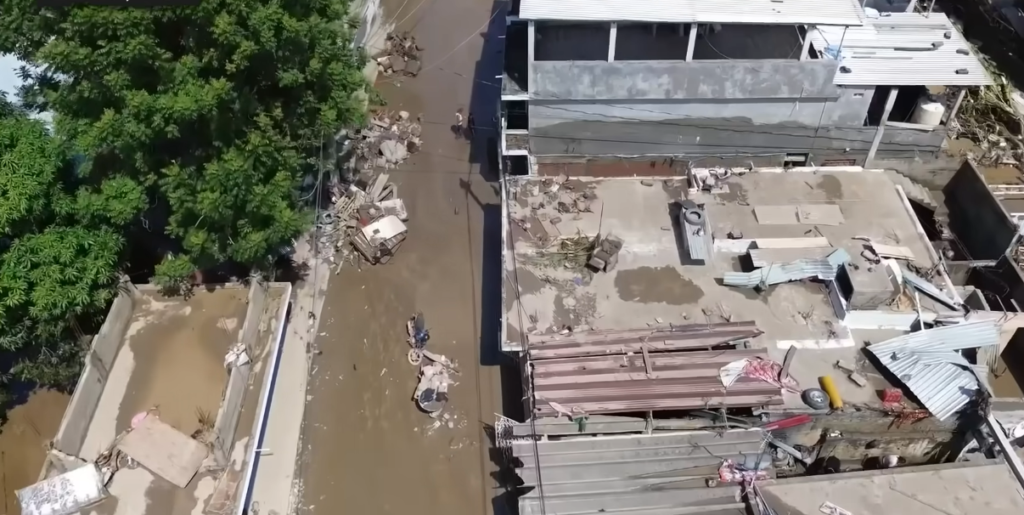
It is impossible to overestimate the benefits of artificial intelligence (AI) for disaster management in Mexico, despite these formidable obstacles. For example, after a disaster occurs, drones fitted with AI-powered computer vision algorithms can quickly determine the extent of damage. By scanning impacted areas, this technology finds collapsed structures, blocked roads, and other dangers that require quick attention. Drones are assisting rescue teams in prioritizing their work and providing aid more effectively by processing this data in real time.
AI seems to be changing Mexico’s preparedness for disasters as well as its response to them. The nation can now more efficiently distribute resources by employing predictive models, guaranteeing that aid reaches the most impacted communities first. AI has also made it possible to plan for recovery more intelligently. The system helps authorities better plan for rebuilding efforts by predicting the long-term economic impact of a flood or hurricane based on data collected from past disaster events.
However, the system’s effectiveness depends on more than just technology; careful coordination between local government agencies, tech firms, and the communities themselves is necessary. Addressing concerns like data privacy and making sure AI systems are not only efficient but also morally and openly sound require cooperation. Additionally, it will be essential to raise public awareness and provide training so that people know what to do in the event of an AI-generated alert.
Although Mexico has made great progress in applying AI to disaster relief, these developments also bring up significant issues regarding the application of AI in other high-risk areas. Will other nations with comparable risks—such as those in the Caribbean or Southeast Asia—follow suit if the AI systems prove to be successful? Without a doubt, other countries wishing to implement AI-powered disaster management systems could find great inspiration in Mexico’s experience. The partnership between academic institutions, tech companies, and CENAPRED provides an example of how technology can be used for the benefit of society.
However, there are risks, just like with any new technology. The biggest worry is the potential for complacency brought on by reliance on AI. Although AI can make predictions more quickly and accurately, it cannot replace humans in disaster response. The system must be integrated with on-the-ground operations, including emergency medical services, shelter distribution, and evacuation plans, according to authorities. AI by itself cannot save lives; human reaction is what counts.
It is evident from these developments that artificial intelligence (AI) holds promise for revolutionizing the prediction and management of natural disasters. The early warning system in Mexico offers a preview of how disaster management may develop in the future, combining human expertise and technology to shield communities from nature’s unpredictable forces. But in order for the system to be genuinely revolutionary, it needs to be a component of a larger plan that also involves international cooperation, public education, and infrastructure investment.
