

The livestream started quietly, almost casually, as thousands of others do throughout China every night. The young woman’s face was glowing in the familiar ring light as she combed her hair in front of her phone’s camera in a small, well-lit room. Tiny digital affirmations moved faster than anyone could read as comments drifted upward across the screen. In response, she tilted her head slightly and smiled, putting on a routine performance of herself. Then, without warning, the performance faltered.
The beauty filter broke for a split second, so short it was almost a dream. A softer, more textured, more human skin took the place of the smooth porcelain skin. Her mouth opened a little. Her skin became warmer. The filter quickly reverted to the meticulously planned symmetry that her audience had come to expect.
However, the delusion was already shattered.
| Key Information | Details |
|---|---|
| Platform | Douyin |
| Industry | Livestream Influencing & Beauty Content |
| Incident | Beauty filter malfunction during live broadcast |
| Reported Fallout | Allegedly lost ~140,000 followers |
| Location | China |
| Cultural Context | Heavy reliance on real-time beauty filters |
| Similar Past Case | Qiao Biluo |
| Reference | https://www.ndtv.com |
| Additional Reference | https://www.mothership.sg |
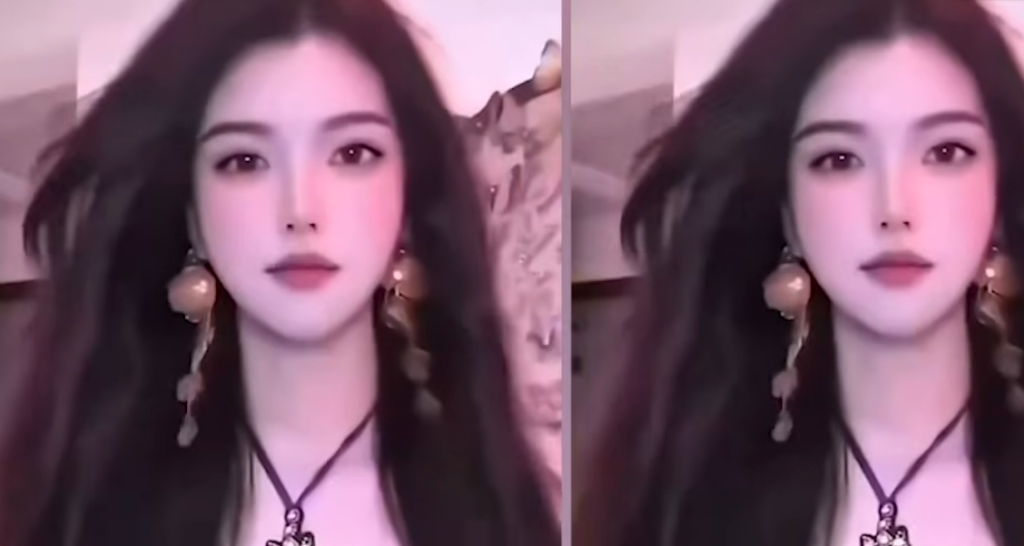
There is an odd stillness in that moment when you watch the clip later, after it has been played millions of times on various platforms. She didn’t respond right away. She might not have even been aware of what had occurred. However, viewers did. The video circulated well beyond her typical audience in a matter of hours, provoking discussion, jeering, and, surprisingly, pity.
Although precise numbers are still unknown, some reports indicate she lost about 140,000 followers as a result. The reaction’s speed felt realistic enough, though. Almost immediately, followers disappeared, comments changed in tone, and the discourse shifted from praise to criticism.
It’s difficult to ignore how brittle online personas have become.
These days, beauty filters are so ingrained in livestream culture that it is nearly impossible to notice them. Livestream studios can be found nestled between tea shops and clothes stores in Hangzhou or Guangzhou’s urban shopping districts. Influencers spend hours inside, speaking to audiences they will never meet while their faces are lit artificially and their appearances are subtly manipulated by real-time software. In addition to being amazing, the technology is a little unnerving.
Filters can instantly reshape bone structure, smooth wrinkles, narrow noses, and enlarge eyes. The change isn’t portrayed as fantastical. It is portrayed as fact. Even when reason dictates otherwise, audiences gradually start to accept the improved version as genuine.
The tension starts at that point.
The influencer in this recent instance didn’t appear significantly different without the filter. In fact, a lot of people who watched it afterwards said that she looked more alive in her natural state. However, that wasn’t the purpose. The disruption was the point. the abrupt realization that what people thought they were seeing wasn’t totally accurate.
Once broken, expectations are rarely easily restored.
The influencer market in China has expanded into a huge, fiercely competitive market. In a single evening, top livestreamers sell millions of dollars’ worth of merchandise, and their faces become recognizable brands. In this ecosystem, appearance is money. Additionally, filters are now a component of the system that backs that currency.
It’s possible that artists believe they have limited options.
Another Chinese livestreamer, Qiao Biluo, gained notoriety a few years ago when her own filter malfunctioned and her appearance shocked fans who had assumed she was younger. The reaction was quick and harsh. The significance of preserving digital perfection was emphasized by that incident, which lingered in influencer culture like a warning. It seems like history is repeating itself as we watch this happen once more, albeit maybe with greater complexity.
Instead of focusing on the influencer directly, some viewers hurried to defend her by denouncing unattainable beauty standards. As though the use of filters had been a trade secret rather than a public practice, others accused her of dishonesty. There was more to the divide than a single malfunction. Anxiety was evident.
Social media sites inadvertently use artificial enhancement to attain perfection while rewarding it. Influencers adjust as necessary, showcasing versions of themselves that meet the expectations of their audience. Even if it never existed outside of the screen, the improved version eventually turns into the actual product.
This makes reality negotiable.
At least in public, the influencer has said nothing. It’s still unclear if she will confront the incident or just go on, changing her strategy, regaining her following, or maybe going completely missing. Influencer careers have the potential to grow rapidly, but they can also decline surprisingly quickly.
As you watch this happen, you get the impression that the malfunction revealed the appearance of multiple people.
It revealed the extent to which contemporary digital life relies on upholding illusions that are widely acknowledged but seldom acknowledged. Every night, new influencers enter the same meticulously lit rooms, the filters stay in place, and the livestreams go on.
Disclaimer
Nothing published on Creative Learning Guild — including news articles, legal news, lawsuit summaries, settlement guides, legal analysis, financial commentary, expert opinion, educational content, or any other material — constitutes legal advice, financial advice, investment advice, or professional counsel of any kind. All content on this website is provided strictly for informational, educational, and news reporting purposes only. Consult your legal or financial advisor before taking any step.
