

It’s challenging to understand the stakes at first when standing on the broad concrete edge of the well-known Dutch sea barrier, the Afsluitdijk. The serene IJsselmeer Lake, which is gray and flat like brushed metal, is located on one side. The North Sea, on the other hand, moves differently—heavier, restless, and with a subdued authority. The barrier itself appears stable and long-lasting. However, there’s a feeling that here, permanence is negotiated rather than assured.
Although the Netherlands has always been surrounded by water, it is currently making investments on a scale that seems almost defiant. By 2050, the government intends to invest about €650 billion in sand-filling coastlines, strengthening dikes, protecting the nation from rising sea levels, and implementing AI systems to track flood threats. It’s such a big figure that it seems more like a national insurance policy than a construction budget.
| Category | Details |
|---|---|
| Country | Netherlands |
| Population Below Sea Level | About two-thirds of the population |
| Major Program | Delta Programme |
| Total Planned Investment | Approx. €650 billion by 2050 |
| Existing Flood Defenses | Over 3,600 km of dikes and barriers |
| Key Cities at Risk | Amsterdam, Rotterdam, The Hague |
| Innovative Solutions | Sand Motor, AI flood monitoring, floating infrastructure |
| Government Reference | https://www.government.nl/topics/delta-programme |
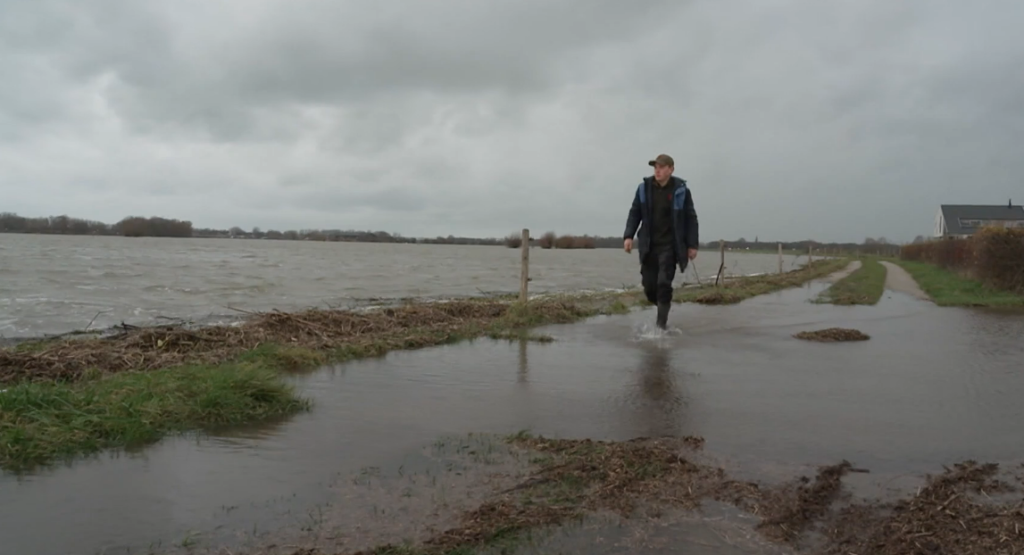
Geography is the source of this urgency. Millions of Dutch people reside in major cities like Rotterdam and Amsterdam, and nearly two-thirds of the country’s population lives below sea level. It’s difficult to ignore how normal everything feels when strolling along Amsterdam’s canals, where bicycles rest carelessly against railings and cafés bustle with visitors. Beneath that normalcy, however, is a disturbing reality: a large portion of this land only exists because people insist it should.
One of the world’s most intricate engineering systems, the nation’s flood defenses cover an area of over 3,600 kilometers. These obstacles change over time. They are continuously strengthened, elevated, and improved. Policymakers and investors appear to think that sustained action, rather than temporary fixes, is necessary to stay ahead of the curve.
The Dutch are also thinking differently about defense. Engineers are experimenting with nature itself rather than just concrete walls. By allowing ocean currents to progressively redistribute sand along the coast, the Sand Motor, a massive artificial sandbank, strengthens the shoreline naturally. It becomes evident that the Dutch are not merely fending off the sea as waves gradually alter this landscape. It is negotiating with them.
Technology is becoming more and more important. These days, AI systems keep an eye on dikes, anticipating flaws before they become catastrophes. Continuous streams of data are sent to control centers by sensors that measure structural stability, water levels, and pressure. Although it’s still unclear if technology alone will be able to keep up with the sea level rise, there is hope that data will at least give it a chance.
Part of that confidence is explained by history. In addition to killing over 1,800 people, the catastrophic North Sea flood of 1953 changed the way the country thought. The Dutch responded by constructing the Delta Works, a massive network of dams and storm surge barriers that are still regarded by many as one of the greatest engineering feats in human history. The disaster is still remembered by older residents, who describe it more as a warning than a memory.
However, those defenses might not be sufficient indefinitely. Sea levels could rise more than a meter by the end of this century, according to scientists, and possibly more if polar ice melts more quickly than anticipated. Engineering studies and planning meetings are clouded by that uncertainty. It’s possible that rather than permanently resolving the issue, today’s investments are just buying time.
Some of the ideas seem almost futuristic. Parts of the nation are already seeing the emergence of floating neighborhoods, where residences are built to rise and fall in response to water levels. These structures, which move gently with the waves instead of against them, have an oddly peaceful feel. This represents a philosophical change from fighting water to embracing it.
The situation is complicated by economics. The hub of world trade is Rotterdam, the biggest port in Europe. Its protection is an international priority as well as a national one. Flood risk now affects long-term business decisions in ways that would have seemed improbable decades ago, and global supply chains rely on this infrastructure.
Additionally, there is subdued skepticism. Privately, some engineers question whether any system can permanently contain the ocean. Assumptions are changing more quickly than anticipated due to climate change. Plans that appeared adequate twenty years ago now appear to be lacking.
Disclaimer
Nothing published on Creative Learning Guild — including news articles, legal news, lawsuit summaries, settlement guides, legal analysis, financial commentary, expert opinion, educational content, or any other material — constitutes legal advice, financial advice, investment advice, or professional counsel of any kind. All content on this website is provided strictly for informational, educational, and news reporting purposes only. Consult your legal or financial advisor before taking any step.
