

In the last ten years, Sweden has viewed climate policy more as engineering homework than as rhetoric. Opening a zero-emission engineering school at Stockholm University seems like a sensible next step rather than a publicity stunt. It indicates that sustainability is now a core design component that is incorporated into research contracts, lecture halls, and labs rather than just a supplemental elective.
With a global ranking of 18th in Environmental Science & Engineering, the university already has a solid position, and credibility is important. Instead of creating a brand-new discipline, it is strengthening current strengths and focusing them on a quantifiable goal. The organization has established a framework that is remarkably explicit in its purpose by coordinating its initiatives with Sweden’s 2045 net-zero target and its own 2040 carbon-neutral plan.
| Key Context | Details |
|---|---|
| Institution | Stockholm University, Sweden |
| Focus Area | Environmental Science, Sustainable Chemistry, Climate and Energy Studies |
| Global Standing | Ranked 18th globally in Environmental Science & Engineering |
| National Goal | Sweden aims for net-zero emissions by 2045 |
| Academic Structure | Master’s programs in Sustainable Chemistry and Transdisciplinary Climate, Environment and Energy studies |
| Research Links | Bolin Centre for Climate Research, Baltic Sea Centre, SUCCeSS circular systems research |
| Climate Commitment | University climate roadmap targeting carbon neutrality by 2040 |
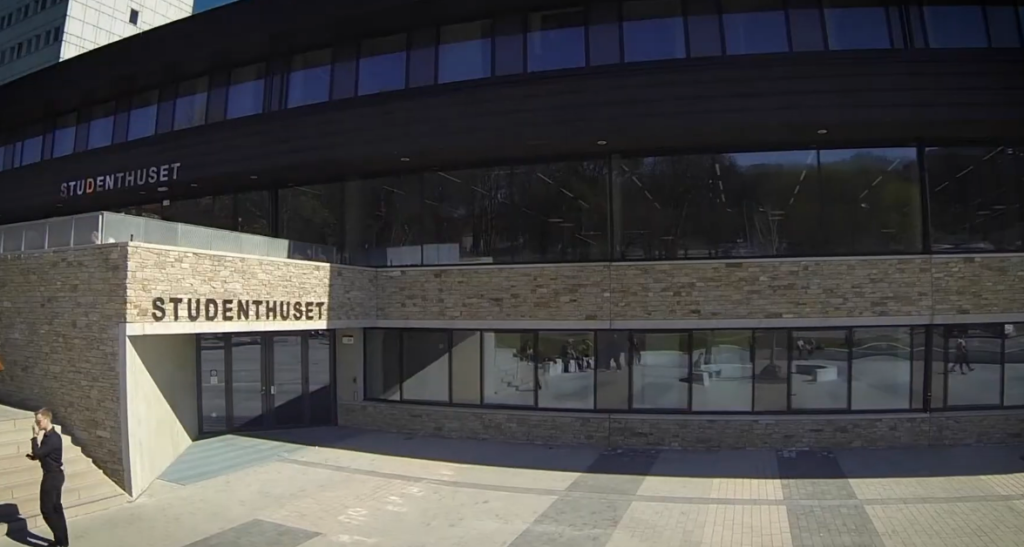
One autumn afternoon, I was strolling across campus when I saw construction workers installing new monitoring systems and adjusting ventilation units. Their work was methodical and nearly silent. These upgrades aren’t ornamental. They are extremely effective retrofits that drastically lower operating emissions and provide students studying energy systems with real-world examples.
Programs like transdisciplinary climate studies and sustainable chemistry provide the academic foundation of the institution. The program is especially creative in that it prepares engineers who comprehend supply chains and molecular structures by emphasizing carbon capture, circular production, and renewable resources. This dual literacy is especially helpful in the context of global warming because it enables graduates to go between positions advising policy and conducting laboratory research without sacrificing technical accuracy.
The attraction for early-stage engineers is quite comparable to what earlier generations discovered in the civil infrastructure or aircraft industries. The aim is the difference. Students are learning how to redesign systems such that emissions are noticeably improved, sometimes drastically cut, and sometimes incrementally adjusted, as an alternative to increasing capacity.
Years ago, at a presentation, a professor showed the emissions curve for Sweden and asked the audience if they thought the fall was rapid enough.
The ensuing silence was candid but awkward. As I read the university’s climate strategy, which describes annual reductions, energy conversions, and procurement reforms in almost clinical detail, that memory came flooding back. It’s not a theatrical desire. It follows a process, is monitored, and is made public.
Integration of research reinforces that gravity. The Baltic Sea Center grounds climate modeling in marine ecosystems, whereas the Bolin Centre for Climate Research links atmospheric science with engineering solutions. These partnerships are extremely flexible, allowing for tasks ranging from planning for coastal resilience to aerosol chemistry.
The school is simplifying operations and releasing intellectual resources that could otherwise be kept in silos by utilizing cross-disciplinary skills. Social scientists and engineers work together to investigate how behavioral incentives affect the uptake of energy. This integration, which acknowledges that technology cannot provide emissions reductions on its own, is especially creative.
Practically speaking, the campus itself turns into a lab. Comprehensive recycling programs, biodiversity zones, and smart energy grids are educational tools rather than side projects. Operational energy use has significantly decreased since the new sustainable framework was introduced, helped by data dashboards that show staff and students alike how far they have come.
There is a cautiously confident tone among the teachers. They use technical but hopeful language to discuss material innovation, energy storage trials, and hydrogen development. Based on Sweden’s larger industrial shift toward electrification and low-carbon production, their strategy seems incredibly dependable.
Scaling prototypes into solutions that are ready for the market is frequently a barrier for medium-sized businesses working with the university. The school is making sure that research transcends academic journals by establishing collaborations with businesses and governmental organizations. These partnerships work incredibly well, speeding up commercialization without sacrificing scientific integrity.
On the other hand, students are not immune to complexity. The trade-offs between rare-earth extraction, battery manufacturing, and grid integration are covered in the courses, emphasizing that achieving zero emissions requires resource choices that are rarely straightforward. The curriculum is especially advantageous when ethics and lifespan analysis are incorporated into engineering programs, enabling graduates to deal with ambiguity rather than run from it.
I heard a lively yet fact-based debate between two students in a café close to the scientific building on offshore wind expansion versus nuclear upgrades.
It was a welcome interchange. It implied that the program is developing engineers with a systematic, rather than an ideological, way of thinking. In a labor market that is becoming more and more influenced by the energy transition, that nuance—developed through case studies and participatory labs—may prove quite resilient.
Although the expenditure is significant, Sweden’s larger clean-tech ecosystem offers support systems that, for institutions ready to make the commitment, make experimentation surprisingly affordable. The financial environment that has been established via grants, public-private partnerships, and innovation funds is quite effective at directing research toward application.
Naturally, the term “zero-emission” raises questions. Since carbon is ingrained in materials and digital infrastructure, achieving complete neutrality is challenging. Leaders of the university publicly admit this, stressing openness and yearly reevaluation. Instead of overpromising, they are establishing credibility by carefully measuring emissions and disclosing the facts.
It is anticipated that engineering education in Europe will move toward decarbonization competences in the upcoming years. Although not unique, Stockholm University’s action is especially noticeable since it shows that environmental science is now an essential part of engineering rather than just a side effect. Compared to reforms tried ten years ago, that integration seems to be happening far more quickly.
Laboratory lights shine against the northern sky as dusk falls early over the campus, reflecting off energy-efficient glass facades. The scene is subtle but effective. It depicts an evolving discipline that is changing thoughtfully rather than hurriedly.
Disclaimer
Nothing published on Creative Learning Guild — including news articles, legal news, lawsuit summaries, settlement guides, legal analysis, financial commentary, expert opinion, educational content, or any other material — constitutes legal advice, financial advice, investment advice, or professional counsel of any kind. All content on this website is provided strictly for informational, educational, and news reporting purposes only. Consult your legal or financial advisor before taking any step.
