

There is a particular lethargy that comes with reading weather reports these days, a kind of numbness that settles in when the unusual happens on a schedule. We used to consider temperature records as sporting achievements—rare, noteworthy, and surprising. Now, they arrive with the administrative regularity of a tax bill. Climate Change and the Environment Midway through January, Canada released its annual global mean temperature projection, and the figures are both worrisome and stubborn. According to the modeling, 2026 won’t provide the respite that many had hoped for following the scorching trifecta of the previous three years. Rather, it is set to become one of the hottest years ever recorded, possibly on par with the scorching 2024.
The estimate puts the global average temperature for 2026 between 1.35°C and 1.53°C above pre-industrial levels. Fractions of a degree appear to the uninformed like rounding mistakes. To a climatologist, or a farmer seeing a wheat crop wither in Saskatchewan, they are the difference between a terrible season and a catastrophe. If the mercury goes to the upper end of that projection, we are looking at another year that flirts aggressively with the 1.5-degree threshold imposed by the Paris Agreement.
What struck me most about this data is not the surge, but the floor. We are entering the thirteenth straight year where global temperatures have sat at least 1.0°C above the 1850-1900 baseline. The baseline itself is moving. We have climbed the mountain and constructed a home there; we are no longer standing on the ground gazing up at a summit. The severe heat in 2023 and 2024 was partly driven by a significant El Niño event, a natural warming of the Pacific Ocean that acts like a radiator for the earth. But El Niño has waned, and the heat has not followed it out the door. The warmth is sticking, trapped in place by the thickening blanket of carbon emissions that we continue to weave around the atmosphere.
| Key Metric | Forecast Details |
| Projected Temperature Anomaly | 1.35°C to 1.53°C above pre-industrial levels (1850–1900). |
| Probability of Record Heat | High likelihood of ranking in the top four; 12% chance of exceeding 1.5°C. |
| Contextual Streak | 2026 marks the 13th consecutive year global temperatures exceed 1.0°C above baseline. |
| Primary Drivers | Accumulating greenhouse gases compounded by lingering El Niño effects. |
| Source Authority | Environment and Climate Change Canada (ECCC); Canadian Centre for Climate Modelling and Analysis. |
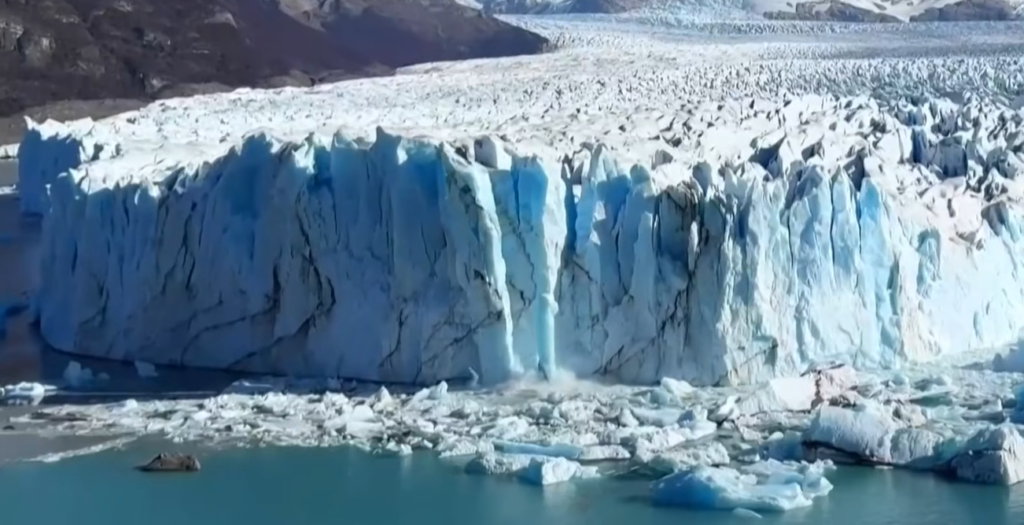
The physics of this are invisible yet potent. The heat that accumulates in the oceans doesn’t merely disappear overnight. Rewriting the script for seasons, it persists. I recall chatting to a ski resort operator in British Columbia a few years back who described the snowfall as “unreliable currency.” That volatility is now the standard. The winter of 2025 was the third-warmest on record, and 2026 is shaping up to continue the trend. The calendar and climate are becoming less connected. January no longer guarantees cold; July no longer assures shelter from smoke.
This persistence of heat is what the scientists at the Canadian Centre for Climate Modelling and Analysis are flagging. Their “made-in-Canada” prediction technology is not just a crystal ball for weather nerds; it is a warning siren for the economy. It’s getting harder to deny the connection between these abstract temperature graphs and the cost of bread at the grocery store. The supply chain is hampered by extreme weather events, such as heatwaves that buckle train lines, floods in logistics centers, and droughts in grain belts. The models implicitly forecast higher insurance premiums and more erratic food costs when they foresee a hot 2026.
It is important highlighting that crossing the 1.5°C threshold in a single year, or even a number of years, does not mean the Paris Agreement has failed. That goal is defined by a multi-decade average. However, the frequency with which we are bashing our heads against that ceiling is rising. There is a 12 percent risk that 2026 alone will exceed that limit. It feels less like a goal we are aiming to miss and more like a speed limit we are deciding to ignore.
I stared at the probability distribution graph on my laptop screen for a long time, tracing the red line of the forecast, and found myself feeling less terrified than simply weary by the predictability of it all.
The human element of this data is often lost in the discussion of “mean temperatures” and “anomalies.” But you can see it in the comments sections of news articles and forums. People are seeing the minor erasures. A Reddit member recently commented that at 36 years old, they are witnessing their first winter with virtually no snow on the ground. “I am not exaggerating,” they wrote. The overall tragedy of climate change is composed of many tiny, individual losses. It’s the loss of the visceral experience of the seasons we grew up with.
Looking farther ahead, the government’s long-term estimates show that the period from 2026 to 2030 will likely be the hottest five-year span on record. This is the new architecture of our life. The “cool” years of the future will undoubtedly be hotter than the “hot” years of the past. The Berkeley Earth group, a non-profit that independently examines surface temperatures, corroborates the Canadian data, expecting 2026 to land as the fourth-warmest year since 1850, fitting in exactly behind the sweltering trio of 2024, 2023, and 2025.
The consolation of skepticism is taken away by these independent agencies’ constancy. The argument regarding the actuality of the issue vanishes when Environment Canada in Ottawa, Berkeley Earth in California, and the Met Office in the UK all point to the same crimson horizon. The only question remaining is adaption.
“Building climate resilience” is referred to by the government as an economic need. To put it simply, this means strengthening our infrastructure to survive a world that is physically incompatible with the way we constructed it. It involves producing crops that can tolerate brief droughts and building towns that don’t turn like ovens. The projection for 2026 is a reminder that the atmosphere doesn’t care about our political timeframes or our financial cycles. It reacts to physics. And right now, the physics suggest we are going to be heated.
We are watching the “abnormal” become the “average” in real-time. The shock value is gone, replaced with the dreary chore of endurance. We enter 2026 knowing that the heat will no longer be a guest. It’s moved in.
Disclaimer
Nothing published on Creative Learning Guild — including news articles, legal news, lawsuit summaries, settlement guides, legal analysis, financial commentary, expert opinion, educational content, or any other material — constitutes legal advice, financial advice, investment advice, or professional counsel of any kind. All content on this website is provided strictly for informational, educational, and news reporting purposes only. Consult your legal or financial advisor before taking any step.
