

Taipei’s tallest building was dimly illuminated by streetlamps and anticipation an hour before daybreak. Its terraced terraces slowly vanished into the morning mist, giving the impression that the building was impossibly vertical from below. Then Alex Honnold approached quietly and put his palm on the façade’s foundation. No harness. There are no second chances.
It was a city accustomed to horns and hustle, but the throng seemed oddly calm. As dawn spread over the sky, Honnold started to climb—not ceremoniously, but with a small change in weight, as though he were climbing a ladder that only he could see. It was silent, methodical, and astonishingly successful at holding everyone’s breath, much like a conductor raising a baton.
It wasn’t El Capitan here. There was no history of climbers trying and failing, no national park setting, and no polished granite. Steel, glass, and mistrust were the building blocks of Taipei 101. Built to survive earthquakes and typhoons, the structure was barely fit for human hands. However, the rhythm of Honnold’s movements—which were incredibly clear and efficient—was not something that one would expect on a corporate tower.
He could see that each ledge was more ornamental than functional. Toes, however, saw concealed shelves where others saw only surface, and he adjusted his weight exactly. Surprisingly, he solved the formerly intimidating building piece by piece like a vertical puzzle. Ultra-light chalk bags and far better climbing shoes helped, but they didn’t account for his composure.
| Name | Alex Honnold |
|---|---|
| Profession | Professional Free Solo Rock Climber |
| Age | 40 |
| Climb Achieved | Taipei 101, 1,667 ft, no ropes or gear |
| Duration | 1 hour 31 minutes |
| Date Completed | January 25, 2026 |
| Notable Feature | Tallest urban free solo climb in history |
| Streaming Platform | Netflix, “Skyscraper Live” |
| Website | www.alexhonnold.com |
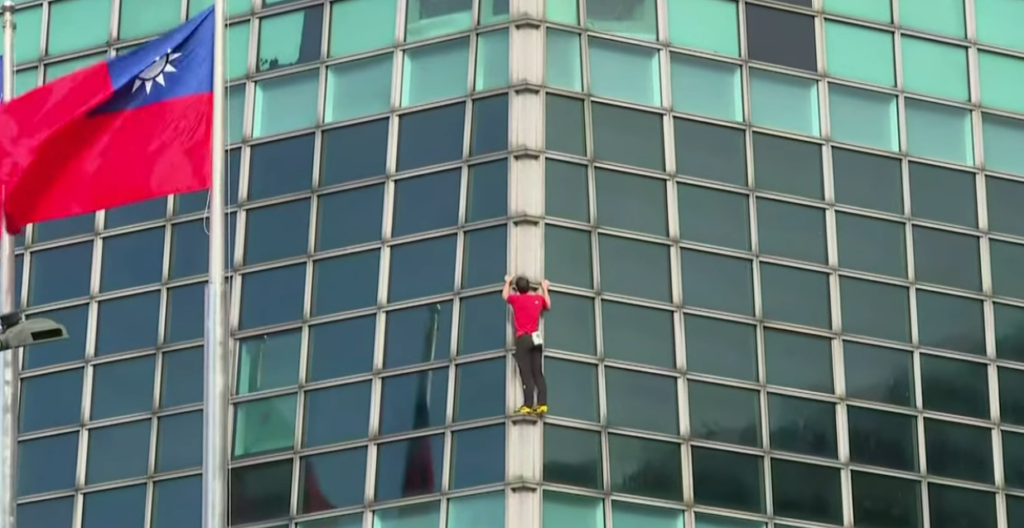
The sun broke over the city halfway up. The offices were illuminated. Traffic started up again. But every eye, whether on screens or on the streets, was skyward. I noticed that I was leaning forward as if my own balance may assist him stay on the building while I watched the video from a small newsroom located somewhere between the 70th and 80th floors.
Alex Honnold has demonstrated for more than ten years that anxiety can be managed—not eliminated, but reframed. He became well-known in 2017 after climbing El Capitan. However, this ascent was unique. He altered the boundaries and context of his sport by substituting steel for rock and Yosemite for a skyline. By doing this, he subtly changed the public’s perspective of climbing, making it appear more urban, immediate, and even relevant.
The performance incorporated the symmetry of the building. Honnold’s figure reflected the linear order of the building window by window, as though he were being drawn upward by purpose. But the serenity was more striking than the threat. Real-time, visible, and frequent decisions were being made; there was no drama in his expression.
The organizers made sure that spectators could follow the experience both physically and emotionally by incorporating a broadcast team that included drone visuals and biometric feedback. His pulse rate remained remarkably constant, as shown in the stream’s corner—a realization that was both bizarre and comforting. It served as a reminder that this was not superhuman; rather, it was highly skilled and incredibly dependable decision-making under duress.
He arrived at the top without a histrionic wave or fist pump. He merely sat with his hands on his knees and gazed over the city as if completing a silent meditation. After such a hike, such silence was very potent. It implied that the goal was completion rather than praise.
Honnold has always had a meticulous approach to climbing. In this case, however, it also became symbolic. It felt like a message to scale a glass office tower without a rope—about risk, about focus, and about how conditions we think are off-limits could merely call for a different sort of reasoning. His rise was a type of urban poetry—clean, succinct, and devoid of ornamentation.
The response from the public was prompt and varied. The message it gave to younger climbers was questioned by some. Others saw it as a motivational illustration of ambition and preparation. However, even detractors had to admit that this achievement, which was especially creative in both concept and execution, caught people’s attention. They looked up because of it.
words like “onsight” and “crux” are technical words in the climbing community. But Honnold’s achievements went beyond technical terms. It touched on mastery, instinct, and how physical boundaries are frequently crossed covertly and without any fuss. His performance was more about clarity than adrenaline—exceptionally sharp focus, noticeably better technique, and an unexpectedly low emotional register.
We might see more people attempt comparable climbs in the upcoming years. Since they’ve seen what’s possible, they’re not trying to surpass him. Honnold’s ascent of Taipei 101 broadened the map, not geographically but mentally. He demonstrated to us that sometimes having bravery is merely taking the next step in the right direction.
And perhaps the strongest argument of all is that. nor the height, nor the show, but the quiet in between each step. a confidence that demonstrates itself rather than making an announcement. One level at a time.
Disclaimer
Nothing published on Creative Learning Guild — including news articles, legal news, lawsuit summaries, settlement guides, legal analysis, financial commentary, expert opinion, educational content, or any other material — constitutes legal advice, financial advice, investment advice, or professional counsel of any kind. All content on this website is provided strictly for informational, educational, and news reporting purposes only. Consult your legal or financial advisor before taking any step.
