

On a gloomy Oxford morning, scientists are transforming the way we combat illnesses that have long defied treatment in a lab that hums like a thinking machine. With £118 million in funding and a daring collaboration with the Ellison Institute of Technology, the University of Oxford has started an exceptionally progressive AI program aimed at creating better vaccines more quickly and accurately than ever before.
The program, called CoI-AI, or Correlates of Immunity–Artificial Intelligence, is already gaining recognition for its incredibly effective fusion of artificial intelligence modeling and real-time immunology research. Its goal is more remarkable, though, as it aims to rethink our understanding of immunity itself in addition to combating illnesses.
The controlled human challenge investigations are the main focus of the endeavor. In these experiments, participants are purposefully and safely exposed to germs such as Escherichia coli and Streptococcus pneumoniae, providing researchers with a unique opportunity to observe the body’s reaction in real time. Although it’s a contentious approach that necessitates high ethical standards, it’s incredibly successful at producing comprehensive immune response data.
CoI-AI differs in that it applies state-of-the-art AI models to the real-time datasets. These models are created by EIT and driven by Oracle’s computational architecture. By concurrently studying immune function at the micro and macro levels, the team seeks to identify particular patterns—what scientists refer to as “correlates of protection”—that indicate whether a vaccination would be effective. Should this strategy prove effective, it might significantly reduce the time needed to produce vaccines and remove a lot of uncertainty.
| Key Detail | Description |
|---|---|
| Program Name | CoI-AI (Correlates of Immunity–Artificial Intelligence) |
| Lead Institution | University of Oxford |
| Partner | Ellison Institute of Technology (EIT) |
| Funding | £118 million |
| Focus Areas | AI-powered vaccine development, antibiotic resistance, immune response |
| Research Techniques | Human challenge studies, advanced immunology, AI modeling |
| Key Pathogens Targeted | Streptococcus pneumoniae, Staphylococcus aureus, Escherichia coli |
| Lead Researchers | Prof. Sir Andrew Pollard, Prof. Daniela Ferreira |
| Infrastructure Support | Oracle supercomputing and AI architecture |
| Source Reference | Oxford University Official Announcement, Sept 1, 2025 |
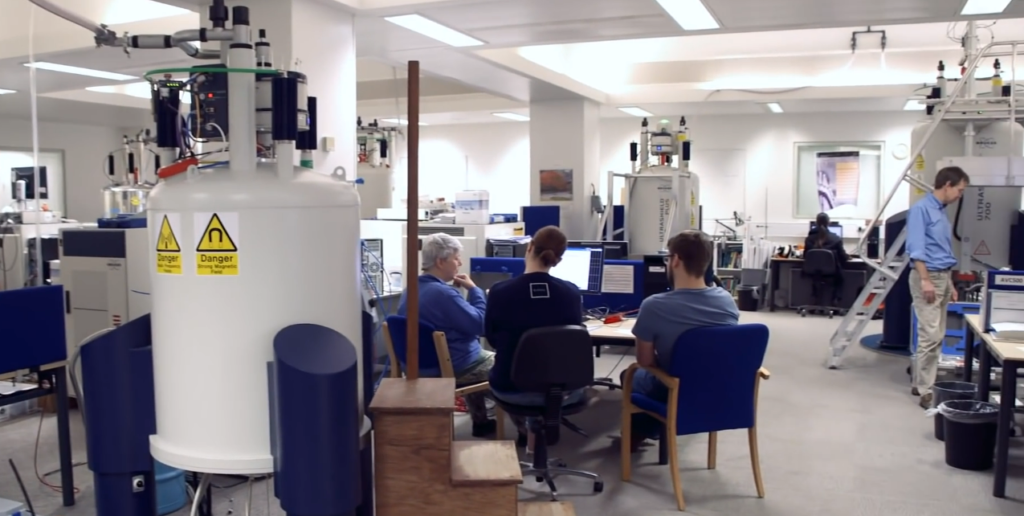
The Oxford Vaccine Group’s head, Professor Sir Andrew Pollard, describes this as a “new frontier in vaccine science.” He feels that the combination of AI and contemporary immunology has come at the perfect moment, particularly given the ongoing threat posed by antibiotic resistance to international health systems. Previously treatable diseases now persist or recur because germs change more quickly than can be monitored by conventional research.
According to the group’s deputy director, Professor Daniela Ferreira, the immune system is not a straightforward on/off switch. It works more like a dense network of sensors and reactions instead. They are able to map this complexity with startling clarity thanks to the incorporation of AI. “With tools that allow us to see both the smallest cellular behavior and the broader immune orchestration, we’re now studying infections in real time, in living people,” she said.
This thought that we’re not only watching how people recover from diseases but also how they prevent being sick in the first place really stood out to me.
The partnership with the Ellison Institute offers more than simply financial support. The engineers, AI scientists, and systems thinkers at EIT are actively involved in the endeavor, developing algorithms that are capable of adapting to different diseases, geographical locations, and even vaccination kinds. Because of this, the program can swiftly adapt to new health hazards, making it extremely adaptable.
According to EIT chair Larry Ellison, the project is establishing the foundation for a safer, quicker, and more responsive vaccine research process. Practically speaking, this may mean bypassing months of laboratory testing and going directly to promising candidates supported by immunological predictors developed from artificial intelligence. That kind of acceleration has become essential in recent years rather than just a theoretical concept.
However, the balance that the CoI-AI software attempts to achieve is what makes it unique. By incorporating contemporary machine learning technologies while maintaining Oxford’s stringent vaccination testing procedures, the project stays clear of the common pitfalls of tech-over-science. Scientists are enhanced rather than replaced by it.
The initiative is being supported by an absolutely outstanding infrastructure. This computational capacity from Oracle enables the researchers to execute simulations at scales that were previously unattainable. Now, any immune dataset, regardless of its complexity, can be examined across thousands of parameters, transforming data into insight with a much shorter lag. This ability is more than simply strong. It is absolutely necessary.
A new generation of hybrid scientists—those who can connect biology and computation without becoming bogged down in translation—will be trained in this program, according to Oxford and EIT. Early-career researchers are being mentored across disciplines through a dedicated Scholars program, preparing them to lead the future generation of AI-informed medical science as well as contribute to present projects.
Oxford and EIT have made it apparent since announcing their long-term strategic partnership in December 2024 that this project is only a small portion of a larger goal. Generative biology, sustainable energy, public policy, and plant science are among their combined areas of interest; each is approached using a combination of AI modeling, systems integration, and human-centered design. CoI-AI, on the other hand, has become a particularly creative example of how that strategy might function in critical situations.
Yes, there is a lot at stake. Currently influencing everything from cancer treatment to post-operative recovery, antibiotic resistance is a problem rather than a threat. Conventional vaccinations have not kept up. Oxford’s concept, if successful, might provide a framework for reengineering the funding, execution, and conversion of research into tangible impact, in addition to a new military strategy.
Government assistance has already started to line up. In particular, CoI-AI was mentioned as a model for mission-led science in the UK’s AI for Science Strategy. It exemplifies the type of coordinated, clearly defined research endeavor that officials think will help establish Britain as a pioneer in ethical, technologically enabled healthcare innovation.
This endeavor has legitimacy because of Oxford’s past. However, the program’s design—the way it combines quick-thinking AI capabilities with meticulous, human-centered science—feels very progressive. Instead of chasing hype, CoI-AI seems to be designed for size and longevity.
Still in its infancy, no vaccination has been made available under this system. There is a serene urgency to the systematic, piece-by-piece laying of the foundation. If this program fulfills the goals set forth by its designers, it might be remembered not only for its innovations but also for subtly redefining what innovative science could entail.
Disclaimer
Nothing published on Creative Learning Guild — including news articles, legal news, lawsuit summaries, settlement guides, legal analysis, financial commentary, expert opinion, educational content, or any other material — constitutes legal advice, financial advice, investment advice, or professional counsel of any kind. All content on this website is provided strictly for informational, educational, and news reporting purposes only. Consult your legal or financial advisor before taking any step.
