

Every weekday, just before eight in the morning, the parking lots surrounding Hamblen County schools start to fill in a pattern that feels remarkably similar: a constant stream of buses, parent drop-offs, and early teacher arrivals to prepare lessons that will soon be tested by actual classrooms rather than planning documents. The daily routine of the Hamblen County Department of Education involves the discreet management of expectations that go far beyond bells and schedules.
Serving almost 10,000 students in Morristown and the surrounding areas, the district strikingly captures the cultural and economic facets of East Tennessee. Schools serve as anchors for many families, providing routines, meals, and stability that are especially helpful for homes with erratic work schedules or no access to daycare. The fact that about one-third of pupils are eligible for free or reduced lunches has a subtle influence on everything from after-school activities to attendance regulations.
The district is in a difficult middle ground in terms of academics. The average graduation rate is about 85%, which indicates stability but also leaves space for significantly better results. Reading and math skills are still obstinately poor, indicating problems that are difficult to resolve with curricular changes alone. Teaching here is frequently like caring for a garden in unpredictable weather, with daily adjustments and the hope that long-term investment will finally pay off, according to the educators.
Staffing is still a silent asset. Compared to many districts, the student-teacher ratio is 15 to 1, making education more individualized and enabling teachers to identify a student’s decline before grades completely plummet. Despite its modestness, teacher pay is remarkably competitive for the area, which helps the district keep teachers who may otherwise leave for larger systems with more bureaucratic layers but better exposure.
Table: Key Facts About Hamblen County Department of Education
| Category | Details |
|---|---|
| Location | Morristown, Tennessee, USA |
| Student Population | Approximately 10,287 (PK–12) |
| Staff Count | 1,319 total; 666 certified teachers |
| Student-Teacher Ratio | 15:1 (slightly better than national average) |
| Graduation Rate | 85% |
| District Rating | B (Above Average) |
| Diversity Grade | A- (Notable racial and economic diversity) |
| Website | www.hcboe.net |
| Director of Schools | Arnold Bunch (Superintendent) |
| Notable Recent Event | Feasibility study underway for school restructuring |
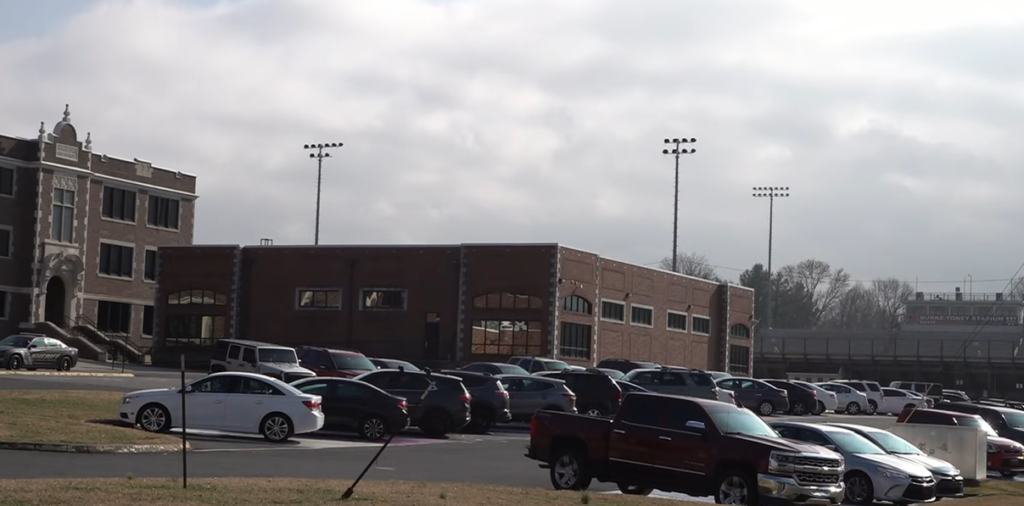
Discussions concerning long-term planning and amenities have gained prominence within the previous 12 months. A feasibility study that was carefully portrayed as exploratory rather than prescriptive and disclosed by district administration looked at building conditions, transportation logistics, and enrollment trends. Even though Superintendent Arnold Bunch made it very apparent that no choices were final, many parents were nonetheless concerned about the potential effects of change on their local schools.
The realization that even a neutral planning document might subtly alter a community’s sense of certainty caused me to pause at that very time.
A district culture that prioritizes conversation over spectacle is reflected in the measured rather than hostile response from the community. Instead than engaging in ideological debates, parents who have pragmatic concerns like classroom sizes, safety protocols, and bus routes are more likely to attend school board meetings. Despite imperfect responses, this grounded method has shown remarkable efficacy in preserving confidence.
An essential component of that trust is communication. With features like staff directories, enrollment portals, and calendars, the district’s digital platforms are incredibly effective in minimizing rather than increasing complexity. Announcements for the new school year’s enrollment went viral in recent days, indicating both administrative preparedness and a tacit belief in the system’s capacity to comfortably accept new pupils.
One of Hamblen County’s hidden assets is still its diversity. Students from different backgrounds are brought together in classrooms, sometimes in the same desk row, and are rated well for racial and economic diversity. This combination creates a more comprehensive social education that is difficult to quantify, but it also poses difficulties, especially for standardized testing. Teachers frequently talk about highly adaptable learning settings that modify lessons to take into account both academic requirements and real-world situations.
Additionally, safety and training have become more crucial. Lessons acquired throughout the education sector are reflected in mandatory substitute safety workshops and improved protocols, which emphasize readiness without veering into fear-driven policy. These initiatives are incredibly dependable in that they consistently uphold objectives and provide employees with a stronger sense of institutional support.
In terms of finances, the district is disciplined. Because spending per student is still far below the national average, administrators are compelled to concentrate instruction while reducing administrative growth and streamlining operations. Some see this as a limitation, while others see it as a coercive tool that keeps decisions about classrooms rather than branding campaigns or transient experimental projects.
Conversely, students traverse a system that provides opportunity without deception. The fact that not all graduates will pursue a four-year degree coexists with advanced placement courses, dual enrollment possibilities, and robust extracurricular programs. Community college collaborations, career readiness, and vocational pathways have all subtly grown in response to families who are more interested in tangible results than in abstract prestige.
That balance is reflected in the district’s reputation. In addition to disappointment about disciplinary problems or a lack of resources, student and parent reviews also highlight the helpful staff and deep connections. Instead of promising instant change, these conflicts are more proof that a system is functioning under actual circumstances and making small adjustments.
The school plan for Hamblen County seems forward-thinking without being overly optimistic. Plans prioritize teacher retention, enrollment management, and facility upkeep—areas that may not have as much drama but are far more likely to yield long-lasting change. The district is putting itself in a position to adapt to changing demographics without losing its essential identity through meticulous planning and consistent communication.
The approach taken by Hamblen County seems reasonable and convincing in the context of public education, where radical changes frequently come with irrational deadlines. Here, attendance records, graduation ceremonies, and classrooms that open promptly every morning and are manned by adults who are familiar with their pupils’ names are used to gauge progress.
The final effect is a school system that may never make headlines, but it keeps on providing education that is quietly dependable, noticeably better in important areas, and long-lasting.
Disclaimer
Nothing published on Creative Learning Guild — including news articles, legal news, lawsuit summaries, settlement guides, legal analysis, financial commentary, expert opinion, educational content, or any other material — constitutes legal advice, financial advice, investment advice, or professional counsel of any kind. All content on this website is provided strictly for informational, educational, and news reporting purposes only. Consult your legal or financial advisor before taking any step.
