

Few predicted that the chemical signature found in Earth’s oceans would be so eerily identical when astronomers used the James Webb Space Telescope to survey the skies. However, it is precisely what came out of the hazy atmosphere of the planet K2-18b, which is orbiting a faint star in the constellation Leo. This far-off exoplanet, which is 124 light-years away, has just emerged as a strong new contender in the hunt for extraterrestrial life.
Scientists discovered dimethyl sulfide, or DMS for short, using sophisticated infrared spectroscopy. This molecule is known to be created naturally on Earth only by living things, particularly plankton floating in our oceans. It was accompanied by evidence of dimethyl disulfide (DMDS). Although the discovery by itself does not prove the existence of life, it has paved the way for a very novel approach to comprehending what far-off, invisible ecosystems may chemically convey.
In recent months, there has been a noticeable increase in the discussion of biosignatures. Astronomers had been hoping to see carbon dioxide or water vapor for decades. However, DMS? Most shortlists didn’t even include that. It is a complicated molecule that is difficult to produce without organic activity and is involved in marine ecology and cloud formation on Earth. Its presence on K2-18b points to something interesting that might not even be geological.
The researchers discovered remarkably distinct spectral lines pointing in the direction of this molecule using JWST’s Mid-Infrared Instrument (MIRI). With a confidence level of 3-sigma, the signal is 99.7% certain, which is exceptionally strong by astronomical standards but still falls short of scientific validation. To reach that elusive five-sigma threshold, where the likelihood of a false detection decreases to almost nothing, more data is required.
| Key Detail | Description |
|---|---|
| Detection Site | Exoplanet K2-18b, 124 light-years from Earth |
| Discovery | Dimethyl sulfide (DMS) and dimethyl disulfide (DMDS) found in atmosphere |
| Detection Tool | James Webb Space Telescope (JWST) |
| Possible Significance | Strongest potential biosignature found beyond Earth to date |
| Lead Scientist | Prof. Nikku Madhusudhan, University of Cambridge |
| Planet Classification | Hycean world (hydrogen-rich atmosphere, possible water ocean) |
| Confidence Level | 99.7% (3-sigma), further data required for confirmation |
| Source Reference | https://en.wikipedia.org/wiki/K2-18b |
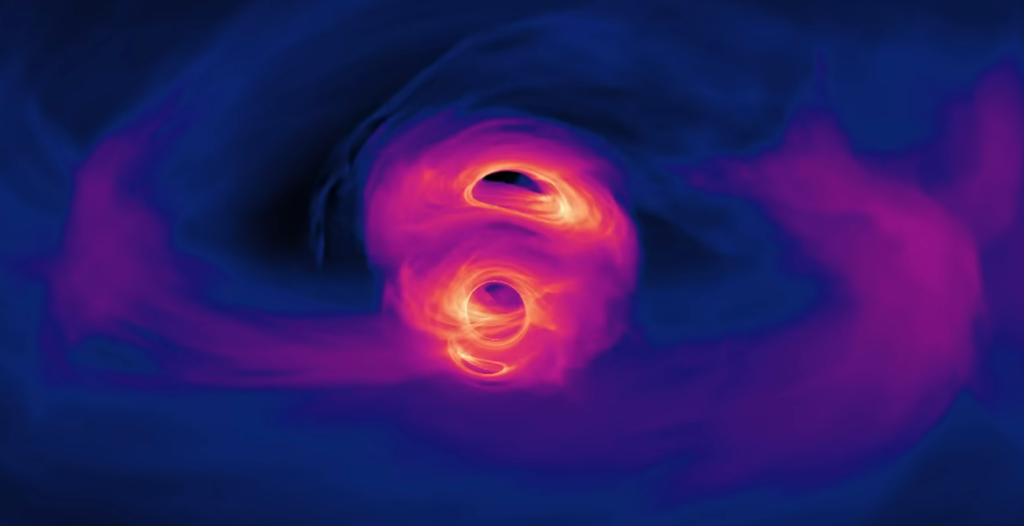
The chance to investigate planets like K2-18b is both thrilling and intimidating for medium-sized research teams. The planet belongs to a type of exoplanets known as Hycean worlds, which have an atmosphere rich in hydrogen and may have a large ocean of liquid water beneath them. With the potential to provide steady temperatures and energy flows that could support life forms unlike anything we now know, this combination makes it extremely adaptable for studies of habitability.
Lead researcher Prof. Nikku Madhusudhan cautiously optimistically described the significance of the discovery during a public discussion. For years, his team at the University of Cambridge has been modeling these planets and making far predictions about the chemical expression of life. He described the unexpected discovery of DMS in their data as “unexpectedly promising.”
The moment feels both personal and momentous to those of us who are witnessing the development of this field. I recall reading about other “false positives” that were eventually disproved by science, such as methane spikes on Mars or phosphine on Venus. It feels different to perceive this. The staff seems particularly grounded, the instrumentation is state-of-the-art, and the approach was greatly enhanced.
These kinds of findings have greatly proliferated after JWST’s deployment. It is truly groundbreaking in its capacity to record atmospheric chemistry from light-years distant. The way that starlight passes through a planet’s gaseous envelope can be used to determine its molecular fingerprints. This finding is more convincing because such a fingerprint contains DMS.
This could be a turning point for early theories regarding extraterrestrial life. The type of ecosystem that could release DMS at such high levels is already being modeled by some scientists. To duplicate that output on Earth, vast oceanic regions would need to be teeming with microbial activity. If there are seas on K2-18b, may they have a comparable abundance of microscopic life? The million-light-year question is that.
Other scientists have shown both enthusiasm and caution in recent interviews. According to Dr. Clara Sousa-Silva, a former phosphine detection researcher, DMS is a chemical that she has long felt is undervalued. This would be the first time we’ve chemically alluded to alien metabolism with such specificity, assuming more research confirms this reading.
This detection could be used as a model for future missions in the field of exoplanet exploration. Scientists are increasingly concentrating on metabolic byproducts—what live things leave behind, often invisibly—instead of hoping to discover intelligent signals by accident. This method is similar to how paleontologists use trace layers rather than whole skeletons to discover fossils.
Researchers are also broadening the criterion for life by utilizing cross-disciplinary expertise, from planetary science to chemistry. Assembly Theory, which investigates how molecules get complex enough to imply a deliberate, life-driven process, is becoming popular among some. Others are looking at lab simulations in an attempt to replicate DMS using abiotic chemistry in environments with pressures and temperatures that are similar to those of aliens. The failure of those attempts thus far lends silent credence to the biological theory.
The study team is asking for more time to observe JWST through strategic partnerships. They intend to use other tools and perspectives to confirm the DMS signature. If verified, it will alter not just textbooks but also our understanding of life, geography, and the boundaries of biology.
The subtle tone of this possible breakthrough really appeals to me. There are no exaggerated claims or spectacular movie trailers. Just scientists observing light, carrying out their duties, and obtaining a glimpse of something exquisite, potentially living, and unquestionably far away. We’ll remember this as the instant the silence of space started to hum with possibilities if it turns out to be true.
Disclaimer
Nothing published on Creative Learning Guild — including news articles, legal news, lawsuit summaries, settlement guides, legal analysis, financial commentary, expert opinion, educational content, or any other material — constitutes legal advice, financial advice, investment advice, or professional counsel of any kind. All content on this website is provided strictly for informational, educational, and news reporting purposes only. Consult your legal or financial advisor before taking any step.
