

Standing in the middle of red cedar woods and natural meadows outside St. Louis, the Living Learning Center exudes a certain peaceful assurance. Constructed in 2009, it functions independently by collecting rainfall, producing electricity from sunshine, and decomposing human waste. Over time, what once appeared to be an architectural experiment has evolved into a wonderfully successful template for structures that live simply and independently.
Its south-facing roof is covered with solar panels that generate more than 100 kWh on a sunny day, which is sufficient to power a few average homes. Rainfall brings in all of the water utilized in the structure, which is then treated and sanitized by an on-site system. Toilets use composting chambers, where bacteria and worms break down waste, rather than city water to flush. Even the floors tell a tale: made from black walnut and white ash that were harvested less than two miles away, they feel purposeful and long-lasting.
These are not oddities. They belong to the strict Living Building Challenge criteria. A building must demonstrate over the course of a year that it generates as much energy as it consumes, processes all of its own water, and manages waste without taxing other systems in order to be certified. Materials that are properly sourced and non-toxic must be used. It must also be beautiful, which is a crucial but frequently disregarded prerequisite.
In contrast, a traditional building may appear obstinately reliant, continuously connected to the grid and using resources that are never regenerated. Living structures pose an alternative query: What if our workplaces, schools, and residences contributed more than they consumed?
Key Factual Context Table
| Topic | Details |
|---|---|
| Concept | “Living Buildings” are self-sufficient, sustainable structures |
| Energy Source | Solar photovoltaics, heat pumps, smart energy systems |
| Water System | Rainwater capture, greywater recycling, composting toilets |
| Certification | Living Building Challenge by the International Living Future Institute |
| Key Example | Living Learning Center, Tyson Research Center, completed 2009 |
| Notable Feature | Net-zero energy, net-zero water, and zero waste production |
| Supporting Innovations | Biophilic design, solar tubes, variable heat pumps, rain gardens |
| Source Example | https://tyson.wustl.edu/living-learning-center |
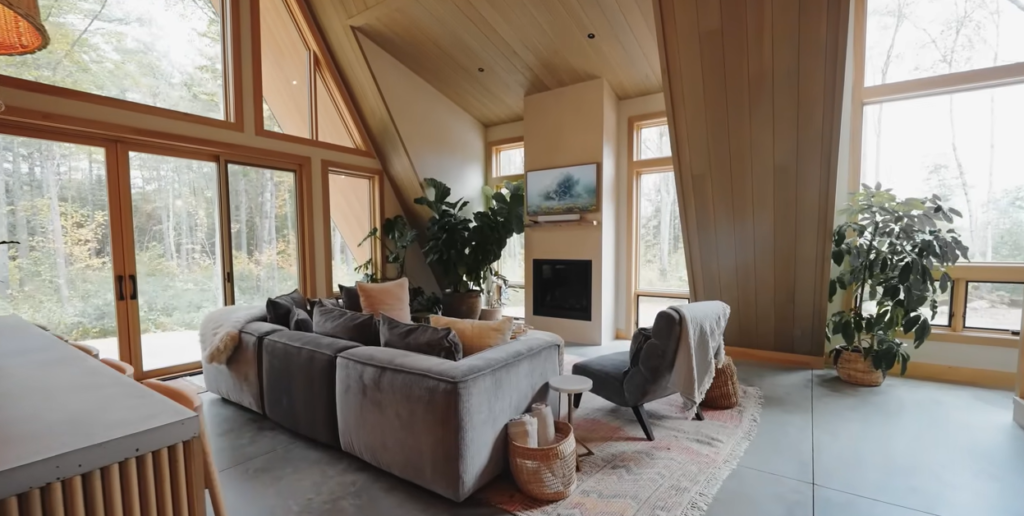
The reasons for the movement’s slow growth aren’t technical. The largest obstacles are code restrictions, a building industry that is hesitant to undergo significant change, and cultural—financial conservatism. But momentum is subtly changing. The Bullitt Center in Seattle, which is frequently regarded as one of the greenest business structures ever constructed, has contributed to the proof of viability. Additionally, architects are working with novel materials and adaptable systems that blur the boundaries between ecology and shelter all over the world, from Melbourne to Massachusetts.
Photovoltaic panels, which turn walls and roofs into silent electricity generators, are now surprisingly inexpensive and aesthetically pleasing. The output of variable-capacity heat pumps is precisely adjusted. Pervious asphalt is allowing rainwater to seep through sidewalks instead of run off, which drastically lowers pollution and erosion.
What was previously a sacrifice now seems to be a progression of design.
I once stood in a brightly illuminated classroom that was fully powered by solar tubes. Despite the overcast afternoon, the room seemed to have been painted with daylight. No switches to flip, no buzzing fluorescents. Just natural light that is purposefully copious and skillfully directed.
Buildings don’t have to be passive energy consumers, it turns out. They might take part. Perhaps the most notable philosophical transformation of all is that transition from passive to active, from extractive to regenerative.
Additionally, living structures are meant to link us to nature rather than separate us from it. Biophilic design is demonstrated by features like school seats constructed from recycled seat belts and battery casings, natural buffalo grass that doesn’t require mowing, and floor-to-ceiling glass doors that glide open on warm days. These aren’t ploys. These decisions preserve a feeling of location while lowering consumption.
The notion that waste need not be waste has a certain beauty. Sink greywater can be used to moisten the garden. You may fertilize trees using toilets. A place can be subtly warmed by heat pumps without being overpowered. Wetland grasses and bald cypress help filter water, making runoff safer for the ecosystem. This is just one of the unusually lyrical uses for the rain garden next to the entryway.
Adoption, however, has remained low. Worldwide, the number of completely approved Living Buildings is less than 40. However, that figure is rising, and local incentives and policy change are being fueled by noticeably increased public awareness.
Buildings can now manage power with amazing precision thanks to the integration of smart technologies, which can predict usage trends to cut down on waste, decrease lights as natural brightness increases, and reroute extra power to the grid. No longer are these systems costly experiments. They are more commonplace in high-performance design.
The possibilities are especially creative. Scientists are investigating heat-producing algae walls. Some are using concrete that has been loaded with bacteria to repair cracks on its own. It’s even being discussed that buildings may change their shape significantly depending on the weather, pushing the limits of bioengineering and architecture.
Buildings like this not only lower emissions in the context of climate urgency, but they also convey a distinct picture of what is feasible. They demonstrate that building doesn’t always have to entail ruin. That advancement need not entail extraction. And without compromising comfort or style, sustainability can be incredibly evident in its goal.
Most of us won’t be residing in a living building in the upcoming year. However, a lot of us could live in houses and workplaces that heavily reference their design. Rainwater barrels, improved insulation, passive solar heating, and using locally produced materials are all tiny acts of resilience. They are all signs of autonomy.
In the last ten years, energy-literate architecture has replaced gadget-filled novelty in our understanding of a “smart building.” Perhaps now we’re starting to realize that the most intelligent structures may also be the liveliest.
Disclaimer
Nothing published on Creative Learning Guild — including news articles, legal news, lawsuit summaries, settlement guides, legal analysis, financial commentary, expert opinion, educational content, or any other material — constitutes legal advice, financial advice, investment advice, or professional counsel of any kind. All content on this website is provided strictly for informational, educational, and news reporting purposes only. Consult your legal or financial advisor before taking any step.
