

When a neighborhood is filled with silence, it feels odd, very odd and weird. Suddenly, you notice that the dull hum of background life has vanished. No dishwashers, no furnaces, not even the soft roar of a refrigerator. This week, almost 160,000 individuals in Colorado felt that sudden silence, broken only by the wind that caused it.
Over large areas of the state, Xcel Energy turned off the switch twice in three days. Their cause? A situation remarkably similar to the Marshall Fire of 2021 was in danger of igniting when catastrophic winds threatened to bring down power lines. Preemptive power outages were considered essential to prevent that destruction from happening again. However, for people who were abruptly thrust into the dark or who received unclear, insufficient updates, the justification didn’t necessarily seem all that solid.
Anger had turned into rage by Friday afternoon. Governor Jared Polis chastised Xcel harshly, describing the company’s communication as “disappointing” and requesting more openness. He contended that Colorado residents should be informed about the reason for the power outage or when it will be restored. Even more bluntly, Attorney General Phil Weiser described the shutoffs as “not how it should be done,” particularly in light of the approaching holidays and falling temperatures.
| Item | Detail |
|---|---|
| Utility | Xcel Energy Colorado |
| Power Outages Peak | Over 160,000 customers affected |
| Current Outages (Dec 21) | ~57,000 customers still without power |
| Trigger | Windstorms with gusts over 100 mph |
| Method | Preemptive shutoffs to reduce wildfire risk |
| Key Concern | Communication failures, prolonged restoration |
| Governor’s Reaction | Jared Polis: Called for transparency and clearer communication |
| Public Feedback | PUC collecting community input for potential procedural changes |
| Historic Precedent | 2021 Marshall Fire partly blamed on Xcel downed line |
| External Reference | CBS News Colorado coverage |
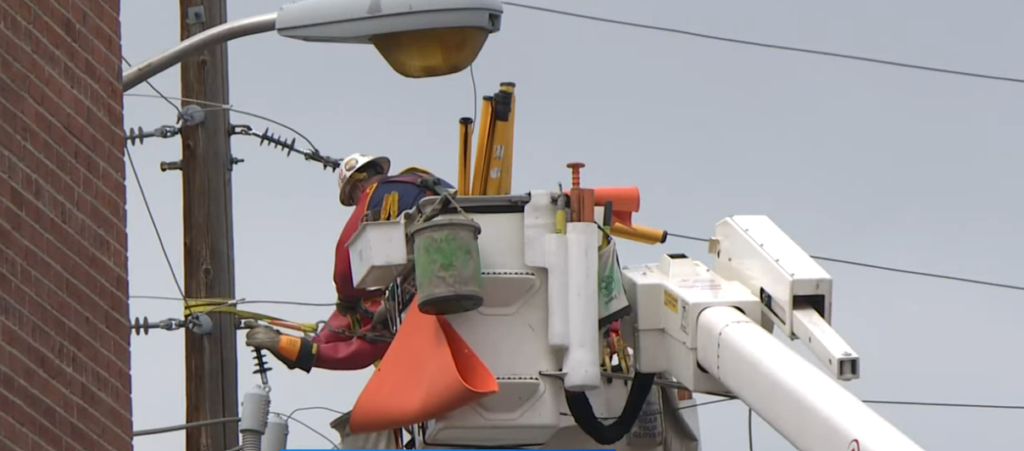
Because the outages weren’t caused by storm damage or infrastructure failure, they seemed particularly startling. They were deliberate choices made to avert a potential catastrophe, even if it meant suffering in the short term. A difficult trade-off. Risk versus assurance. Disruption vs. prevention. And trust is rapidly undermined when it occurs without justification.
In a darkened grocery store in Boulder, I recall seeing a man pulling a cart while holding a lantern that ran on batteries. The light bounced off the fruit boxes like an odd theatrical spotlight. Things like those give the abstract discussion about utilities a startlingly tangible feel. Nowadays, it’s more about human adaptation and the delicate threads that bind a community’s rhythms together than it is about megawatts or liability.
Xcel Energy Colorado President Robert Kenney supported the shutoffs. The circumstances were historically dire, he underlined. Usually reserved for the most flammable meteorological conditions, the National meteorological Service issued a rare “particularly dangerous situation” fire advisory. Indeed, as the winds surged past 100 mph, they tore through trees and valleys. However, it is as important how we deal with nature’s energy and how we communicate it to others.
Most clients had their power back by Sunday, according to the business. For many, however, the communication breakdown was the true problem. Locals reported getting unclear texts, slow updates, or even worse, nothing at all. Small companies lost whole days of sales. Schools hurried to change their schedules. And there was a lack of clear instructions for older people who depended on electric-powered medical gadgets.
Although it has no authority to approve or disapprove these shutoffs, the Public Utilities Commission has intervened to solicit public input. It’s a positive start that will help to ensure that better protocols are created. Not only is the speed at which the lights turn back on at risk, but so is the initial level of responsibility with which these choices are made.
Preemptive outages are not a recent development. Since using them for years, California has frequently faced similar criticism. However, Colorado has unique topography, weather, and public expectations. Although they are more conscious of the growing challenges posed by climate change, people in this area are especially protective of their independence.
The load of recent memory is another. Accountability in the wake of the Marshall Fire largely implicated a downed Xcel line. That fire spread quickly, burning more than a thousand homes in a few of hours. In that situation, proactive shutoffs seem like a very creative approach to eliminating an obvious and immediate threat. However, the impression of safety it is supposed to provide is much diminished when implementation fails.
Clarity must increase if a new age of increased intersection between energy policy and wildfire danger is to begin. Question marks are impossible for residents to plan around. Transparency needs to be as consistent as the winds that trigger forced outages.
There is merit to Xcel’s defense. Their workers frequently encountered logistical challenges that no software could predict while working in dangerous conditions. But the fact remains: human empathy must keep pace with technical urgency. Clear message cannot be replaced by algorithms, and operational efficiency cannot entirely make up for public uncertainty.
The events of this week revealed holes in communication as well as infrastructure. How can we explain that temporarily disconnecting them might be necessary to protect lives? What does it mean to be successful when the precise thing we wanted to avoid didn’t happen? Utilities in fire-prone states are still figuring out how to deal with this dilemma.
These issues will be major concerns in the months ahead when the Public Utilities Commission sorts through public comments. Additionally, Xcel Energy, which is still gaining public trust, will have
Disclaimer
Nothing published on Creative Learning Guild — including news articles, legal news, lawsuit summaries, settlement guides, legal analysis, financial commentary, expert opinion, educational content, or any other material — constitutes legal advice, financial advice, investment advice, or professional counsel of any kind. All content on this website is provided strictly for informational, educational, and news reporting purposes only. Consult your legal or financial advisor before taking any step.
