

Now, it’s more than just a breathtaking sight when a humpback whale’s cold breath erupts into the Arctic air—it’s data in action. Microscopic signals from within one of the biggest mammals in the ocean are carried by that brief, scarcely noticeable vaporous breath. And when scientists use drones to record those signals in midair for the first time, they find something concerning: a lethal virus that is known to wipe out marine mammal populations has spread farther north than previously reported.
Teams from King’s College London and Nord University verified the presence of cetacean morbillivirus, a highly contagious infection, by piloting drones fitted with sterile petri dishes through the expelled mist, or what scientists refer to as the “blow.” Whales above the Arctic Circle have been shown to be infected with this virus, which has been linked to widespread strandings across oceans. It is a silent invasion for the whales. There is an urgent need for scientists to increase surveillance.
Researchers tracked humpback, fin, and sperm whales along the North-East Atlantic during a series of synchronized expeditions. The drones hovered just over the blowholes at each surface breach, capturing droplets before they vanished into the sea wind. The procedure removed the need for stressful capture or contact and was extremely effective and non-invasive. It offered real-time snapshots of respiratory health in the form of pure, airborne samples.
Although the virus they found is not novel, its location is concerning. The cetacean morbillivirus transmits quickly between species and was initially identified in dolphins in the late 1980s. Because it affects the immunological, neurological, and respiratory systems, it is especially deadly. In the past, whole pods have washed up on the coast, sick and confused. The fact that it is now found in Arctic seas, which were previously thought to be a relative sanctuary, challenges preconceived notions about marine health.
Key Factual Context: Drones Detect Whale Virus
| Detail | Information |
|---|---|
| Discovery Method | Drones collecting whale exhalation (“blow”) droplets |
| Pathogen Detected | Cetacean morbillivirus |
| Location of Detection | Above the Arctic Circle and North Atlantic waters |
| Species Sampled | Humpback, sperm, and fin whales |
| Significance | Virus linked to respiratory, neurological, immune disorders |
| Research Partners | King’s College London, Nord University, The Royal (Dick) School of Veterinary Studies |
| Publication | BMC Veterinary Research |
| Additional Findings | Herpesviruses also detected in some whales |
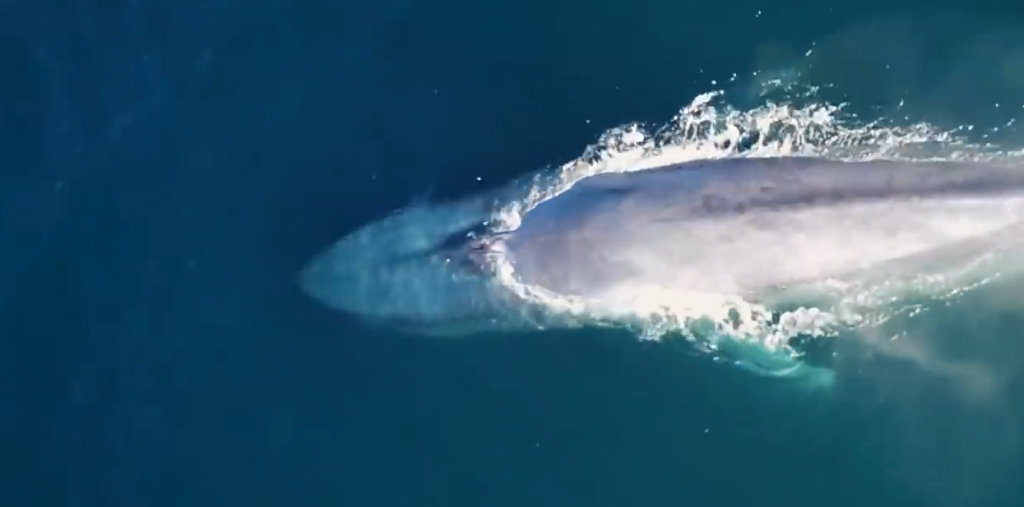
The initiative was a turning point for Professor Terry Dawson. He said, “Drone blow sampling is a game changer.” And with good reason. Researchers have greatly enhanced our ability to monitor marine diseases by obtaining samples from live whales without endangering them. This approach is especially helpful for maintaining the integrity of research while safeguarding fragile species, particularly in ecosystems that are already under stress from climate change.
Scientists collected samples from breath, skin, and in rare instances after stranding, internal organs, over multiple excursions. A sperm whale that was obviously ill and one stranded pilot whale both tested positive. Additionally, several whales in the vicinity of Norway, Iceland, and Cabo Verde were revealed to have herpesviruses. Although there were no indications of bird flu or Brucella during this round, the overall picture is still alarming.
Examining the pictures of a researcher standing motionless on a wind-tossed deck with a drone in hand and eyes fixed on the water’s surface caused me to pause. Waiting for a whale to come to the surface was a lonely moment that seemed strangely personal. The machine, the animal, the water, and the air. Instead of feeling like data collecting, it felt more ritualistic.
The simplicity of this new approach appears to be beautiful. Not a net. No sedative. Just patience, timing, and accuracy. Beneath the beauty, however, comes a very sobering finding: this virus may cause yet another round of death events, particularly during winter feeding seasons when many species congregate. In those situations, airborne particles can spread quickly and interspecies.
Whales are not the only ones affected. The boundaries of vulnerability start to blur as humans, seals, and seabirds congregate in common coastal areas. Although there isn’t any proof of human transmission at this time, scientists are still on the lookout. Pathogens are boundary-less, and their evolutionary changes frequently surpass our presumptions.
The path ahead was highlighted by Helena Costa, a key researcher at Nord University. According to her, long-term monitoring is crucial for mapping the interactions between viruses and stressors including plastic pollution, warmer waters, and noise disturbances, in addition to tracking morbillivirus. Surveillance is no longer optional, as many scientists discreetly acknowledge. This was reflected in her statement. It is essential to conservation.
The study’s scope was remarkably broad, encompassing several European institutions. The project required international collaboration between King’s College in London and labs in Iceland and Cabo Verde. This type of cooperation is especially creative since it not only demonstrates a common concern but also serves as a model for how future issues related to marine health might be addressed.
The “exhalome,” a type of respiratory fingerprint that each whale produces as it surfaces, is now a term used by marine researchers. They look for early indicators of disease, stress, and possibly even pollution exposure in that mixture of mist and mucus. They can now obtain that fingerprint without leaving any trace thanks to drones. That’s really adaptable science at work.
Furthermore, when compared to more conventional marine research instruments, the cost of this approach is remarkably low. Drones eliminate the need for intrusive procedures, personnel, and fuel. Additionally, during Arctic missions, where conditions might change suddenly, their dependability in choppy waters has shown to be particularly essential.
Experts predict that these drones will be used more often in the upcoming years, not only in Arctic waters but also along migratory routes. The objective is to establish a network of breath-monitoring flights that will serve as an aerial early-warning system for the health of the ocean. This is a tactic that seems both important and timely as the stakes rise and diseases become more hardy.
Disclaimer
Nothing published on Creative Learning Guild — including news articles, legal news, lawsuit summaries, settlement guides, legal analysis, financial commentary, expert opinion, educational content, or any other material — constitutes legal advice, financial advice, investment advice, or professional counsel of any kind. All content on this website is provided strictly for informational, educational, and news reporting purposes only. Consult your legal or financial advisor before taking any step.
