

Carla Shatz once put forth a theory that at first seemed more poetic than scientific: our brains use structured electrical signals to practice sight before we ever open our eyes. Her claim was met with suspicion at the time. However, like many bold concepts that defy tradition, it turned out to be accurate in the end. It assisted in redefining learning for scientists as a process based on preparation and rehearsal rather as something that starts with experience.
The traditional theory, according to which the brain retains information like a filing cabinet, has subtly collapsed. It is being replaced by something much more responsive, organic, and remarkably human. Scientists are learning that our brains shape information through failure, agency, and flexibility rather than just repetition thanks to behavioral study and fine-grained brain imaging.
We recited definitions several times in class, but weeks later, I found it difficult to recollect them. In the meantime, I remembered one particularly memorable classroom argument for years. At the time, I was unable to explain why, but neuroscience now provides a convincing explanation. Depending on whether information is actively challenged or passively received, different parts of the brain adjust. The deeper the memory appears to be rooted, the greater the emotional or motivating context.
Using two-photon microscopes, researchers at Stanford and UC San Diego have shown that there is no one universal rule governing synaptic learning. Instead, it adjusts according to the location and activity history of a synapse. When firing in tandem, certain neurons become stronger. Others only change when specific chemical or temporal criteria are met. It’s similar to learning that, despite being part of the same system, every neighborhood in a city has its own distinct form of government.
The brain connects events over longer periods of time—seconds, not milliseconds—according to one finding, Behavioral Timescale Synaptic Plasticity (BTSP). For teachers and students in particular, that nuance is crucial. Even if a student hears an idea and doesn’t put it into practice for several minutes, they can still develop a strong bond. This adaptability is consistent with the genuine human experience, where comprehension develops via gradual exposure rather than rapid repetition.
It also explains why it’s still very beneficial to provide delayed feedback, like going back and correcting a mistake days later. According to neuroscience, the brain can move around far more in terms of time than was previously thought. This type of realization can greatly lessen the fear of “missing the moment” to learn.
Education might become much more in line with how the brain learns by utilizing these discoveries. Low-stakes failure, student-driven inquiry, and active recall are not merely pedagogical fads; they have been neurobiologically proven to work. Compared to simply listening or rereading, students retain more when they retrieve material, make mistakes, and then rectify them. It’s a really powerful loop that turns brittle memory into stable memory.
Key Learning Shifts in Neuroscience (as of 2025)
| Key Finding | Description |
|---|---|
| Multiple synaptic rules | Neurons don’t follow one rule; they adapt based on location and experience |
| Active learning beats passive learning | Doing, failing, and correcting build stronger, longer-lasting memories |
| BTSP discovery | Synapses operate over longer timeframes than once thought, mirroring how humans actually learn |
| Emotional and motivational engagement matters | Emotionally engaged learners form more durable memories |
| Neuroplasticity lasts a lifetime | Learning capacity doesn’t end in youth; it just changes |
| Environment and well-being impact cognition | Sleep, nutrition, and stress all directly affect brain adaptability |
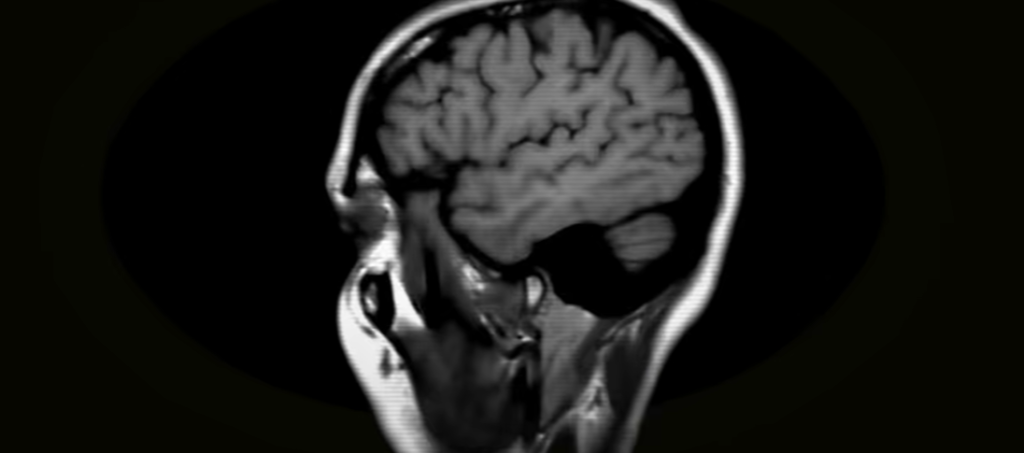
We’re also learning that memory and emotion are closely related. Neuroscientists now know that the hippocampus, the memory center of our brain, enhances retention when motivation and engagement are high. On the other hand, same brain processes can be muted by boredom or disengagement. This clarifies why even very talented children could perform poorly in classes that are emotionally detached or inflexible. Before making a commitment, our minds desire to care.
Since then, Carla Shatz has focused on the adult brain. Her current research reveals proteins that decrease neuroplasticity and function as learning “brakes” in maturity. However, aged mice’s brains regain their youthful capacity for adaptation when these proteins are blocked. Although still in the experimental stage, the research suggests a larger window for meaningful learning and suggests future treatments for cognitive aging and memory decline.
In order to understand how learning rewires the brain moment by moment, researchers are using imaging technology elsewhere. Even the greatest scans available today still look like gorgeous but blurry city lights seen from orbit. However, developments in computational neuroscience, AI-powered models, and hybrid systems are improving our capacity to track memory creation with remarkable clarity. It’s about comprehending the architectural plan of cognition, not about monitoring.
The way this research ties back into artificial intelligence is quite novel. All nodes in a network should learn in the same way, according to early AI systems. However, human brains demonstrate that more adaptability is produced by many learning principles that are dispersed among different compartments. More biologically accurate AI architectures are currently being tested by startups and tech labs, especially in the fields of robotics and adaptive software.
Practically speaking, this research demands that our educational frameworks be updated. Active doing should take the place of passive listening. Experimentation should be combined with memorization. Test-taking should be accompanied by organized reflection. These changes have biological support in addition to being sound pedagogically.
The idea that your brain isn’t fixed is empowering for students. Even after decades, it is still quite adaptable, especially when it is accompanied with movement, sleep, emotional security, and curiosity. It indicates that intellectual development is still possible for older folks, even if it takes a little more effort.
Disclaimer
Nothing published on Creative Learning Guild — including news articles, legal news, lawsuit summaries, settlement guides, legal analysis, financial commentary, expert opinion, educational content, or any other material — constitutes legal advice, financial advice, investment advice, or professional counsel of any kind. All content on this website is provided strictly for informational, educational, and news reporting purposes only. Consult your legal or financial advisor before taking any step.
