

The conventional classroom is subtly eroding. Parents are taking on responsibilities that were formerly held by administrators across the nation, creating schools that suit their kids rather than making them fit the system. The emergence of parent-led schools is more of an awakening—a recognition that there is no longer a single, uniform path for education to take—than a protest.
The term “standard curriculum” connoted consistency and justice for many years. It guaranteed equitable access to high-quality education for all children, regardless of their circumstances. However, that potential has faded. Parents are tired of witnessing their kids memorize rather than comprehend, test rather than create. Once thought to be effective, the standardized approach is becoming less and less relevant in a society characterized by adaptability and creativity.
Bruno V. Manno, an expert in education policy, refers to these parents as “activated citizens.” They are creating reform instead of waiting for it. They are creating an educational system that seems natural, flexible, and profoundly human by setting up collaborative pods, hybrid academies, and microschools. This change, which reinterprets learning as something done with children rather than to them, is especially inventive.
| Topic | The Rise of Parent-Led Schools and the Death of Standard Curricula |
|---|---|
| Focus | Examining how parents across the U.S. are reshaping education through homeschooling, microschools, and custom curricula |
| Key Figure | Bruno V. Manno – Education Policy Expert, Forbes Contributor |
| Profession | Writer, Researcher, and Senior Advisor on K–12 Policy and Workforce Development |
| Primary Reference | Forbes – “Parents Reshape K-12 Public Education As Students Go Back to School” |
| Supporting Sources | Strike School, Newsweek, Reason Magazine, The 74, Tufts Daily |
| Key Themes | Parent empowerment, flexible education, curriculum reform, hybrid learning, community-driven schooling |
| Reference Link | https://www.forbes.com/sites/brunomanno/2025/08/14/parents-reshape-k-12-public-education |
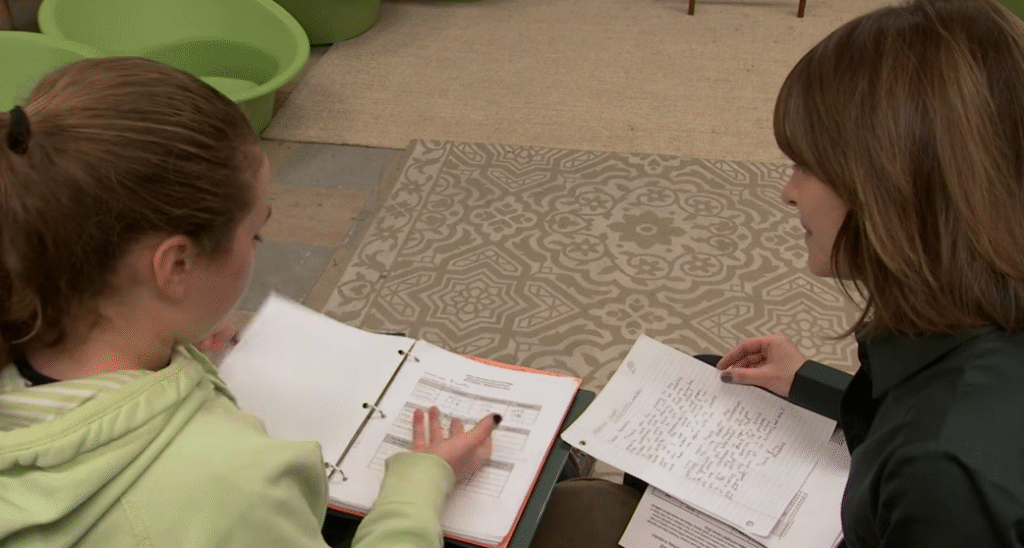
Once considered a marginal practice, homeschooling is now astonishingly common. Strike School provided data showing a sharp increase in parent-led learning program attendance, particularly since 2020. The main drivers mentioned by parents are safety, values, and discontent with bureaucracy. Faith in established schools was steadily eroding, and the pandemic further sped up this process.
Families say it’s a freeing feeling. Learning becomes individualized rather than a daily struggle over homework, attendance, and standardized testing. A young astronomy enthusiast might write poetry about the moon in the afternoon after spending the morning deciphering planetary orbits. The end product is an entertaining and adaptable program that feels surprisingly successful at fostering confidence and curiosity.
One especially helpful ally in this transition has been technology. Once an optional addition, the internet is now a vital component of many home-based programs. Parents develop curriculum that compete with institutional resources by using online discussion boards, digital libraries, and AI tutoring platforms. As a result, a generation of kids learns to think critically rather than mechanically—a distinction that is becoming more and more important in a culture that relies heavily on data.
These parent-led models frequently function incredibly simply. Five families could use project-based modules to work together online or hire a single qualified teacher for collaborative teaching. A group of families in Austin transformed a backyard into a tiny outdoor learning lab where classes integrate design, storytelling, and environmental science. It is a revolution at the grassroots level that seems personal but has a significant influence.
Systems of public schools are taking notice. Alarm has been raised by declining enrollment in several states. According to the National Center for Education Statistics, public K–12 enrollment in the United States may decline by around four million pupils over the course of the next ten years. However, this reduction represents a conceptual movement rather than merely a change in demographics. Families now view education as a dynamic relationship rather than a static function.
A fascinating paradox is highlighted in Manno’s study for Forbes. Parents must deal with both freedom and complication as options increase. It can be difficult to decide between charter partnerships, online courses, and microschools. Manno says, “Parents want agency, not just access.” In order to help families negotiate the complexity of contemporary education, new “education concierge” services are emerging.
Once thought of as a safety net, the conventional curriculum today feels constrictive. It makes the assumption that all students learn in the same manner, at the same rate, and with the same objectives. That presumption is disproved by parent-led education. It turns learning from a group activity into a personal experience by tailoring teachings to each student’s skills.
Trends in other industries are reflected in this evolution. Parent-led schools allow families to curate education in the same way that streaming services allow users to curate their entertainment. Students spend more time learning skills and less time fulfilling bureaucratic requirements, making the concept extremely effective at increasing engagement while reducing waste. Although it is based on choice, this ideology is applied with amazing discipline.
Public systems are also changing. Education savings accounts have been increased in states like Florida and Arizona, enabling families to reroute public cash toward specialized programs. This change in policy is especially creative since it allows parents with low and intermediate incomes to take part in models that were previously only available to families with more financial resources. It’s an attempt to increase accessibility to autonomy, which is a significantly better step toward equity.
However, new obligations come with this independence. Measuring development becomes subjective in the absence of consistent oversight or standardized testing. Supporters contend that true learning cannot be limited to statistics, while critics warn of inconsistent quality. They place a strong emphasis on results, such as resilient, creative, and self-assured students. They contend that these qualities will be the real currency of the future.
Disclaimer
Nothing published on Creative Learning Guild — including news articles, legal news, lawsuit summaries, settlement guides, legal analysis, financial commentary, expert opinion, educational content, or any other material — constitutes legal advice, financial advice, investment advice, or professional counsel of any kind. All content on this website is provided strictly for informational, educational, and news reporting purposes only. Consult your legal or financial advisor before taking any step.
