

At 4:00 p.m. Eastern Time today, Nvidia will release its earnings, which could have a significant impact on the mood of the whole stock market. Investors will have time to process the company’s report before the markets reopen, as it will arrive right before they shut down their trading screens. CEO Jensen Huang will speak at the earnings call at 5:00 p.m. It is now regarded as a high-stakes stage performance where strategy, technology, and emotion come together.
There is a real sense of anticipation. With $54.9 billion in revenue, analysts anticipate that Nvidia will report an impressive $1.25 earnings per share, representing a staggering 56% year-over-year growth. However, those figures demonstrate how essential Nvidia has become to contemporary innovation and go beyond simple business data. Investors are keeping an eye on Huang’s tone, his wording, his confidence, and his outlook in addition to the financials. Every word will be examined for clues regarding the company’s upcoming plans regarding cloud computing, data center expansion, and artificial intelligence.
Nvidia makes sure its story develops without the instantaneous panic of intraday trading by releasing its news after markets close. This approach is very effective at influencing investor sentiment and narrative. When expectations are high, the timing gives the business the ability to manage how its performance is perceived, which is especially advantageous.
Table: Nvidia Earnings Day Overview
| Attribute | Details |
|---|---|
| Company Name | NVIDIA Corporation |
| Ticker Symbol | NVDA (Nasdaq) |
| CEO | Jensen Huang |
| Industry | Semiconductors, Artificial Intelligence, Data Centers |
| Earnings Date | Wednesday, November 19, 2025 |
| Earnings Release Time | After Market Close — 4:00 p.m. ET |
| Earnings Call Time | 5:00 p.m. ET (2:00 p.m. PT) |
| Expected EPS (Earnings Per Share) | $1.25 |
| Expected Revenue | $54.9 billion |
| Reference Website | Nvidia Investor Relations |
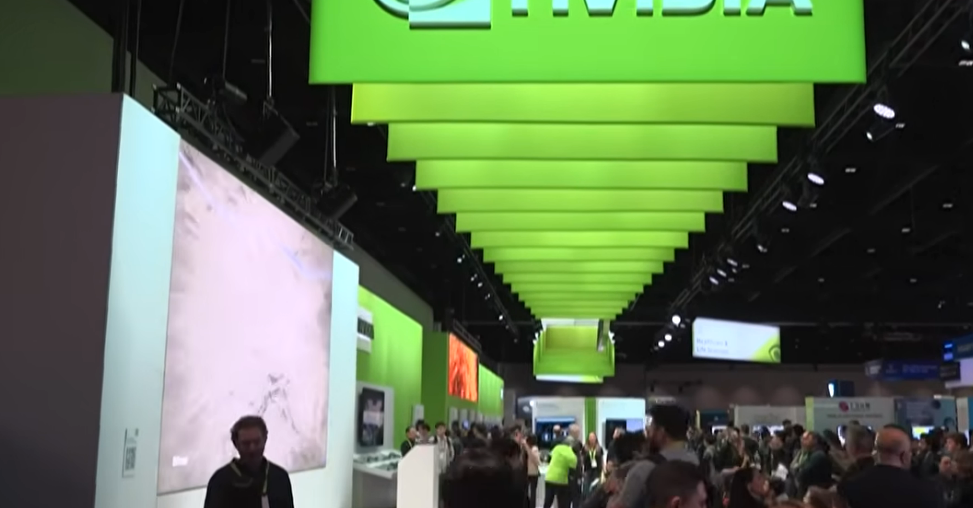
According to Reuters, Nvidia’s market capitalization may fluctuate by $320 billion as a result of today’s report. That is a reflection of the company’s growing influence, not an exaggeration. Since Nvidia owns about 8% of the S&P 500 index, its actions can have an impact on pension funds, ETFs, and portfolios. Investors may decide to start reducing their positions or reaffirm their belief in the AI boom based on the report’s outcome tonight.
Under Huang’s direction, Nvidia has grown from a specialized manufacturer of graphics processors to become a vital component of artificial intelligence infrastructure. He is frequently compared to tech visionaries like Elon Musk or Steve Jobs for his strategic vision and charisma, but his communication style is still remarkably measured. Every quarterly report is like a preview of the upcoming computing chapter.
Nvidia reported $46.7 billion in total revenue for the August quarter, surpassing even optimistic forecasts and representing a 56% increase over the previous year. However, the business’s reliance on its data center division is still being questioned. The segment’s growth and potential to counteract export restrictions on high-end chips headed for China will be closely monitored by analysts. Huang has demonstrated how agility can support growth even in the face of geopolitical pressure with his particularly creative balancing act between expansion and compliance.
Recent market moves by powerful investors have raised the stakes even more. SoftBank sold its stake in Nvidia for $5.8 billion, while Peter Thiel sold his holdings for about $100 million. Michael Burry, who is well-known for foreseeing the 2008 housing crisis, added to the intrigue by purchasing $9.2 billion worth of put options against Palantir and Nvidia. Although traders became more cautious as a result of these actions, Nvidia’s long-term story is still incredibly captivating due to its steady profitability and seemingly unavoidable vision.
This tension is reflected in the stock performance prior to earnings. On November 18, Nvidia’s stock closed at $180, down a little for the day but up roughly 30% since January. Its status as the foundation of the AI economy is unassailable despite brief oscillations. Nvidia’s chip design and software integration keep it significantly ahead of the curve, even though rivals like AMD and Intel have been catching up.
When Huang starts the call at 5:00 p.m., each sentence will be analyzed for indications of caution or confidence. Given changes in global supply and demand, will he temper expectations or will he reiterate the company’s trajectory toward AI dominance? His statements frequently have greater market clout than any forecast or analyst note. This explains why so many traders wait for his signature fusion of ambition and humility while logged in and ready with headphones.
The demand for AI is predicted to remain strong in this quarter’s results, especially in data center sales, which are fueled by hyperscalers like Microsoft, Google, and Amazon. From ChatGPT to Anthropic’s Claude, almost all of the major generative AI models are powered by Nvidia chips. The company’s strong alliance with Microsoft and Anthropic, which was only revealed yesterday, highlights how its role is growing beyond chip supply. It is currently influencing the design of digital intelligence.
With a $10 billion investment from Nvidia and a $5 billion investment from Microsoft, that partnership has the potential to revolutionize the scope of AI cooperation. With Anthropic’s $30 billion investment in Azure compute driven by Nvidia hardware, the chipmaker is positioned to both design and facilitate future innovations. How these partnerships support long-term revenue growth will be of great interest to investors.
Nvidia’s appeal extends beyond its financial results. Its narrative exemplifies the transition from ecosystem dominance to hardware dependency. This company has successfully transformed its chips into building blocks of the digital economy and its products into platforms. That perspective will probably be used to analyze the numbers released tonight, not only as earnings but also as proof of how technological influence can translate into financial power.
The cultural impact of Nvidia is equally remarkable. Like at a major athletic event, social media investors on Reddit and X speculate on how many billions could be added or removed in a matter of seconds as they discuss the company’s earnings. The evening will be devoted to CNBC and Bloomberg anchors converting data points into stories about momentum or moderation. There will be disagreements over every graph and percentage, but Huang’s steady voice tends to either energize or calm the storm.
Even international policymakers are keeping a close eye on traders. The performance of Nvidia affects national tech competitiveness, cloud resource allocation, and spending on AI infrastructure. It’s an economic signal as well as a business milestone. Nvidia’s performance is a predictor of the future direction of the digital economy as governments contemplate AI regulation and semiconductor independence.
Disclaimer
Nothing published on Creative Learning Guild — including news articles, legal news, lawsuit summaries, settlement guides, legal analysis, financial commentary, expert opinion, educational content, or any other material — constitutes legal advice, financial advice, investment advice, or professional counsel of any kind. All content on this website is provided strictly for informational, educational, and news reporting purposes only. Consult your legal or financial advisor before taking any step.
