

A group of five-year-olds are constructing something with foam blocks in a research classroom in a university lab in Boston, yet they continue to do so despite it collapsing. The researchers observing them are not concerned with the stability of the construction. They are observing the children’s brain activity as it decreases, including how quickly the kids adjust, how they bargain with one another about what to do next, and how their focus remains focused despite failure in a manner that often doesn’t happen with worksheet activities. The data generated by the electrodes delicately affixed to some of the kids’ scalps is starting to alter how seriously education researchers consider the term “play.”
Researchers may now observe what truly occurs in the prefrontal cortex during creative, unplanned work because to advancements in brain imaging technology that are both affordable and high-quality. The results of these studies differ with the assumptions made by decades of standardized testing.
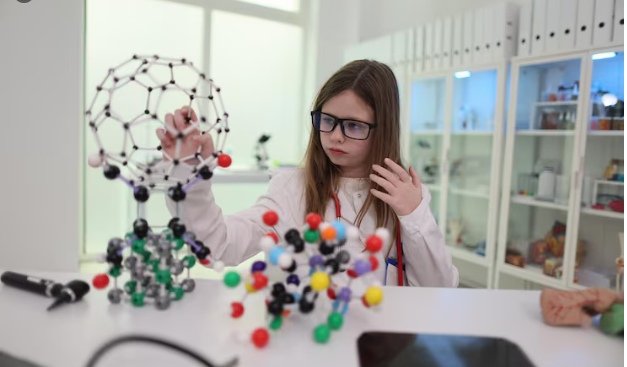
During imaginative play, the prefrontal cortex, which controls the executive functions that most people would identify as fundamental academic and life skills—planning, impulse control, working memory, and the capacity to multitask—is very active. More dynamic than the rote memory tasks that have long dominated classroom design, according to the majority of documented cases. While playing, the brain is not at rest. It is performing a particular, challenging work, and it is improving through repetition in a way that applies to other activities.
It is difficult to ignore the additional depth that the neurochemical picture brings. Cortisol, the stress hormone that, at high levels, functions as a real cognitive barrier, restricting attention and preventing the kind of open-ended thinking necessary for creative problem-solving, is demonstrably reduced by playful learning.
Play also causes the release of dopamine, which serves as a natural motivational signal, priming the brain to seek out more of whatever recently caused the reward and, importantly, increasing the likelihood that the knowledge learned during that state will be retained. Anyone who believes that high-stakes testing should be the main method of accountability finds the implications for how anxiety-inducing classroom conditions impact learning unsettling.
The most unexpected discovery to come out of recent studies may concern pairs of brains rather than individual brains. Data from dyadic EEG, a method that simultaneously monitors two people’s cerebral activity, suggests that teachers’ and students’ brains synchronize in quantifiable ways during guided play. When peers play together, they follow the same pattern. Information transfer becomes more effective and empathy increases noticeably when that synchronization takes place.
The practical implication is that the social environment of learning is important at a biological level, not simply a cultural one, and that the brain states most conducive to learning may be physically undermined in schools intended for quiet individual work.
Researchers in this field have started incorporating their findings into discussions about school architecture, which is an indication that the work has progressed beyond scholarly curiosity to something that could potentially alter physical structures. Instead than relying solely on pedagogical preference, brain data is increasingly being used to support the case for enhanced, adaptable sensory settings over fixed-desk rows.
It is another matter completely whether that argument is heard by curriculum committees, school boards, and the people who decide how much money is spent for standardized testing. Perhaps not surprisingly, the body of research is growing more quickly than the institutional reaction. It’s difficult to ignore the tendency for a finding that contradicts the measures used to evaluate schools to move slowly through the structures those metrics control.
Disclaimer
Nothing published on Creative Learning Guild — including news articles, legal news, lawsuit summaries, settlement guides, legal analysis, financial commentary, expert opinion, educational content, or any other material — constitutes legal advice, financial advice, investment advice, or professional counsel of any kind. All content on this website is provided strictly for informational, educational, and news reporting purposes only. Consult your legal or financial advisor before taking any step.
