

Standing on the grounds of Marine Corps Base Camp Lejeune and understanding what went through the pipes underneath it for thirty-four years carries a certain kind of weight. Spread over nearly 250 square miles of coastal plain, the base is located in Jacksonville, North Carolina. There, service members raised families, children played in yards and drank from kitchen taps, and pregnant women made coffee in the morning without any reason to suspect that the water coming out of the faucet was slowly making its way into their bloodstream and the blood of their unborn children. They were not warned. No one spoke for decades.
It is now a matter of federal record what was in that water. Together, these volatile organic compounds—trichloroethylene, tetrachloroethylene, vinyl chloride, and benzene—from leaking subterranean storage tanks, an off-base dry cleaner that existed before the Marine base itself, on-site fuel farms, and waste disposal sites contaminated two of the base’s main water treatment facilities for more than thirty years. During that time, more than a million people either worked or lived at Camp Lejeune. Bladder cancer, kidney cancer, liver cancer, leukemia, non-Hodgkin’s lymphoma, Parkinson’s disease, birth defects, miscarriage, and a long list of other conditions are all associated with the chemicals they ingested.
That was intended to change with the Camp Lejeune Justice Act, which President Biden signed into law in August 2022 as part of the larger PACT Act. For many years, victims of Camp Lejeune were essentially denied access to the courts due to North Carolina’s statute of repose, which sets a legal limit on the amount of time following an injury. By overturning that obstacle, the CLJA allowed victims to file civil claims with the Navy’s Judge Advocate General and, in the event that their claims were not settled within six months, to file lawsuits in the Eastern District of North Carolina. Bipartisan support and a sincere belief—at least according to its sponsors—that these veterans and their families deserved a long-overdue reckoning led to the law’s passage.
Contrary to what that legislative moment suggested, the reality of what has transpired is more nuanced and depressing.
Camp Lejeune Lawsuit 2026: Over 400,000 Claims, a Fighting DOJ, and Veterans Who Can’t Wait Much Longer
| Category | Details |
|---|---|
| Location | Marine Corps Base Camp Lejeune, Jacksonville, Onslow County, North Carolina |
| Base Size | Nearly 250 square miles |
| Contamination Period | August 1, 1953 — December 31, 1987 |
| Estimated Exposed | Over 1 million people |
| Toxic Chemicals Found | Trichloroethylene (TCE), Tetrachloroethylene (PCE), Vinyl Chloride, Benzene, and up to 70 others |
| Contamination Sources | Underground storage tanks, off-base dry cleaner, Hadnot Point fuel farm, waste disposal sites |
| Linked Illnesses | Bladder, kidney, liver, lung, breast, esophageal cancers; leukemia; non-Hodgkin’s lymphoma; Parkinson’s disease; birth defects; miscarriage; and more |
| Governing Law | Camp Lejeune Justice Act of 2022 (part of the PACT Act, signed by President Biden) |
| Administrative Claims Filed | 409,910+ (de-duplicated, filed with Department of the Navy) |
| Federal Lawsuits Filed | 3,700+ in U.S. District Court, Eastern District of North Carolina |
| Filing Deadline | August 10, 2024 |
| Elective Option Payouts | $150,000–$450,000 for Tier 1 and Tier 2 conditions |
| Settlement Range | $10,000–$1,000,000+ depending on illness severity and exposure duration |
| Government Allocation | $22 billion estimated federal liability |
| DOJ Payments to Date | Approximately $421–$708 million paid through elective option program |
| Eligible Claimants (EO) | Only ~12% of total claims fall within Elective Option framework |
| Court | U.S. District Court, Eastern District of North Carolina |
| VA Presumptive Conditions | 8 presumptive conditions for disability compensation; 15 for healthcare |
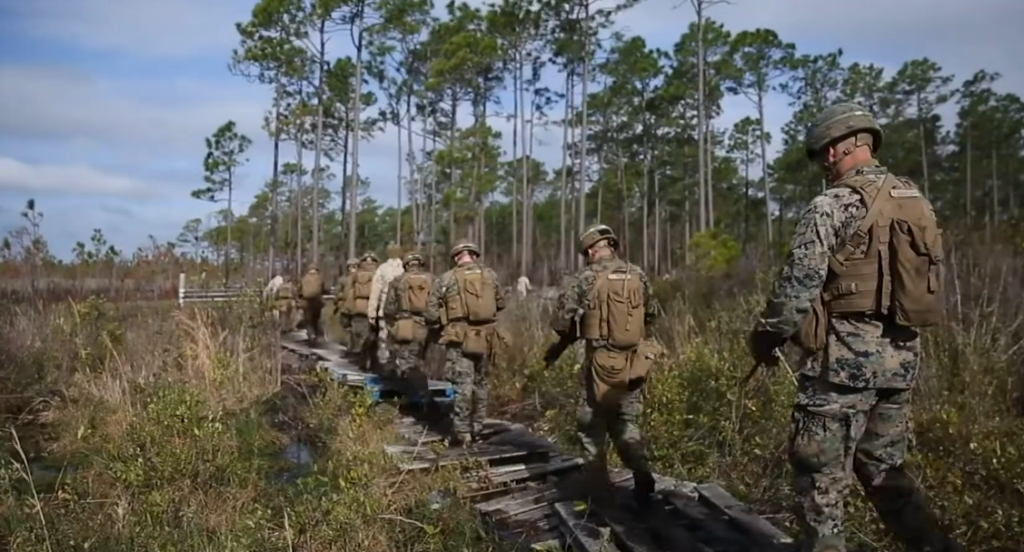
Over 409,000 administrative claims had been submitted to the Navy as of early 2026. There are currently more than 3,700 cases pending in federal court. However, only roughly 12% of those hundreds of thousands of claims are covered by the government’s Elective Option framework, a settlement program with payouts ranging from $150,000 to $450,000 that provides a quicker resolution for the most well-documented Tier 1 and Tier 2 cases. Payments made through the Elective Option totaling about $421 million have been hailed by the Department of Justice as significant advancements. It is described differently by lawyers who represent plaintiffs. When you consider that the Congressional Budget Office estimated total federal liability at $21 billion, a figure that lawyers who closely monitor the litigation believe will ultimately be higher, and when you compare what the elective option pays to what these cases would reasonably be worth at trial, the math falls apart.
Particularly frustrating has been the Department of Justice’s litigation practices. A federal judge struck the expert reports of a DOJ witness in March 2026 after discovering that she had altered her testimony in nearly 300 significant ways, going well beyond what the court’s rules permit as minor adjustments. Her testimony was intended to make the case that there isn’t enough proof connecting the Camp Lejeune water to conditions like kidney cancer and Parkinson’s. The Agency for Toxic Substances and Disease Registry is one of the government’s own agencies whose findings are directly at odds with this position. Federal litigation rarely involves defense experts. When this occurs, it usually indicates that the expert went far beyond what the evidence truly supports.
In the meantime, the DOJ has persisted in submitting motions that plaintiffs’ lawyers characterize as an attempt to impose a higher standard of causation than the Camp Lejeune Justice Act mandates, thereby requesting that courts make these cases more difficult to prove than Congress intended when the law was passed. Prior to any bellwether trial, a recent filing requested a decision on expert causation evidence. If successful, the practical outcome would be to clear the docket before juries ever hear a case, which is uncomfortably similar to the outcome of years of statute of repose litigation in North Carolina prior to the passage of the CLJA.
It is uncomfortable to read about the human cost of this pace. In the Track 1 bellwether cases, which are the first set to go to trial, many of the plaintiffs are elderly. According to recent court documents, one plaintiff with Parkinson’s disease underwent brain surgery as part of his treatment, had a massive heart attack during the litigation, and now needs a wheelchair and a speech device to communicate. He is awaiting his court date. More time is what the government is requesting.
The exact start date of the first bellwether trials is still unknown. Expert depositions for the general causation phases have been completed, the science has been largely briefed, and both sides are now embroiled in disagreements over specific causation, damages calculations, and government offset arguments. These include a battle over whether VA disability benefits already paid to plaintiffs should be deducted from trial verdicts and whether projected future benefits should lower awards before a single check is written.
It was inevitable that the Camp Lejeune lawsuit would be extensive and drawn out. When the law was passed, that was recognized. The extent to which the Department of Justice would defend these claims in the same manner as any institutional defendant might defend a mass tort—looking for every avenue to limit exposure, contest evidence, and postpone resolution—was less expected, or perhaps overly optimistically dismissed. Congress acknowledged that these victims had been denied access to the legal system for an excessive amount of time and passed the CLJA. Reconciling that legislative intent with a legal strategy that some lawyers have likened to defending asbestos liability—deny, dispute, and delay—is truly challenging.
The veterans who cooked with that water, bathed their kids in it, and drank it for thirty-four years without warning are now in their seventies and eighties. Many have already left. The $22 billion the government has set aside to settle these claims is an acknowledgement that something went seriously wrong with the water supply of a military base in North Carolina beginning more than 70 years ago, despite the fact that this acknowledgement was delayed and contested in practice. The question that will determine how history evaluates this specific chapter is whether the legal process proceeds fast enough for those who experienced the fallout from that failure to truly see a resolution.
Disclaimer
Nothing published on Creative Learning Guild — including news articles, legal news, lawsuit summaries, settlement guides, legal analysis, financial commentary, expert opinion, educational content, or any other material — constitutes legal advice, financial advice, investment advice, or professional counsel of any kind. All content on this website is provided strictly for informational, educational, and news reporting purposes only. Consult your legal or financial advisor before taking any step.
