

Entering the Boxer Wachler Vision Institute in Beverly Hills is like entering a high-end, light-filled medical facility that appears to be more intended for Instagram than for patient consultations. It’s the kind of place where the branding is clear, the walls are spotless, and the doctor’s name is written so clearly that it’s obvious who built it. For the most part, Dr. Brian Boxer Wachler’s public persona, which combines elements of cutting-edge surgery and social media personality, has been incredibly successful. He debunks health myths on TikTok, where he has over 3.4 million followers. His approachable and informal persona has earned him the nickname “Cap” doctor. However, beneath the polished content and the widely shared before-and-after videos, there is a more nuanced professional narrative that has at least a few courtroom appearances.
On the surface, the lawsuits associated with Dr. Boxer Wachler’s practice are not out of the ordinary for a doctor performing a lot of specialty work in a litigious city. There are malpractice lawsuits. According to court records, a patient named Mariah Huarte filed a lawsuit against the Boxer Wachler Vision Institute. In June 2014, Jessica Anderson v. Brian S. Boxer Wachler MD et al. was filed, and it proceeded through the legal system with the quiet momentum that medical malpractice cases frequently have. A $4 million settlement in a medical malpractice case involving what legal sources described as catastrophic, life-altering injuries is perhaps more noteworthy. There is no reason why that figure would show up in Dr. Boxer Wachler’s TikTok feed. However, it does exist, sitting in legal databases next to the patient testimonials on his practice website, and when taken as a whole, they create a more nuanced picture than either the fans or the critics usually recognize.
| Category | Details |
|---|---|
| Full Name | Dr. Brian S. Boxer Wachler, MD |
| Age | 57 (as of 2025) |
| Specialty | Ophthalmology (Corneal & Refractive Surgery) |
| Practice | Boxer Wachler Vision Institute |
| Location | Beverly Hills, California |
| Known For | Keratoconus treatment, “epi-on” CXL, keratopigmentation (eye color change) |
| Social Media | ~3.4 million TikTok followers (“Cap” Doctor / health myth debunker) |
| Notable Procedure | Keratopigmentation — $6,000 per eye ($12,000 total) |
| CXL Method | “Epi-on” corneal cross-linking (not FDA-approved; “epi-off” is FDA-approved) |
| Known Legal Cases | Mariah Huarte v. Boxer Wachler Vision Institute; Jessica Anderson v. Brian S. Boxer Wachler MD et al. (filed June 2014); reported $4 million malpractice settlement |
| Professional Affiliations | WHO FIDES Network (health misinformation) |
| Education/Training | UCLA (Communications background noted) |
| Clinic Address | Beverly Hills, Los Angeles, California |
| Peer Criticism | Use of non-FDA “epi-on” CXL; marketing style questioned by colleagues |
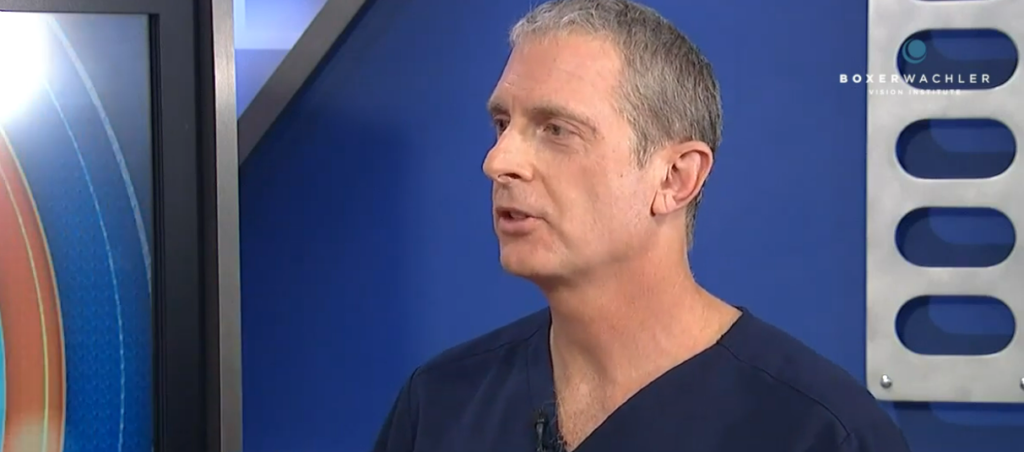
Keratopigmentation, which the doctor refers to as “cosmetic surgery for the eyes,” has garnered the most public attention in recent months. In order to permanently alter the eye’s visible color, an advanced laser is used to create a circular tunnel in the cornea. Custom-colored ink is then injected into the channel. green emerald. Blue Riviera. Gold, honey. The cost is $6,000 per eye, the results are instantaneous, and the colors are striking. In Dr. Boxer Wachler’s videos, patients react with astonished joy; some cry on camera, their faces are inches from a mirror, and they see olive green or steel grey where brown or hazel once was.
Millions of people watch the videos. However, the comments are quite different: “how is this even legal,” “this is scarier than any horror film,” and “imagine risking blindness to look like a demon.” Although Dr. Boxer Wachler insists the procedure is extremely safe for healthy eyes without a history of LASIK, the American Academy of Ophthalmology has identified significant risks, including vision loss and complications.
Then there is the “epi-on” controversy, which has been simmering for years in the medical community that treats keratoconus and touches on issues that go beyond marketing tactics. A progressive eye condition called keratoconus causes the cornea to thin and swell outward, severely distorting vision over time. A procedure called corneal cross-linking, or CXL, is intended to stop that progression by fortifying the corneal tissue. The FDA-approved procedure, known as “epi-off,” entails removing the cornea’s epithelium prior to treatment. One of the most well-known proponents of “epi-on” CXL, which preserves the epithelium and promises a quicker recovery and less discomfort, is Dr. Boxer Wachler. The issue is that epi-on has not yet received FDA approval. Some of his colleagues have criticized his strategy, not because epi-on has been shown to be ineffective—the clinical picture is genuinely unclear—but rather because loudly promoting an unapproved technique while caring for hundreds of vulnerable patients raises valid concerns about the boundaries between risk-taking and innovation.
The tension permeating the public discourse surrounding this physician is difficult to ignore. Patients in the keratoconus community debate him fiercely on Reddit, with some applauding his outcomes and others calling his website “the biggest ‘doctors hate this one tip’ website of literally all time.” That description is quite telling. It does not necessarily indicate that the medication is harmful. However, it does imply a brand-first approach to medicine that genuinely unnerves some peers and patients. One coworker reportedly made his own opposition to epi-on CXL a signature position—a subtle but pointed professional distancing—without specifically naming Boxer Wachler.
What the Boxer Wachler story reveals about the age of the doctor-influencer is what makes it truly fascinating, both as a medical controversy and as a cultural one. As a doctor, gaining a sizable social media following is not always a bad thing. His involvement with the WHO’s FIDES network on precisely that subject indicates that his public health intuitions are genuine. Correcting health misinformation on the internet is important work. However, the same platform that allows a physician to dispel popular health myths also allows them to advertise elective procedures to millions of followers, many of whom might not be able to tell the difference between medical advice and entertainment. It’s still unclear whether the medical community has determined where to draw that line, and that is a real tension.
When considered separately, the lawsuits associated with Dr. Boxer Wachler’s name are not out of the ordinary for a busy surgical practice in Beverly Hills. When combined with the criticism from peers, the controversy surrounding non-FDA procedures, and the extent of his social media following, they create a picture that is worth closely examining, particularly for anyone thinking about entrusting him with their vision.
Disclaimer
Nothing published on Creative Learning Guild — including news articles, legal news, lawsuit summaries, settlement guides, legal analysis, financial commentary, expert opinion, educational content, or any other material — constitutes legal advice, financial advice, investment advice, or professional counsel of any kind. All content on this website is provided strictly for informational, educational, and news reporting purposes only. Consult your legal or financial advisor before taking any step.
