

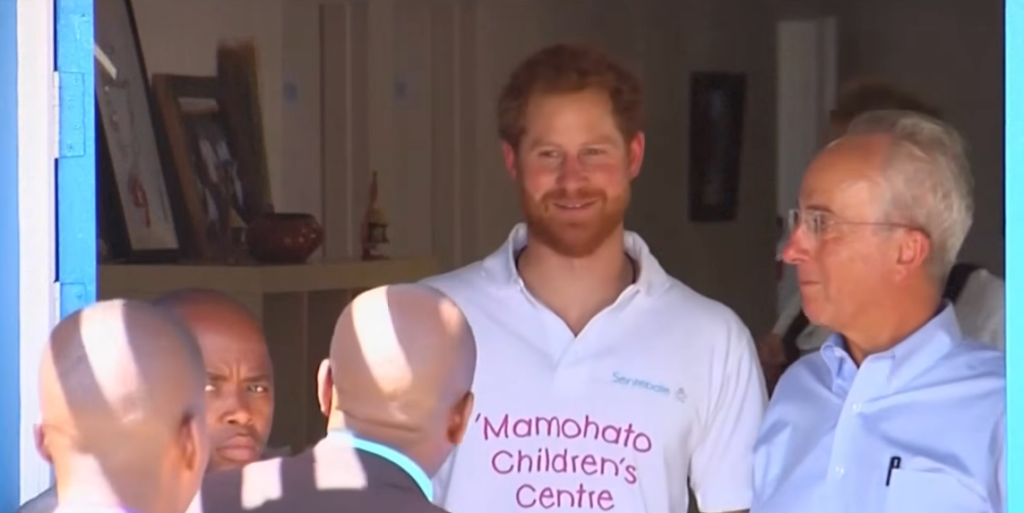
A young Prince Harry co-founded a charity named after his late mother in the tiny nation of Lesotho in 2006. Sentebale, which translates to “forget me not” in Sesotho, was created to support HIV/AIDS-affected children in southern Africa. It was one of the more respectable things associated with his name for almost twenty years: real fieldwork, consistent funding, and a mission that seemed to go beyond formalities. His eventual donation of £1.2 million to the charity from the proceeds of his memoir Spare, which he described as “devastating,” appeared to be a rare instance of direct sincerity from a public figure whose life has increasingly unfolded as a series of institutional collisions.
Sentebale is currently suing him for defamation.
Harry and Mark Dyer, a longtime friend and former trustee, were named as defendants in a lawsuit filed at London’s High Court on March 24, 2026, under the heading “defamation — libel and slander.” The executive director and current trustees of the charity have claimed that a “adverse media campaign” that they claim was planned and related to the fallout from Harry’s departure caused quantifiable harm to the organization’s reputation and interfered with its operations. According to their own statement, they are asking for the court’s “intervention, protection, and restitution.” They stressed that outside funding, not charitable reserves, is used to pay for legal expenses.
Harry and Dyer’s representatives did not respond in a nuanced manner. The pair’s representatives called the allegations “offensive and damaging,” and they suggested that instead of suing its own former patrons, the charity would be better off focusing its resources on the young people in Botswana and Lesotho that it was truly founded to assist. The tone of a dispute that has been conducted almost entirely in public is captured by that type of counter, which works well in a press statement and somewhat less well in a courtroom.
IMPORTANT INFORMATION TABLE — SENTEBALE DEFAMATION LAWSUIT
| Category | Details |
|---|---|
| Organization | Sentebale — a charity supporting young people in southern Africa, particularly those affected by HIV/AIDS |
| Founded | 2006 |
| Co-Founders | Prince Harry (Duke of Sussex) and Prince Seeiso of Lesotho |
| Founding Purpose | Created in honor of Diana, Princess of Wales; works in Botswana and Lesotho |
| Lawsuit Type | Defamation — libel and slander (filed as a “Part 7 Claim”) |
| Court | High Court of Justice, London |
| Claim Filed | March 24, 2026 |
| Defendants | Prince Harry (Duke of Sussex) and Mark Dyer (former Sentebale trustee) |
| Sentebale’s Allegation | An alleged “adverse media campaign” linked to the dispute caused reputational harm and disrupted charity operations |
| Harry/Dyer Response | “Categorically reject these offensive and damaging claims”; suggested charity should focus on its humanitarian mission |
| Legal Funding | Charity stated legal costs are met entirely by external funding — no charitable funds used |
| Harry’s Departure | March 2025 — left alongside Prince Seeiso and several trustees amid boardroom dispute with charity chair Sophie Chandauka |
| Charity Commission Investigation | Concluded August 2025; found blame on all sides; criticized the public nature of the dispute |
| Harry’s Prior Donation | Donated £1.2 million from his memoir Spare to Sentebale |
| Harry’s Statement on Leaving | Described his departure as “devastating” |
In the months leading up to Harry and Prince Seeiso’s resignation as patrons in March 2025, which included several trustees, the falling out that resulted in this lawsuit started to mount. Disagreements over the charity’s finances, fundraising tactics, and governance direction were the main source of contention in the boardroom with Sentebale’s chair, Sophie Chandauka. Public accusations were made by both parties. Internal institutional disputes seldom get messy and noisy when they remain internal. The Charity Commission took notice of the volume and opened an official investigation.
Everyone was uncomfortable with the watchdog’s August 2025 findings. The Commission came to the conclusion that there were several parties at fault and expressed particular disapproval of the way the conflict had been permitted to unfold so clearly. “Sentebale’s problems played out in the public eye, enabling a damaging dispute to harm the charity’s reputation, risk overshadowing its many achievements, and jeopardising the charity’s ability to deliver for the very beneficiaries it was created to serve,” David Holdsworth, chief executive of the Commission, That sentence effectively assigns collective responsibility without absolving any particular party, which is essentially what regulatory conclusions in such circumstances typically result in. diplomatically adjusted the blame.
It’s difficult to look at this story without finding something truly depressing. In a region of the world unrelated to tabloid cycles or palace protocol, Harry spent years creating something connected to his mother’s legacy. The charity’s efforts were genuine, including HIV testing, mental health assistance, and educational initiatives in Lesotho and Botswana, reaching areas that seldom receive sustained international attention. Although the current trustees have been careful to stress that operations continue, none of that appears to have stopped. However, months of boardroom accusations and press statements have probably damaged the institution’s ability to draw in donors and public support.
It’s possible to feel the weight of a dispute that began as a legitimate governance disagreement and escalated until it reached the High Court as you watch this particular chapter unfold. Seldom does anyone benefit cleanly from that escalation. Either the behavior that led to the lawsuit, the lawsuit itself, or the public attention that follows both cause harm to the charity. An organization whose founding mission was one of the clearest statements of what Prince Harry claimed he wanted his public life to mean is now making a claim against him. Prince Harry’s relationship with British legal institutions has been complicated for years.
It is genuinely unclear at this point whether the case proceeds to a full hearing or settles somewhere in the middle. Both parties have reputational stakes in defamation cases involving public figures and charitable organizations, which makes protracted litigation uncomfortable. Courts can proceed slowly in these cases. It’s evident that Sentebale’s story—20 years of labor in southern Africa, named after a flower that means “don’t forget me”—has, for the time being, reached a very different kind of proceeding.
Disclaimer
Nothing published on Creative Learning Guild — including news articles, legal news, lawsuit summaries, settlement guides, legal analysis, financial commentary, expert opinion, educational content, or any other material — constitutes legal advice, financial advice, investment advice, or professional counsel of any kind. All content on this website is provided strictly for informational, educational, and news reporting purposes only. Consult your legal or financial advisor before taking any step.
