

On the morning of March 26, 2026, Noelia Castillo Ramos was lying in bed in a Barcelona hospital room with a few close friends and family. Yolanda, her mother, had come with a packed bag, which is an almost intolerable human detail that sticks with you. Noelia wasn’t supposed to have the bag. It was for Yolanda, who two days prior had declared to a television audience that she would stay as long as her daughter would permit. Noelia was twenty-five. For over two years, she had been fighting for the right to die, both inside herself and in courtrooms and hospital wards.
It is difficult to sum up Noelia Castillo Ramos’s story without doing it some harm. A family split in two, childhood instability, sexual assault, a suicide attempt, irreversible physical harm, psychiatric diagnoses, and a court case that went through Spain’s Constitutional Court, Supreme Court, and ultimately the European Court of Human Rights in Strasbourg are all part of the story. Each of those organizations then informed Noelia’s father, who had been fighting with the group Abogados Cristianos to thwart his daughter’s request, that she was fully capable of making this choice and that his opposition could not override her autonomy. On March 24, 2026, the ECHR issued its final dismissal. Noelia was put to death two days later.
Noelia Castillo Ramos — Key Facts & Background
| Category | Details |
|---|---|
| Full Name | Noelia Castillo Ramos |
| Age | 25 years old |
| Nationality | Spanish |
| City | Barcelona, Catalonia, Spain |
| Medical Condition | Complete paraplegia (irreversible spinal cord injury); neuropathic pain; fecal incontinence; total dependency |
| Cause of Condition | Suicide attempt on October 4, 2022 — fell from fifth-floor window |
| Psychiatric History | OCD, Borderline Personality Disorder; under psychiatric care from age 13 |
| Euthanasia Petition Filed | April 10, 2024 — to Catalonia’s Guarantee and Evaluation Commission |
| Legal Framework | Spain’s Organic Law 3/2021 on Euthanasia Regulation |
| Key Court Rulings | Constitutional Court, Supreme Court, and European Court of Human Rights all dismissed father’s opposition |
| Euthanasia Date | March 26, 2026 |
| Family | Mother Yolanda Ramos (present); father opposed the decision |
| Last Public Appearance | Interview on Antena 3’s Y Ahora Sonsoles, March 24, 2026 |
| Reference | MARCA — Noelia Castillo Testimony |
| Reference | Evrim Agaci — Barcelona Euthanasia Report |
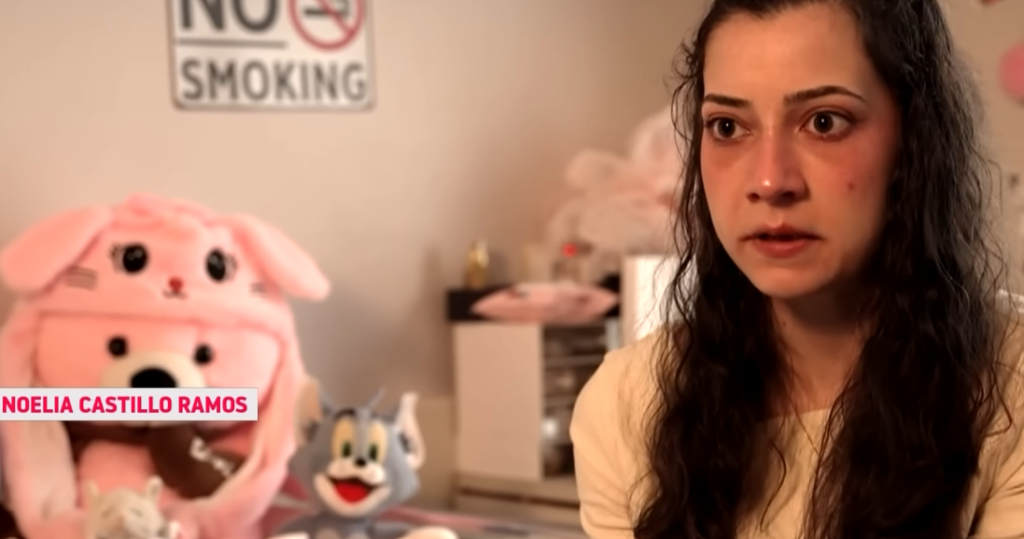
According to her own description, she was raised in a “broken family.” Her parents battled addiction and psychological issues, and she spent a large portion of her early years in juvenile detention facilities. Summers spent at her grandmother’s house, where she spent days selling handmade trinkets at fairs and evenings sitting on her grandmother’s terrace, were the exceptions, as she described in her final television interview. She chose four childhood photos to have by her side throughout the process because those memories were so important to her. That particular detail is subtly heartbreaking and reveals something about her personality. Not a person who had never experienced happiness. Someone who had, only to see it vanish from view.
Darker chapters came with adolescence. She began receiving mental health treatment at the age of 13 and was later diagnosed with borderline personality disorder and obsessive-compulsive disorder. She was sexually assaulted twice, once by a partner and once by a group in a juvenile facility in 2022. She never told the authorities about either incident. She leaped from a fifth-floor window on October 4, 2022. She survived the fall. Her medical team at Barcelona’s Guttman Institute noted that she was left with a complete spinal cord injury, paraplegia that was officially diagnosed in 2024, and a set of everyday realities, including neuropathic pain, sensory loss, and complete dependence on others, which had left her with one consistent, expressed wish: to request euthanasia. It was documented by her physicians. Her desire, they observed, “predominates.”
The 2021 passage of Spain’s Organic Law on the Regulation of Euthanasia is not an easy or quick procedure. It necessitates repeated, deliberate requests, an impartial assessment by a Guarantee and Evaluation Committee, and several safeguards against coercion or compromised judgment. In April 2024, Noelia submitted her official petition. Her father’s appeals were a major factor in the more than two years of legal delay that ensued. She endured the agony and paralysis during that time, waiting while attorneys argued over her capacity in rooms she wasn’t in. It’s difficult to ignore how particularly cruel that is—a system intended to uphold her dignity is actually making her suffering worse through legal action.
Noelia was composed in a way that seemed to cost her something in her final interview, which was aired on Antena 3 two days prior to her passing. She confronted her father’s absence head-on: he had stopped calling and visiting her after losing the legal battle, and he had told her quite bluntly that she was already dead in his eyes. She claimed that she was hurt by those words. But she made it apparent that she had no regrets about her choice. “The happiness of a father or mother should not be above the happiness of a daughter,” she stated. She shook her head when asked if she wanted to change her mind. “I just want to go in peace, stop suffering, and that’s it.”
Her mother’s situation was distinct and, in a sense, equally challenging. Yolanda Ramos opposes the practice of euthanasia. She made this statement in public, on camera, and added that she would still be there. She acknowledged that she was hoping Noelia would suddenly change her mind. One of the more authentically human moments this story created was witnessing a mother simultaneously hold both those things: her unconditional presence and her own moral objection.
Euthanasia was a topic of debate in Spain long before 2021, and Noelia’s case has given it new life. Medical ethicists, conservative legal groups, religious organizations, and disability advocates have all voiced their opinions, sometimes overshadowing one another and other times making arguments that actually make it difficult to draw simple conclusions. It’s possible that the discussion will eventually move past the dichotomy of “right to die” versus “sanctity of life” and address the more difficult issue at hand: what kind of support systems, what standard of care, mental health treatment, and trauma response would be necessary for a 25-year-old woman to consistently and clearly feel that death is preferable to living over a two-year period? Noelia herself never implied that the solution was straightforward. She simply stated that she was certain.
Disclaimer
Nothing published on Creative Learning Guild — including news articles, legal news, lawsuit summaries, settlement guides, legal analysis, financial commentary, expert opinion, educational content, or any other material — constitutes legal advice, financial advice, investment advice, or professional counsel of any kind. All content on this website is provided strictly for informational, educational, and news reporting purposes only. Consult your legal or financial advisor before taking any step.
