

While most of the world is asleep, the last four episodes of Bridgerton Season 4 quietly premiere on Netflix in the early hours of February 26. But by dawn, social media will probably be ablaze once more, analyzing every look and every mistake. It has taken on the form of a ritual. Even though the ton is lit by candles, its audience is watching from the comfort of their phones.
For Bridgerton, spectacle has always made sense. However, the emotional mess Benedict Bridgerton has created out of his own fairy tale is what really intrigues me about Season 4 Part 2, not the dresses or orchestral pop covers.
Benedict, portrayed by Luke Thompson with restless charm, had committed the unimaginable by the end of Part 1. He asked Sophie Baek to be his mistress after rescuing her from harm and developing a loving bond with her. Not his spouse. Not on par with him. His mistress. The proposal had modern sting but was wrapped in Regency logic.
| Series Overview – Bridgerton Season 4 Part 2 | |
|---|---|
| Series Title | Bridgerton |
| Season | 4 (Part 2) |
| Release Date | February 26, 2026 |
| Release Time | 3 a.m. ET / 12 a.m. PT |
| Streaming Platform | https://www.netflix.com |
| Production Company | https://www.shondaland.com |
| Showrunner | Jess Brownell |
| Central Couple | Benedict Bridgerton & Sophie Baek |
| Episodes in Part 2 | 4 (Total Season: 8) |
| Setting | Regency-era London & Countryside Cottage |
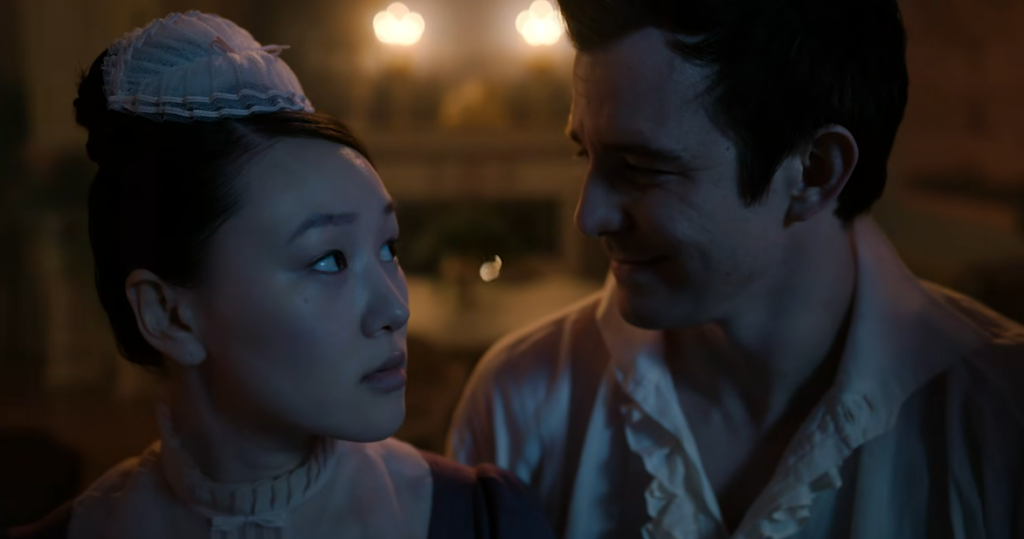
The actors themselves have compared Benedict and Sophie’s misunderstanding to a knot that is tightly pulled. It’s difficult to overlook the change in tone when watching those last scenes. Something heavier replaces the masquerade ball’s flirtation. After a dance, regret lingers in the air like perfume; it’s hard to ignore.
Yerin Ha’s character Sophie bears the story’s emotional burden. Beneath the “Lady in Silver’s” glitz, a woman struggles with pride and class limitations. This version feels less magical and more complex, despite the intentional parallels to Cinderella—the midnight flight, the single glove, the secret identity. Viewers might have anticipated escapism. Rather, they are facing consequences.
Days before their release, Thompson and Ha seemed at ease as they laughed in between camera flashes during a photocall in London at BFI Southbank. On the red carpet, Ha wore a gold metallic minidress and boots that clicked softly. Thompson chose a simple yet stylish double-breasted grey suit. The cast seemed to understand the stakes as they greeted the fans. Part 2 is more than just a romance’s conclusion. It is being repaired or disassembled.
Three “hot-under-the-collar” scenes are hinted at in the trailer, but the actual tension appears to be more emotional than physical. Letters were sent. Stealed glances around the Bridgerton home. Benedict’s confidence was ebbing as he followed Sophie through the hallways. Whether his pursuit is interpreted as privileged stubbornness or romantic persistence is still up for debate. That uncertainty could be the silent danger of the season.
Then there is the trip back to Mayfair.
Intimacy was provided by Part 1’s rural cottage scenes, which featured whispered confessions, rain hitting windows, and lake water catching sunlight. The stakes change back in Grosvenor Square as society looks on and Sophie starts working as a maid. It becomes impossible to overlook power dynamics. Flirting alone is one thing, but navigating love in a hierarchy that rarely extends forgiveness is quite another.
Hovering as pressure points are Queen Charlotte, Lady Danbury, and the astute Lady Whistledown. Despite personal strife, the social season goes on. Ballrooms glittering while hearts break is a classic Bridgerton contrast. However, there is a feeling that the show is attempting to push romantic fantasy as far as it can before breaking.
By dividing the season, Netflix has established a trend that heightens tension and prolongs dialogue. It appears that staggered releases keep momentum going, according to investors. They might be correct. Binge culture is impatient, though. Benedict’s error has been plaguing viewers for weeks. Anticipation has sparked controversy.
Benedict’s proposal, according to some admirers, reflects Regency realism. Some view it as a betrayal of his apparent emotional growth. Strangely enough, that conflict has preserved the show’s cultural relevance. It’s difficult to ignore the fact that so few romances on streaming services now elicit real controversy.
The question of growth is what makes Part 2 so compelling. Benedict has long been characterized as the creative, ideal-drifting Bridgerton. Clarity might be forced by losing Sophie. Or it could reveal immaturity. It feels more genuine to watch him struggle with that possibility than to watch another bow tied neatly.
The return of Viscount Anthony adds another level by bringing up the storylines from earlier seasons. Lessons are often learned the hard way by the Bridgerton brothers. At this point, Benedict’s turn seems inevitable. Another question is whether he merits redemption.
You get the impression that Bridgerton is quietly adjusting its fairytale formula. Previous seasons placed a strong emphasis on swoon-worthy inevitable outcomes. Part 2 of Season 4 is less clear. Here, love requires humility. It demands that harm be acknowledged.
Nevertheless, it is still lush. Stairs lit by candles. Fingers sliding through silk gloves. A contemporary hit is being reimagined by a string quartet. Even as the story veers toward discomfort, the aesthetic is still enticing.
Fans will probably watch all four of the remaining episodes in one sitting when the clock strikes three in the morning ET. Timelines will be overflowing with verdicts by breakfast. Was Sophie something Benedict deserved? Was Sophie too quick to forgive? Or not at all?
Disclaimer
Nothing published on Creative Learning Guild — including news articles, legal news, lawsuit summaries, settlement guides, legal analysis, financial commentary, expert opinion, educational content, or any other material — constitutes legal advice, financial advice, investment advice, or professional counsel of any kind. All content on this website is provided strictly for informational, educational, and news reporting purposes only. Consult your legal or financial advisor before taking any step.
