

In Singapore, the fatigue of concrete is more noticeable than its strength. After a heavy downpour, you can see the hairline cracks that resemble faint pencil marks and are darkened by moisture. These cracks trace the underside of an expressway viaduct that transports thousands of impatient vehicles every hour. Nothing striking, nothing to stop onlookers. However, engineers take note. Since the big bills start with tiny cracks, they always notice.
That is the subtle reasoning behind Nanyang Technological University researchers’ self-repairing concrete work. Although the concept—concrete that fixes itself—sounds almost cheeky, the city’s climate makes it seem more like a necessity than a novel idea. The slow seepage of water through small openings is an everyday villain in an area where humidity is prevalent and salty winds can blow inland. This encourages corrosion and makes routine maintenance a recurring national pastime.
| Item | Details |
|---|---|
| Place | Singapore (dense, humid, coastal—hard on concrete and steel) |
| Lead institution | Nanyang Technological University (NTU Singapore) |
| Research context | Urban infrastructure durability: bridges, tunnels, roads, marine-adjacent structures |
| Technology | Self-repairing (self-healing) concrete using bacteria-embedded capsules that activate with moisture |
| Claimed repair behavior | When water enters microcracks, dormant bacteria “wake,” forming limestone-like minerals that seal fissures (reported crack sealing up to ~0.8 mm in pilot descriptions) |
| Why it matters | Extends service life, reduces maintenance closures, lowers repair material demand and associated emissions |
| Official NTU reference (link 1) | NTU Research Hub: “Fortified from land to sea” |
| NTU magazine reference (link 2) | Pushing Frontiers (Issue #24, Oct 2024) |
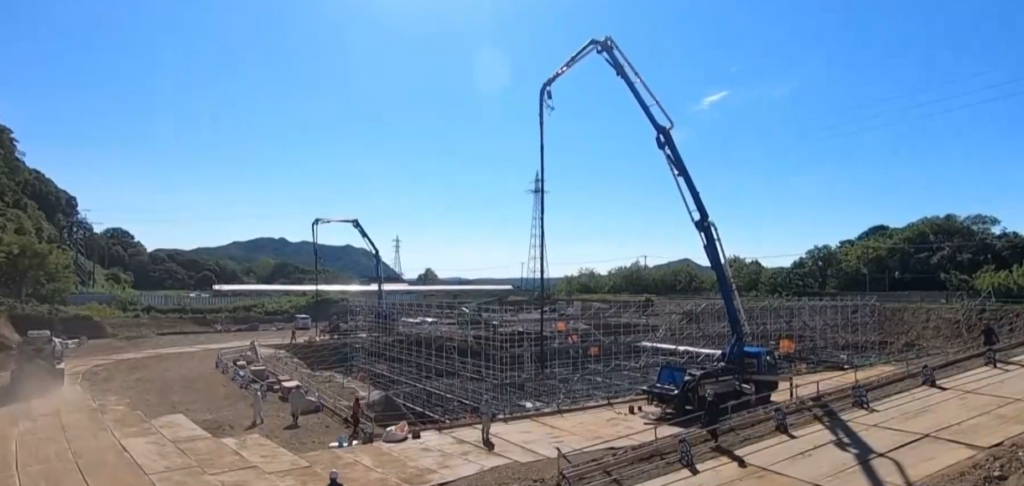
Unexpectedly, the fundamental mechanism under discussion is earthy. Dormant bacteria are carried by capsules inserted into the concrete. These bacteria become active when cracks open and water seeps in, creating mineral deposits that can seal off tiny fissures. These deposits are frequently referred to as calcite or limestone. It looks neat on paper: the crack serves as the workspace, and moisture acts as the trigger. It’s still unclear how consistently “tidy” holds up in the messier world of real infrastructure, but any city that has ever closed a lane at two in the morning and still managed to create traffic will find the idea appealing.
It’s difficult to imagine the scene in which such a material is used: a bridge deck expanding and contracting under tropical sun, a tunnel wall perspiring slightly in the subterranean heat, or a drain line carrying water that never quite stays where planners intended it to stay. Because the structure continues to move even after a contractor arrives, traditional repairs—patch, seal, grind, and recoat—are frequently repeated. A material that reacts internally seems to be an engineer’s attempt to make infrastructure act more like a living system—that is, to adapt rather than just endure.
Naturally, the term “living concrete” evokes the same level of suspicion that Singaporeans reserve for anything that seems overly clever. After years of being baked in the sun and compressed by traffic, will the bacteria still be viable? Will you experience healing in one area and persistent cracking in another, or will the capsules distribute evenly? The standards, testing procedures, and procurement regulations—those sluggish gatekeepers that determine whether a lab success becomes the norm in civil engineering—seem to be lagging behind the idea.
Nevertheless, it is hard to overlook the economics. Not only are concrete repairs costly, but they are also costly in society. Freight schedules, commuters, and political tolerance for disruption are all negotiated during each maintenance closure. A self-repairing mix alters a city’s rhythm if it even slightly lowers the frequency of interventions. Making repairs less frequent, less expected, and less like background noise will have a greater impact than doing away with them.
As though no one wants to oversell it, the climate angle is also one that is frequently discussed with careful wording. The production of cement contributes significantly to emissions, and repairs require more cement, transportation, on-site equipment, and demolition and replacement cycles. It’s the kind of arithmetic that governments covertly prefer—fewer interventions, fewer materials, and fewer repeated emissions linked to maintenance—but extending the service life of infrastructure is one of those unglamorous climate strategies that hardly ever trend online.
The larger ecosystem surrounding NTU’s involvement is what makes it so intriguing. Singapore views its infrastructure as a national asset class that should be optimized, tracked, and improved with the impatience of a technologist rather than as scenery. This is reflected in the university’s research culture, which combines materials science and civil engineering with an increasingly practical sustainability that is serious about longevity rather than sentimental about the environment.
However, many innovations stall at the transition from promising material to routine adoption. Costs and supply dependability are concerns for contractors. Long-term behavior and liability are concerns for regulators. When something fails, asset owners are concerned about whether a “healing” claim turns into a legal dispute. Self-repairing concrete may find its first practical application in less glamorous areas, such as pilot corridors, secondary structures, or controlled deployments where performance can be observed without endangering reputations.
Disclaimer
Nothing published on Creative Learning Guild — including news articles, legal news, lawsuit summaries, settlement guides, legal analysis, financial commentary, expert opinion, educational content, or any other material — constitutes legal advice, financial advice, investment advice, or professional counsel of any kind. All content on this website is provided strictly for informational, educational, and news reporting purposes only. Consult your legal or financial advisor before taking any step.
