

There is something subtly assured about the way AbbVie Inc. shares have been acting, and they are currently trading at about $230, not far from their 52-week high. It’s not ostentatious. Unlike a biotech startup that promises miracle molecules, it doesn’t swing wildly. Rather, it functions like a business that is fully aware of who it is and what it still needs to demonstrate.
Construction workers are getting ready for a $380 million expansion at AbbVie’s headquarters campus on a gloomy North Chicago morning. The business recently revealed plans to construct two new active manufacturing facilities for pharmaceutical ingredients, which will result in the hiring of about 300 workers. There is a tangible sense of industrial commitment as trucks idle outside the existing buildings and survey markers are scattered across the frozen ground. Investors may view this as more than just steel and bricks. It appears to be insurance.
| Category | Details |
|---|---|
| Company Name | AbbVie Inc. |
| Ticker Symbol | ABBV |
| Exchange | NYSE |
| Founded | April 10, 2012 |
| CEO | Robert A. Michael |
| Headquarters | North Chicago, Illinois, USA |
| Employees | ~57,000 (2025) |
| Market Capitalization | ~$405 Billion |
| Latest Quarterly Revenue | $16.62 Billion (+10% YoY) |
| Dividend Yield | ~3.0% |
| 52-Week Range | $164.39 – $244.81 |
Official Website: https://www.abbvie.com
Investor Relations: https://investors.abbvie.com
The history of AbbVie over the last ten years is inextricably linked to the once-best-selling medication in the world, Humira. Skeptics foresaw a painful decline when biosimilar competition started to eat into U.S. sales. There was tension in the air when watching the stock in those early post-Humira quarters. Analysts posed insightful queries. The market paused.
Revenue reached $16.62 billion in the most recent quarter, a 10% year-over-year increase. Some people were afraid of a collapse like that. Newer medications in the fields of neuroscience, immunology, oncology, and increasingly obesity are taking their place. Even though the transition hasn’t been smooth, investors appear to think the pipeline is performing as intended.
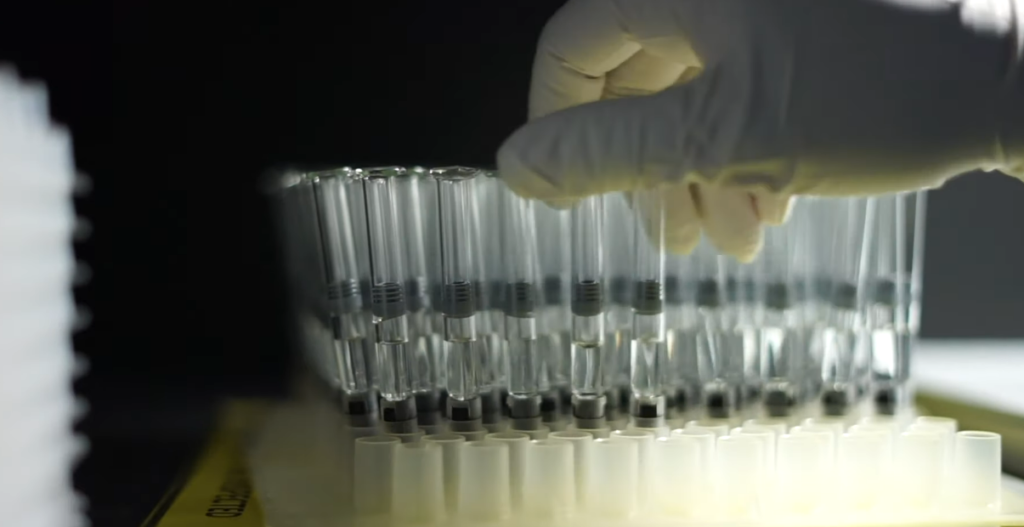
It seems like AbbVie is attempting to shift its positioning from “Humira successor” to “diversified growth pharma.” Over the next ten years, the company plans to invest $100 billion in research, development, and capital projects in the United States. Even though that number sounds almost theatrical, it feels realistic as you stroll around the university’s campus in Illinois. The process of making APIs, which are a drug’s chemical foundation, is messy, intricate, and costly. It necessitates machinery running constantly, scientists modifying formulas, and regulators keeping a close eye on things.
Another layer is added by the dividend, which has a yield of about 3%. AbbVie has established itself as a somewhat reliable companion for investors who prioritize income and retirees. Payouts of $1.73 per share every three months are not insignificant. That dependability is reassuring, particularly when the volatility of technology stocks dominates news reports. However, complacency can also result from comfort. Some people question whether the stock has outpaced its earnings reality given its P/E ratio of almost 97.
It’s still unclear if market optimism about stability or upcoming innovations is reflected in the valuation.
AbbVie finds itself in an intriguing middle ground when compared to competitors such as Pfizer Inc. and Merck & Co. It is not entirely dependent on a single blockbuster, nor is it riding a single pandemic windfall. Instead, at a time when trade policies and tariffs are changing global supply chains, it is focusing on domestic manufacturing while distributing risk across therapeutic areas.
The choice to increase U.S. production seems to be a combination of political and strategic considerations. Drug manufacturers are rushing to localize operations as a result of recent sharp increases in import tariffs on pharmaceuticals. By fortifying supply chains and demonstrating a commitment to domestic manufacturing, AbbVie’s Illinois investment seems less like optional growth and more like a defensive move. That could be interpreted as foresight by investors.
The business is also pursuing obesity treatments, a market that is presently dominated by well-known rivals. The competition is fierce, but so is the opportunity. As this is happening, it seems like AbbVie is joining the party a little later than expected but with a lot of resources. It remains to be seen if that timing turns out to be beneficial or expensive.
The quiet story of AbbVie’s stock chart speaks for itself. Shares steadily recovered after plunging to the mid-$160s within the last year, rising to $240 before leveling off around $230. In addition to indicating confidence, that recovery shows that the market is prepared to overlook temporary setbacks. Not all pharmaceutical behemoths are treated with such dignity.
It’s difficult to ignore how composed AbbVie’s investor calls frequently sound in contrast to their biotech counterparts who are presenting ground-breaking scientific findings. Measured, almost restrained, is the tone. That stability can be comforting, but it also hides danger. The development of drugs is unpredictable. There are actual patent cliffs. The level of regulatory scrutiny may suddenly increase.
Nevertheless, the company’s presence—57,000 workers, facilities in several states, and growing production lines—indicates longevity. Speculative hype is not what AbbVie is after. While some cut budgets, others are hiring engineers, bolstering capacity, and constructing infrastructure.
It appears that investors are placing bets that cash flow, scale, and disciplined reinvestment will outlast any temporary upheaval. The pipeline’s capacity to continue delivering significant treatments rather than merely minor updates will determine whether that wager is profitable.
