

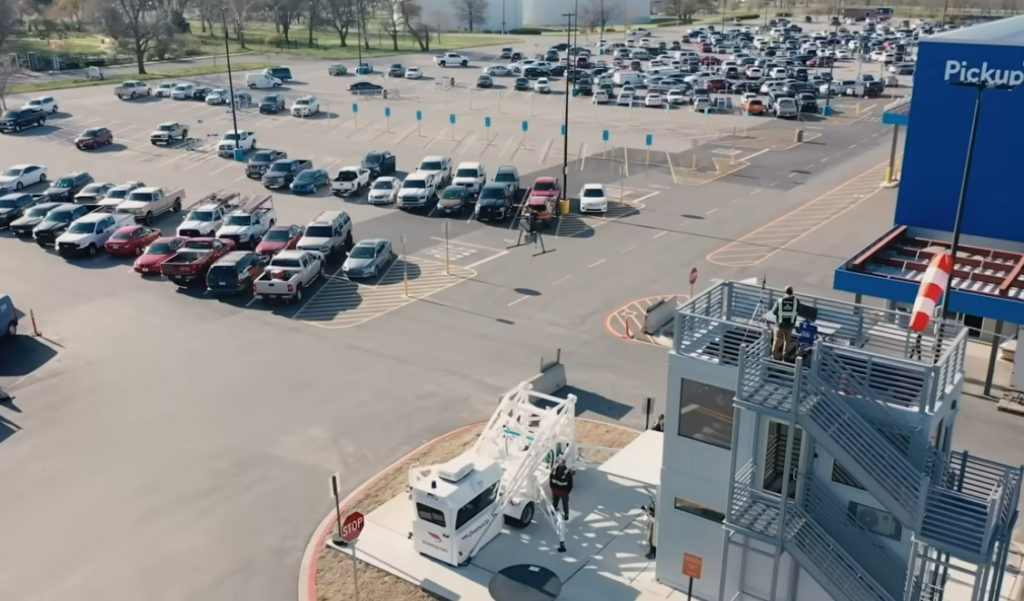
These days, Bentonville’s Walmart parking lot off Interstate 49 fills up sooner than anticipated. Pickup trucks and electric cars are parked next to each other, with drivers moving swiftly under the bright fluorescent lights. Some are going inside, while others are waiting for curbside delivery. It’s clear from observing the movement of people that Walmart is not only surviving the digital era, but also embracing it in ways that didn’t seem possible at first.
Walmart’s stock is currently trading close to its all-time high of $125. At that price, the company’s market value is close to $1 trillion, which would have seemed ridiculous when Sam Walton was starting bargain stores in rural Arkansas. Investors appear to think the business has found a new lease on life by subtly rebuilding itself behind the scenes rather than by eschewing its origins.
A portion of the optimism can be explained by the financial results. Walmart recently revealed quarterly sales of over $190 billion, with earnings exceeding forecasts, partly due to a more than 20 percent increase in e-commerce. Although those figures are impressive, the transformation feels more tangible than statistical when you’re inside a renovated Walmart store and watch staff members fill online orders from shelves while customers peruse the area.
| Category | Details |
|---|---|
| Company Name | Walmart Inc. |
| Stock Symbol | NASDAQ: WMT |
| Current Stock Price | $124.87 |
| Market Capitalization | ~$1 Trillion |
| Headquarters | Bentonville, Arkansas, USA |
| Founded | 1962 |
| Founders | Sam Walton, Bud Walton |
| CEO | John Furner |
| Employees | 2.1 Million |
| Annual Revenue | $700+ Billion |
| Dividend Yield | ~0.75% |
| Official Investor Relations | https://stock.walmart.com |
| Stock Information | https://finance.yahoo.com/quote/WMT |
The way Walmart has combined traditional and modern retail is unique. In addition to replenishing shelves, workers pushing blue carts through grocery aisles are putting together digital orders and scanning goods for delivery drivers who are waiting outside. Walmart may be able to outperform rivals who still rely solely on warehouses thanks to this hybrid system that uses physical stores as distribution centers.
It appears that investors have taken notice. Over the past year, Walmart’s stock has increased by more than 20 percent. The ascent has not been tumultuous or dramatic. It has instead been composed, almost methodical, and suggests confidence rather than conjecture. However, there are issues with the valuation. The stock is no longer inexpensive when the price-to-earnings ratio rises above 40. Investors are paying for uncertain future growth.
There’s more to discover when you stroll through the grocery section on a weekday morning. The shoppers appear different. Richer. more intentional. Walmart executives have subtly admitted that higher-income households are increasingly shopping there due to convenience and quick delivery, not just the store’s low prices. That change is important. It implies that Walmart is evolving into a default store rather than merely a discount retailer.
The role of technology in this evolution is peculiar. Sparky, Walmart’s in-house digital assistant, assists customers in creating shopping lists and completing transactions more quickly. Ten years ago, the notion of artificial intelligence directing grocery shopping would have seemed ludicrous. It feels strangely normal now. Walmart seems to be using technology to strengthen people’s existing habits rather than pursuing it for its own sake.
Uncertainty still persists. After decades as the largest retailer in the world, Amazon has overtaken Walmart in terms of yearly revenue. Even if Walmart continues to be incredibly profitable, that change has symbolic significance. Walmart’s ability to match Amazon’s digital dominance or whether it will adopt a completely different role is still up in the air.
Walmart’s physical stores continue to be both its greatest asset and its greatest liability. It costs a lot to maintain thousands of locations. However, Walmart is also able to deliver orders more quickly thanks to those locations than many of its competitors who only sell online. It’s difficult to ignore how effective it appears when you’re standing close to the pickup area and watching drivers load groceries into car trunks.
Additionally, Walmart stock has an emotional component. It doesn’t arouse the enthusiasm of tech startups. It doesn’t guarantee significant change. Rather, it provides something more subdued: constancy. Regardless of the state of the overall economy, investors appear to have faith that consumers will continue to purchase groceries, toothpaste, and laundry detergent.
Observing Walmart’s development, one gets the impression that its success stems from an understanding of human behavior rather than from forecasting the future. Convenience is what people desire. Low prices are what they desire. They are looking for dependability. Despite the fact that everything else is changing around it, Walmart has based its operations on these fundamental facts.
Disclaimer
Nothing published on Creative Learning Guild — including news articles, legal news, lawsuit summaries, settlement guides, legal analysis, financial commentary, expert opinion, educational content, or any other material — constitutes legal advice, financial advice, investment advice, or professional counsel of any kind. All content on this website is provided strictly for informational, educational, and news reporting purposes only. Consult your legal or financial advisor before taking any step.
