

Inside the conference room, the presentation screen gleamed faintly, showing charts that initially appeared to be somewhat hopeful. Once-unrelentingly climbing lines were starting to curve, indicating that group efforts were beginning to have an impact. However, the rate of development remained significantly slower than what scientists deemed required, resulting in a gap that felt both profoundly human and technically complex.
Governments, businesses, and communities have all increased their climate commitments over the last ten years, indicating a particularly creative change in priorities. Once-impossible changes in electricity generation have been brought about by the shockingly low cost of renewable energy. These adjustments have significantly decreased dependency on fossil fuels, demonstrating that advancements may be translated from theory to reality.
| Key Fact | Details |
|---|---|
| Report Source | United Nations Emissions Gap Report 2025 |
| Current Emissions Level | Approximately 57.7 gigatonnes in 2024 (record high) |
| Required Cuts | 43% by 2030 and 55% by 2035 to keep 1.5°C goal alive |
| Projected Warming | 2.3°C to 2.5°C this century under current pledges |
| Major Contributors | G20 nations account for roughly 77% of global emissions |
| Agreement Framework | Paris Agreement adopted in 2015 |
| Key Turning Point | Emissions curve beginning to bend downward—but slowly |
| Critical Deadline | This decade seen as decisive for climate trajectory |
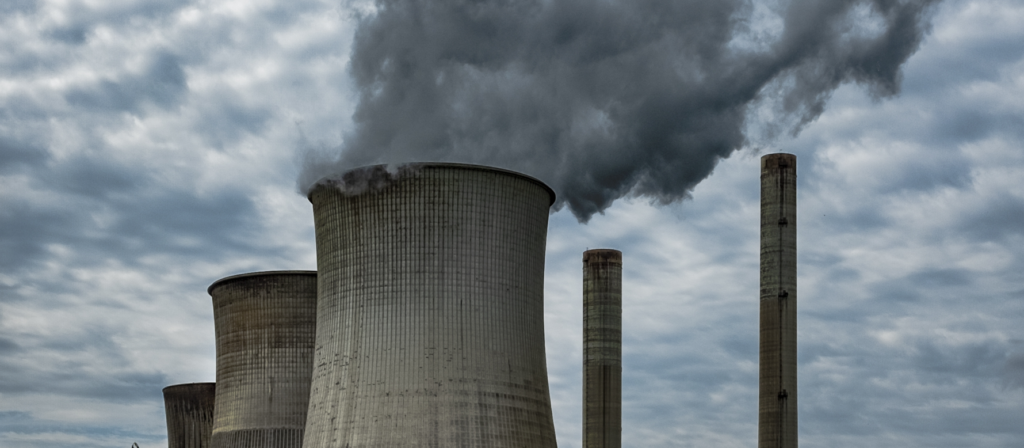
Emissions are still stubbornly high despite such improvements, a reflection of systems that have been in place for generations and cannot be removed quickly. Experts have issued a very strong warning that the present reductions are insufficient after closely studying the numbers. The current task is to accelerate transformation considerably more quickly rather than to demonstrate that it is doable.
For policymakers, it is like navigating a huge ship that has finally started to turn but still has a lot of velocity. Delays increase the distance to safer waters, but every change counts. Leaders can guarantee that momentum keeps moving in the right direction and convert incremental progress into long-term stability by taking bold action.
Tens of gigatonnes of emissions are produced worldwide each year, a magnitude that is both impossible to imagine and extremely significant. According to scientists, in order to preserve climate stability, those totals need to be drastically lowered over the course of the next ten years. Despite its ambitious nature, that goal is especially advantageous because it is supported by established technologies.
Today, solar panels are found on both rooftops and in deserts, efficiently transforming sunshine into electricity. Wind turbines provide incredibly dependable and more economical energy as they spin steadily across plains and coastlines. These systems serve as examples of how innovation can preserve natural systems while transforming economies.
Consistent investment in these technologies has allowed nations to make breakthroughs that would have appeared unthinkable just a generation ago. Growth in emissions has slowed, and totals have started to fall in some locations. Scientists refer to this change as proof that concerted efforts can yield significant outcomes, marking a turning point.
One climate analyst I heard calmly say that the future was still open, and the serene assurance in her voice made the task seem surprisingly doable.
The shift offers both benefits and challenges for underdeveloped countries, necessitating resources that aren’t always easily accessible. These nations may implement cleaner systems without compromising economic growth thanks to financial assistance and technological sharing. Cooperation can be improved to make progress more sustainable and balanced.
Because their emissions have a disproportionate impact on global results, major economies play a crucial role. They can drive change at a scale that affects everyone by implementing policies that are incredibly successful, like increasing energy efficiency and renewable infrastructure. When they continue to lead, their influence spreads well beyond their boundaries.
The use of renewable energy has significantly improved during the last ten years, reaching areas where fossil fuels were formerly the only source of energy. This expansion has been very effective at producing electricity while having less of an adverse effect on the environment. Additionally, it offers financial benefits by generating sectors and employment that sustain long-term success.
These efforts have been facilitated by climate agreements, which provide common objectives that inform national policy. Because of these frameworks’ remarkable adaptability, nations can modify their approaches while still gaining momentum as a group. Innovation and policy must be in harmony for growth to be both feasible and attainable.
But the defining characteristic is still the rate of change. Scientists stress that gradual, even steady, emission reductions might not be sufficient to avert more severe outcomes. Societies can prevent higher expenses and disruptions in the future by expediting implementation now.
As governments, corporations, and communities realize the advantages of cleaner energy systems, encouragingly, momentum keeps growing. Public awareness has gradually expanded, investments have increased, and technologies have significantly improved. These advancements show how willpower can turn worry into activity.
Energy systems that formerly relied solely on fossil fuels are changing into networks driven by renewable energy sources with the help of digital management and storage. This change is especially inventive since it makes it possible to produce and distribute electricity more effectively than in the past. Societies can build resilient and sustainable systems by adopting these developments.
From electric cars to energy-efficient buildings that automatically lower use, the shift is evident to people in their daily lives. Even though they are small, these adjustments add up to greater advancement. By implementing new technology gradually, societies provide the groundwork for long-term progress.
The decisions made by governments and businesses in the upcoming years will significantly influence how quickly emissions are reduced. Innovation, funding, and collaboration can be prioritized to significantly speed progress. This strategy provides a realistic yet optimistic route.
| Key Climate Indicator | Current Status | Required Path | Why It Matters |
|---|---|---|---|
| Global Emissions Trend | Beginning to decline slowly | Rapid and sustained decline this decade | Determines future temperature stability |
| Total Annual Emissions | Around 57.7 gigatonnes | Must fall nearly by half by 2035 | Prevents severe climate disruption |
| Temperature Projection | 2.3°C to 2.5°C expected | Limit warming closer to 1.5°C | Protects ecosystems and economies |
| Major Emitters | G20 produces about 77% | Faster and deeper national cuts needed | Largest impact potential |
| Renewable Energy Growth | Expanding rapidly | Accelerated deployment globally | Replaces fossil fuel dependence |
| Climate Agreement Timeline | Paris Agreement since 2015 | Critical decisions required by 2030 | Defines long-term climate direction |
| Technology Availability | Already proven and scalable | Wider and faster implementation | Enables transition success |
Disclaimer
Nothing published on Creative Learning Guild — including news articles, legal news, lawsuit summaries, settlement guides, legal analysis, financial commentary, expert opinion, educational content, or any other material — constitutes legal advice, financial advice, investment advice, or professional counsel of any kind. All content on this website is provided strictly for informational, educational, and news reporting purposes only. Consult your legal or financial advisor before taking any step.
