

The Hague courtroom had a formal yet subtly historic feel to it, with attorneys organizing papers and onlookers straining forward, feeling that something very significant was about to be made clear. Although the proceedings proceeded slowly, each declaration appeared to have ramifications that went well beyond those gleaming oak walls.
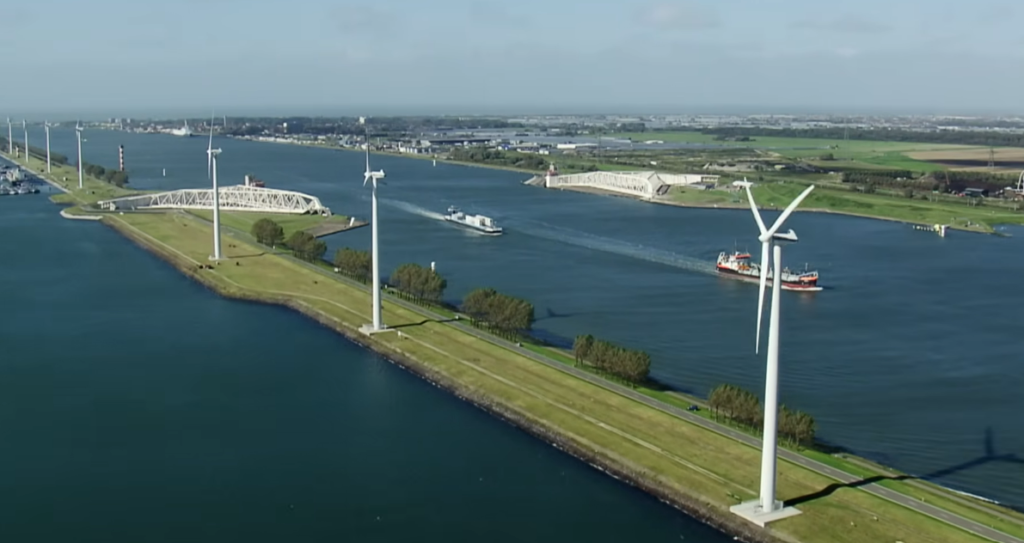
The Netherlands has established an identity based on engineering precision and long-term planning, positioning itself as exceptionally adept at controlling environmental risk for decades. Enormous flood barriers and meticulously maintained canals serve as tangible evidence of a country that has continuously resisted giving in to the threat of rising water, bolstering the belief that readiness can triumph over danger.
However, the difficulty presented by this example was quite comparable and could not be resolved by concrete barriers or steel gates alone. Residents of Bonaire, a Dutch municipality in the Caribbean, claimed that despite their particularly susceptible location and limited ability to adapt on their own, their government had not offered as robust climate protection.
| Key Fact | Details |
|---|---|
| Country | Netherlands |
| Legal Venue | The Hague District Court |
| Core Issue | Court ruled Dutch climate policy insufficient and discriminatory toward Bonaire |
| Court Order | Binding emissions reduction targets within 18 months and climate adaptation plan |
| Climate Goal | 55% emissions reduction by 2030; climate neutrality by 2050 |
| Plaintiffs | Residents of Bonaire supported by Greenpeace Netherlands |
| Legal Basis | European Convention on Human Rights |
| Broader Impact | Case could influence climate litigation across Europe and globally |
After reviewing the evidence, the court issued a very unambiguous ruling that reframed climate action as a legal obligation rather than a flexible political pledge. Within 18 months, the government must set legally binding emissions reduction objectives and create an adaptation strategy that protects Bonaire’s infrastructure and people, according to the judges’ orders.
The decision was more than just policy change for the residents who had filed the case; it was an acknowledgement that their concerns had been taken seriously after years of feeling ignored. According to one local, the ruling marked a return to equality and demonstrated how legal recognition can be a very powerful tool for restoring public confidence in institutions.
The court found that the Netherlands’ goals of becoming carbon neutral by the middle of the century and cutting emissions by 55% by 2030 lacked binding urgency. Even if long-term pledges were encouraging, they were deemed insufficient in the absence of short-term goals that could produce quantifiable results.
The justices highlighted how environmental preservation is closely related to individual safety and dignity through legal reasoning based on human rights legislation. Climate damage was acknowledged as an immediate and systematic problem that needed to be prevented, rather than as a far-off concept.
Responding cautiously, government officials pointed out that emissions had significantly decreased in several industries and that numerous restrictions were already in place. They emphasized the growth of offshore wind, efficiency enhancements, and renewable energy that were already revolutionizing the country’s energy system in very creative ways.
Simultaneously, the decision raised the bar for accountability, which might hasten current plans and force officials to take more deliberate and open action. Mandates from the law frequently act as very effective accelerators, converting intentions into quantifiable schedules that can direct both public and private sectors.
Although the Netherlands has previously dealt with comparable climate litigation, this case had particular emotional significance because it revealed differential protection under the same national framework. Once the gap was subjected to court examination, it became impossible to overlook due to Bonaire’s vulnerability, which was sculpted by rising waters and stronger hurricanes.
Years ago, while strolling along a canal in Utrecht, I was silently surprised by how much preparation had influenced daily life as I watched bikes pass serenely alongside water that was kept back by invisible infrastructure.
That thought came back to me when I heard about Bonaire, where preparations had not yet advanced to the same degree, demonstrating how unequal protection might arise even in a nation renowned for its preparedness. In order to ensure that safety is provided universally rather than selectively, the comparison emphasized the significance of expanding protective measures wherever citizens reside.
In Europe, climate litigation has grown in importance and set precedents that push governments to make more robust pledges more quickly. Since they guarantee that environmental preservation is consistent with human rights values, courts have become especially trustworthy stewards of long-term accountability.
The way societies view climate risk has changed, and this change is a reflection of a larger trend that views it as a problem that requires legally binding frameworks rather than purely voluntary aspirations. Clarity is provided by legal frameworks, which help citizens know precisely what safeguards they are entitled to and when they will be implemented.
By expediting planned but unexecuted investments, the decision may be especially advantageous in the Dutch situation. Uncertain policy signals cannot drive emissions down as quickly as binding targets, which provide clarity and stimulate investment and innovation.
Now, with deadlines guiding them, engineers, legislators, and environmentalists have a clearer plan that turns climate goals into observable benchmarks. Building public trust, coordinating efforts, and mobilizing resources may all be accomplished with remarkable effectiveness when this clarity is there.
The Netherlands’ example shows how optimism and legal pressure may coexist, promoting more robust action and highlighting the country’s advantages in engineering and planning. Instead of weakening leadership, the decision presents a chance to reinforce it with solid and comprehensive protection.
The durability of governance and infrastructure is still being put to the test by climate change, but it also demonstrates how adaptable and cooperative people can be. Governments can guarantee that safeguards grow more robust and equitable by reacting in a positive manner.
Relief and resolve were evident in the calm, reflective voices that filled the courthouse as individuals left that afternoon. The ruling had not resolved the climate crisis, but it had given us a much better sense of direction and a more obvious route to safety and justice.
Disclaimer
Nothing published on Creative Learning Guild — including news articles, legal news, lawsuit summaries, settlement guides, legal analysis, financial commentary, expert opinion, educational content, or any other material — constitutes legal advice, financial advice, investment advice, or professional counsel of any kind. All content on this website is provided strictly for informational, educational, and news reporting purposes only. Consult your legal or financial advisor before taking any step.
