

It is anticipated that the first day of fasting will be celebrated on Wednesday, February 18, and that Ramadan 2026 will start in the evening of Tuesday, February 17. Depending on whether the crescent moon is seen, the month should end on the evening of March 18.
The moon is still that one detail that is very important.
There is no set solar estimate for the arrival of Ramadan. It is based on the Hijri lunar calendar, which is about 10 to 12 days earlier every year. This gradual transition has been very consistent across continents over the last ten years, easing the month’s transition from lengthy summer fasts to shorter winter days.
A large portion of the Northern Hemisphere will observe Ramadan in the late winter of 2026. The first day of fasting is scheduled to last approximately 12 to 13 hours in Pakistan, the UK, Canada, and much of Europe. These hours will progressively rise during March, but they will still be far shorter than during the hottest summer months.
| Event | Ramadan 2026 |
|---|---|
| Expected Start | Evening of Tuesday, February 17, 2026 |
| First Day of Fasting | Wednesday, February 18, 2026 (may vary by sighting) |
| Expected End | Evening of Wednesday, March 18, 2026 |
| Duration | 29 or 30 days (depending on lunar sighting) |
| Basis for Date | Islamic lunar (Hijri) calendar; confirmed by crescent moon sighting |
| Notes | Dates may vary by country and official moon sighting announcements |
The trend is reversed for nations south of the equator. The first few hours of fasting can be closer to 14 or 15 hours, but they will gradually shorten over the course of the month. Guided by cosmic mechanics, this fluctuating pattern feels both old and remarkably accurate.
Researchers have observed that Ramadan is progressively approaching the Northern Hemisphere’s winter solstice during the last ten years, bringing with it significantly shorter daylight fasts in the years to come. For people who must balance spiritual discipline with physically rigorous work schedules, that seasonal alignment can be very helpful.
However, the date is never set in stone until the crescent is seen.
Religious leaders in Saudi Arabia customarily urge people to search for the new moon on the evening of Sha’ban 29. If it is visible, Ramadan starts right after sundown. If not, thirty days are left in the month. This technique, which is astonishingly stable over generations, combines human testimony with astronomical prediction.
I remember the silent solemnity of a chilly February evening when I stood outside a mosque and watched a group of old men use binoculars to look at the horizon.
Looking is still important, even with satellites, apps, and astronomically clear data. It serves as a reminder that faith is not purely algorithmic. Even though the crescent is thin and almost invisible, its affirmation has the power to change millions of lives in an instant.
The response to the question, “When is Ramadan 2026?” is both calendar-specific and multi-layered spiritually. It is a shift, one that changes everyday routines, sleep cycles, talks, and priorities. It is February 17 at sunset, or potentially February 18 depending on seeing.
Muslims fast from sunrise until sunset throughout Ramadan, depriving themselves of food, liquids, and other necessities. Suhoor starts prior to the Fajr prayer. Maghrib is followed by Iftar at dusk. Recalibrating habits is made amazingly effective by repeating this framework for 29 or 30 days.
In professional contexts, working hours are significantly improved for balance, especially in nations with a majority of Muslims. Short shifts are common in public offices. Schedules for meetings are modified by private companies. A particularly creative approach to workplace inclusion is shown in the growing number of accommodations offered by companies and schools in multicultural societies.
Physically, fasting in the winter can seem doable, but hunger is rarely the main obstacle during Ramadan. It is taqwa, which is defined in Islamic tradition as self-control, patience, and increased awareness. In an age when people are easily distracted, such inward focus might be very helpful.
For many people, February 2026’s shorter days will be a relief. However, daylight does not lessen spiritual intensity. Still, maintaining a twelve-hour fast requires discipline, self-control, and intention. Indeed, for some people, the cooler months create a calmer, more contemplative mood.
The advent of computerized prayer timetable applications has made it much easier and more dependable to obtain precise suhoor and iftar times. On the other hand, a lot of homes continue to print calendars on paper and display them on the kitchen walls. Technology and tradition coexist peacefully.
Once more, the phrases “Ramadan Mubarak” and “Ramadan Kareem” will be used. These are straightforward statements that convey a sense of shared expectation. Families start preparing meals. The amount donated to charities rises dramatically. Community kitchens get quite busy, which simplifies procedures and frees up volunteers to serve more effectively.
The effectiveness of charitable donations during Ramadan is astounding. Many decide to compute zakat, the Islamic duty to give alms, during this month. This festive generosity is especially creative in its design for communities that are at risk, focusing assistance when it is spiritually focused.
There is a larger cycle to take into account as well.
between 2030, Ramadan will fall between early January and late December, as the lunar year is shorter than the solar year. People are frequently surprised by this fact, but it shows how consistently the calendar runs. Despite the cycle’s seemingly natural social impact, it is mathematically exact.
Planning is necessary during Ramadan for professionals handling deadlines, sportsmen modifying training plans, and students getting ready for tests. Communities have developed a high level of efficiency in handling these changes throughout time. Meal preparation gets structured. Sleep cycles change. Energy levels are carefully controlled.
Not only does 2026 have a memorable date, but it also offers a significant opportunity.
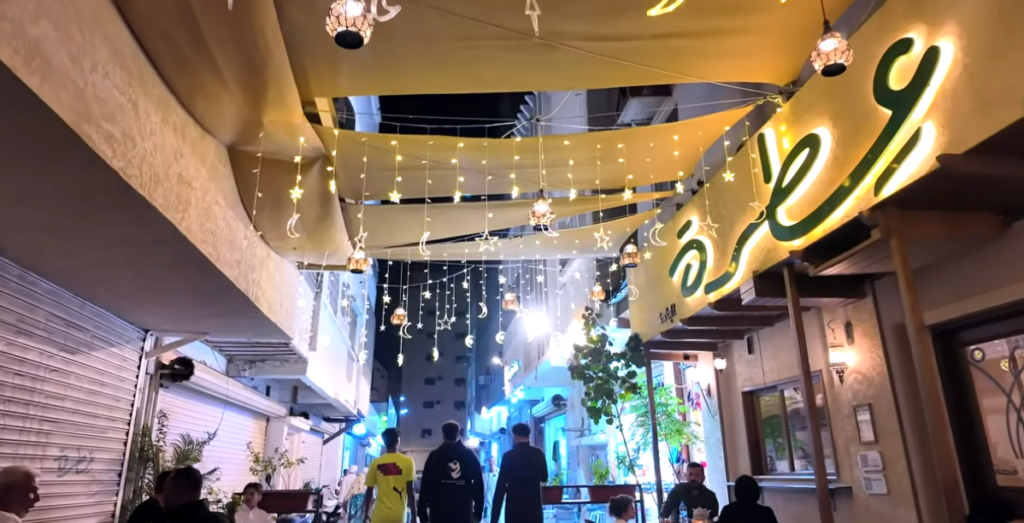
For families that want to spend more evening time together, winter Ramadan can be especially helpful. Shorter fasting periods enable more time for group prayer and discussion. Mosques, lit against the clear February evenings, are frequently remarkably calm.
Quietly, the suspense grows.
Shops make inventory adjustments. On supermarket shelves, dates and lentils are frequently displayed. Regarding their first complete fast, kids have questions. The fasting hours used to be somewhat longer or shorter depending on the season, according to elders who tell memories of Ramadan in various decades.
Though the preparations are remarkably same, the experiences are slightly different every year.
The formal start date is February 17th, when the moon will be sighted, but planning usually starts weeks earlier. Many find the month to be astonishingly transforming by carefully planning their calendars and establishing reasonable goals.
When does 2026 Ramadan fall? It is anticipated to start on the evening of February 17 and conclude on or around March 18, depending on how the crescent appears. But there’s more to it than those dates: a planned break in the year that encourages self-control, thankfulness, and rejuvenation.
Disclaimer
Nothing published on Creative Learning Guild — including news articles, legal news, lawsuit summaries, settlement guides, legal analysis, financial commentary, expert opinion, educational content, or any other material — constitutes legal advice, financial advice, investment advice, or professional counsel of any kind. All content on this website is provided strictly for informational, educational, and news reporting purposes only. Consult your legal or financial advisor before taking any step.
