

After an earthquake, quiet descends first when structures collapse. Every second becomes quantifiable, steel bends inward, and dust lingers in shafts of light. Rescue crews must make the difficult and emotionally taxing decision of where to look first during those early hours.
That question is now a design problem at the Oxford Robotics Institute.
Autonomous search and rescue drones are being developed by engineers there, and they can enter unstable structures before humans do. The goal is very clear: map broken ground, use sound and heat to find survivors, and send accurate information back to teams that are farther away.
Because of developments in onboard computing and sensor integration, robotic capabilities has significantly increased during the last ten years. With far faster reaction times, what formerly required large external computing can now function within small airborne platforms, flying into collapsed passageways and inspecting debris fields.
| Category | Details |
|---|---|
| Institution | Oxford Robotics Institute (ORI), University of Oxford |
| Location | Oxford, United Kingdom |
| Focus | Autonomous systems for disaster response and hazardous environments |
| Key Technologies | Search-and-rescue drones, ground robots (“SMURF”-style units), AI-based detection systems |
| Core Capability | 3D mapping of collapsed structures, thermal and chemical sensing for survivor detection |
| Research Links | Collaboration with UK and international robotics and AI partners |
| Mission | Improve speed, safety, and accuracy of earthquake rescue operations |
| Website | https://ori.ox.ac.uk |
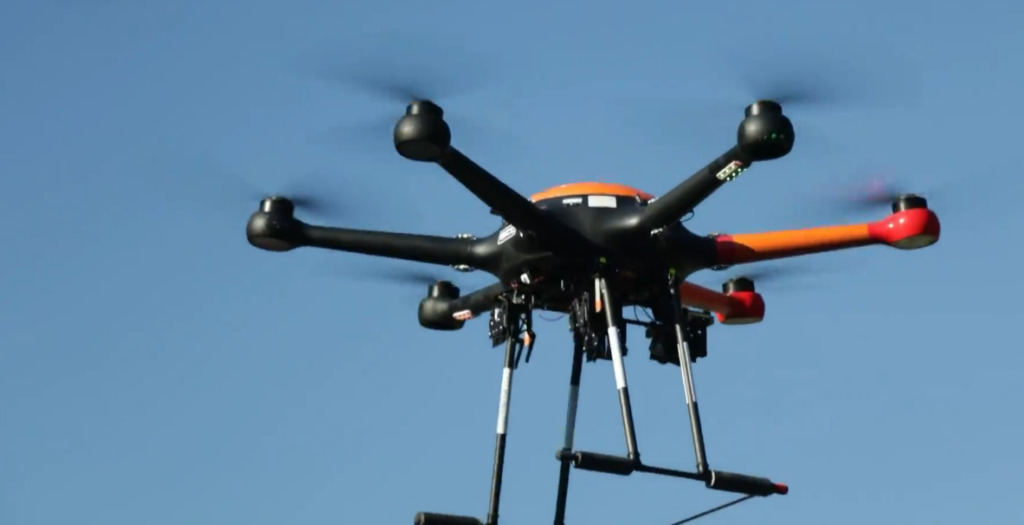
The drones are incredibly good at using overlapping imagery to create three-dimensional maps. Visual feeds and thermal overlays are used to create incredibly detailed models that show potential locations for trapped survivors. These maps are operational aids that focus scarce personnel on regions with the best chance of supporting life, not purely aesthetic displays.
Compact ground robots are used in conjunction with aerial systems because they can maneuver through narrow spaces that would be hazardous or inaccessible to humans. These devices examine carbon dioxide patterns that are remarkably comparable to the characteristics of human respiration. They are outfitted with microphones, thermal cameras, and chemical sensors. They continue to work incredibly well in low light, where visibility is much diminished.
The real test is navigating.
Building collapses create erratic conditions with moving debris and shaky angles. Drones can now recalibrate in midair and avoid obstacles in real time thanks to Oxford’s extremely inventive autonomy technologies. The margin of error is little when flying inside a broken concrete structure; it is not the same as flying outside.
A larger aerial unit serves as a communication hub in a tiered system that researchers are creating to coordinate many devices. By linking ground robots and smaller flying units, this “mothership” drone expedites the flow of data back to command centers. With each unit offering its own viewpoint and staying in close touch, the arrangement operates much like a well-organized team of field analysts.
I saw a prototype drone hover momentarily at the edge of a mock rubble pile during a controlled field demonstration, then lower itself carefully into a small aperture. While speaking in measured tones and using software to filter out background noise, engineers kept an eye on temperature readouts and audio signals.
The system’s detection of a simulated heat source behind debris was noticeably silent.
Accuracy in earthquake reaction needs to be both highly flexible and disciplined. Missed signals result in fatalities; false alarms waste energy. Through the integration of convolutional neural networks that have been trained on intricate datasets, the institute’s algorithms distinguish between real human presence and ambient warmth by classifying patterns with ever higher degrees of confidence.
This work is not a standalone piece of work. Techniques created for nuclear inspection or offshore infrastructure can now be modified for disaster areas because to the institute’s expertise in hazardous industrial robotics. Through the use of sophisticated analytics developed in other fields, the team has greatly decreased technical uncertainty and expedited learning cycles.
The cost is also important.
Helicopters can’t securely hover near shaky structures and are costly. Drones consume very little energy and may be deployed at unexpectedly low costs. Aerial robots can be deployed first, allowing emergency services to more strategically deploy larger assets for extraction instead of reconnaissance.
But trust is a gradual process.
Technology must demonstrate its worth to rescue experts under duress. In close collaboration with first responders, Oxford’s researchers incorporate their input into safety procedures and design modifications. The institute makes sure that its systems complement rather than interfere with established command structures by forming strategic alliances with emergency agencies.
In the last ten years, robotics has evolved from a curiosity in the lab to a practical tool. It feels especially important in the context of earthquake reaction. Machines are now actively involved in life-saving operations, navigating debris while human teams analyze the data, rather than acting as passive onlookers.
That evolution has a subtly positive quality to it.
The institute continues to have a practical stance. By conducting numerous simulations, adjusting autonomy algorithms, and fine-tuning sensor location, engineers turn the lessons learned from each experiment into quantifiable progress. Iterative testing has led to notable improvements in performance metrics, resulting in detection that is far faster than previous prototypes.
These systems are anticipated to be expanded beyond academic demonstrations in the upcoming years through larger deployment experiments. Landslides, floods, and industrial accidents all pose comparable risks, and the technology’s versatility makes it very applicable in a variety of situations. By creating incredibly robust systems, the institute raises the possibility of practical implementation.
Increasing the speed of discovery while lowering the risk to rescuers is the project’s simple philosophy.
Disclaimer
Nothing published on Creative Learning Guild — including news articles, legal news, lawsuit summaries, settlement guides, legal analysis, financial commentary, expert opinion, educational content, or any other material — constitutes legal advice, financial advice, investment advice, or professional counsel of any kind. All content on this website is provided strictly for informational, educational, and news reporting purposes only. Consult your legal or financial advisor before taking any step.
