

A woman stands in the middle of a lavish launch party with the poise of someone who has practiced every look, while snow drifts outside the glass walls. In this way, The Art of Sarah presents its main character—not in a chaotic way, but with purpose. Every movement has a deliberate sense to it, and its inventive restraint subtly conveys the story’s preference for accuracy above spectacle.
A unique luxury handbag is placed next to a body found in a Seoul sewer as if it were a signature, setting the scene for the drama. Detective Park Mu-gyeong methodically goes over witness accounts and surveillance evidence, approaching the case with a very clear logic. Over time, what seems to be a simple murder turns out to be a far more complex scheme.
Through other people’s memories, Sarah Kim, the alleged victim, is introduced. She is said to be American-born, educated at Oxford, and remarkably self-assured. She stands for the new luxury brand Boudoir, which is marketed as being so exclusive that it serves the wealthiest segment of the population. However, behind the surface, even in these early episodes, there is a noticeable sense of improvisation.
Inconsistencies emerge when Park tracks social ties and business activities. With every interview, Sarah Kim’s identity changes and becomes more fluid. Once considered a symbol of prestige, the handbag now serves as proof of construction. Here, luxury is more than just a product; it’s a storytelling medium that has a remarkable ability to suspend disbelief.
| Title | The Art of Sarah |
|---|---|
| Original Title | 레이디 두아 (Lady Doir) |
| Release Date | February 13, 2026 |
| Platform | Netflix |
| Genre | Mystery Thriller |
| Episodes | 8 |
| Writer | Chu Song-yeon |
| Director | Kim Jin-min |
| Lead Cast | Shin Hye-sun, Lee Jun-hyuk |
| IMDb Rating | 7.3/10 |
| Official Info | https://www.netflix.com |
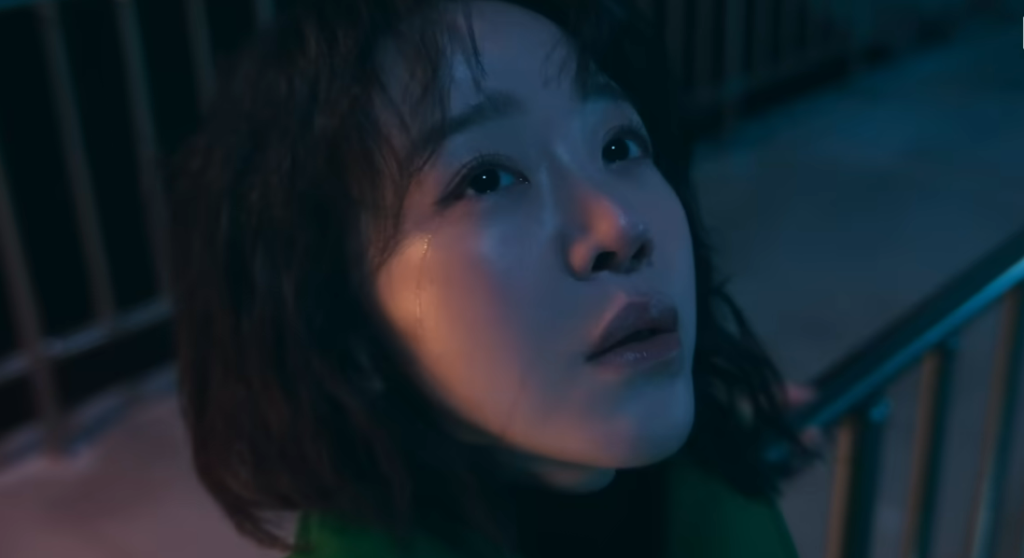
Sarah was initially Mok Ga-hui, a department store clerk who was encumbered by a 50 million won debt following a robbery incident, as we soon find out. Financial catastrophe can seem inevitable to those who are just starting out, especially under systems that prioritize inheritance over hard work. Her humiliation turns into a pivotal moment that subtly encourages a bold and unsettlingly systematic reinvention.
She examines wealth with scholarly rigor after being reborn as Kim Eun-jae and then as Sarah Kim. She becomes proficient in tone, posture, and language by using imitation and observation. She views high society as a language that must be acquired before being spoken with ease. It’s surprisingly educational to see her maneuver around elite places; she reveals how confidence and repetition can build credibility.
She poses the crucial question of whether authenticity counts if the imitation is perfect at one point. The calmness with which that line was delivered made me pause.
Sarah shows up alive halfway through the series, entering a police station and shattering the main premise of the case. The tone of the story changes and becomes much sharper. The focus of Detective Park’s investigation shifts from finding a murderer to unraveling a meticulously constructed persona.
Shin Hye-sun’s performance is remarkably adaptable, alternating between iron control and softness. Her facial expressions are subtle but convey a lot of passion. She presents ambition as a methodical approach rather than as greed. Every look seems purposeful, every silence more significant.
The brand she develops, Boudoir, serves as her most advanced creation. Though completely fake, it is marketed as heritage European luxury. The label builds momentum through carefully planned exclusivity and strategic alliances. The business processes are presented as being extremely effective, showing how branding can be incredibly powerful when done with conviction.
The tension is increased by the relationship between Sarah and craftswoman Kim Mi-jeong. The actual bags are made by Mi-jeong, who works in settings very different from the upscale salons where they are exhibited. Her wish to assume Sarah’s identity is eerily reminiscent of Sarah’s prior need for acceptance. According to the series, identity is highly malleable and transferable when bolstered by performance.
The final altercation isn’t dramatic. It starts with controlled aggression and ends with strategic destruction. Instead of being sensational, it is handled with unsettling realism. Sarah seems to make quite logical decisions, even when they are morally dubious.
Detective Park, on the other hand, stands for the clash between private ambition and institutional order. As the case progresses and his suspicions are honed by experience, his systematic approach noticeably improves. However, he acknowledges the structural injustices that made Sarah’s rise possible. His dispute is philosophical in nature rather than just legal.
Sarah decides to give up her independence in the last act in order to maintain Boudoir’s validity. She makes sure the brand endures by taking on yet another persona and confessing under a different name. It is a sacrifice presented as a calculated investment rather than a failure. She prioritizes symbolic success over instant comfort in the context of social mobility.
Park and Sarah’s final prison visit is quiet and subdued, bordering on sentimental. He asks what her name is. She gives none, but grins. That quiet speaks louder than any admission, implying that the business she founded was her actual self.
The inability to categorize its protagonist as either a hero or a villain is what makes The Art of Sarah so inventive. It looks at aspiration without making fun of it. Elitism is criticized without being oversimplified. Since discussions around class mobility have become more prevalent worldwide over the last 10 years, Sarah’s path seems rather relevant.
In the end, the show portrays reinvention as a burden as well as an empowering. Sarah was able to gain access that had previously been inaccessible to her by building herself from pieces. However, each layer needed upkeep, dishonesty, and emotional separation. The price was genuine.
Disclaimer
Nothing published on Creative Learning Guild — including news articles, legal news, lawsuit summaries, settlement guides, legal analysis, financial commentary, expert opinion, educational content, or any other material — constitutes legal advice, financial advice, investment advice, or professional counsel of any kind. All content on this website is provided strictly for informational, educational, and news reporting purposes only. Consult your legal or financial advisor before taking any step.
