

At the age of twelve, he landed in Hong Kong with a blanket and the kind of hunger that only exiles can experience. Jimmy Lai would eventually become a billionaire. After folding clothes for a while, he decided to reveal the truth. He became wealthy from the manufacturing and dangerous from the press.
Few newspapers dared to directly challenge Beijing’s authority in the mid-1990s. Every day, Apple Daily did it. It yelled, chastised, and revealed. Jimmy Lai managed it like a cause but designed it like a business. His remarkably thoughtful decision brought him not just notoriety but also unavoidable danger.
His name has been heard well beyond the confines of the courtroom in recent days. In accordance with Hong Kong’s National Security Law, Lai, who is currently 78, received a 20-year prison sentence. The accusation: planning to undermine China’s government by working with foreign organizations. It’s a phrase that has become remarkably elastic, including editors, entrepreneurs, and campaigners alike.
| Field | Detail |
|---|---|
| Full Name | Lai Chee-Ying (Jimmy Lai) |
| Date of Birth | December 8, 1947 |
| Age | 78 |
| Nationality | British, Chinese, Taiwanese |
| Known For | Founder of Apple Daily, Giordano; Pro-democracy activism |
| Arrested Under | Hong Kong National Security Law (2020) |
| Conviction | Conspiracy to collude with foreign forces, sedition |
| Sentence | 20 years imprisonment (2026) |
| Spouse | Teresa Lai |
| Children | Five: Lai Sung Yan, Jade Lai, Lai Shun Yan, Lai Gin Yan, Lai Yiu Yan |
| Credible Source | Wikipedia – Jimmy Lai |
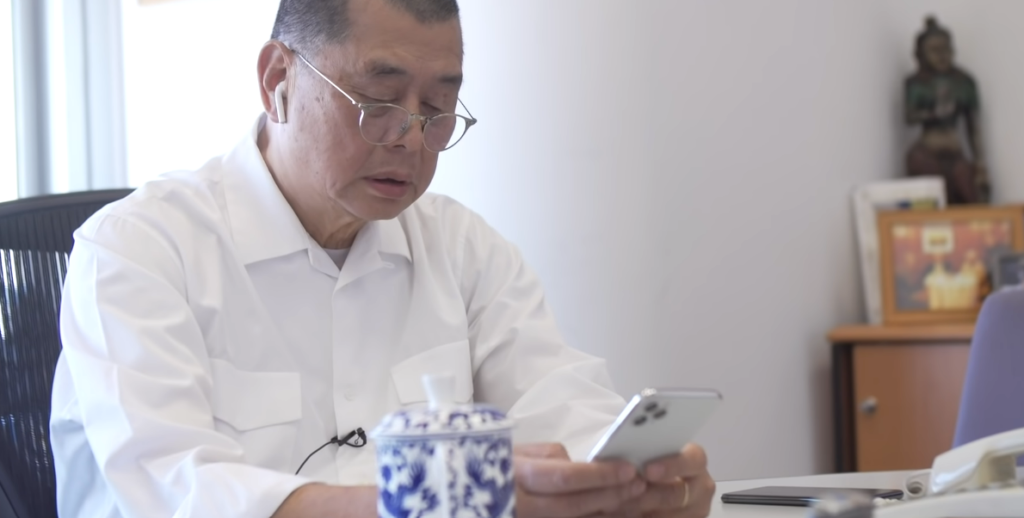
Lai allegedly maintained his composure during his sentencing, with his hands folded gently and his eyes steady. This was not a defeated man’s rage. It was the silent dignity of someone who had been waiting for this day for a long time. His supporters called him “unbroken.” But the judges saw something different, a menace, an orchestrator.
Lai was charged with using his media platform to support international politicians, advocate for sanctions, and disseminate what the court deemed to be seditious material. However, a number of observers, especially those from press freedom organizations, contended that his actual transgression was much more straightforward: he refused to remain silent.
Hong Kong’s civic space has gotten smaller at an alarming rate during the last 10 years. Once spanning entire districts, protests now only exist in digital snippets. Once-political publications have either shuttered or become sanitized. The mood seems more and more well manicured—remarkably regulated.
A symbol, Jimmy Lai’s sentence was unusually harsh for a public figure. It’s about more than just one man. It concerns how easily the boundary between criminal and criticism can be blurred.
The faith was more striking to me than the turmoil or volume when I first visited Lai’s newsroom years ago. Walls were covered in crosses. Before making important editorial choices, staff members publicly prayed. As a devoted Catholic, Lai seldom kept faith and work apart. He was particularly harder to classify because of his intensely private yet widely expressed faith. He was considered a media magnate by some. Provocateur to others. However, to those who constantly monitored his condition, he was a man of conscience—singularly dedicated, obstinately optimistic.
His legal team has sought international prominence through strategic alliances. British officials referred to the decision as “politically motivated,” citing his citizenship. Concern has been raised by US politicians on numerous occasions. The trial was described as a planned message by Human Rights Watch. However, the statement stands in spite of these responses.
Lai’s situation poses a glaring conundrum for developing democracies or areas with some degree of autonomy. If a city openly curbs press freedom, can it still be considered financially credible? Investors observe in silence. Diplomats take their time. Younger journalists in particular balance principle against risk.
Nevertheless, Lai’s influence endures even after being imprisoned. Sebastien Lai, his son, is now his spokesperson overseas. They are preparing his legal appeals. His image—older, thinner, yet vigilant—has gone viral once more, igniting new discussions about dignity, protest, and resiliency.
It feels like a turning point in terms of regional stability. What happens to the truth if the new safety is silence? Who creates the institutions of the future generation if editors and entrepreneurs face the same penalties?
Lai has changed by serving out his sentence without compromise. He was once seen to be stubborn, but many now consider him as symbolic. Of consequence, not of revolt. of what it means to persevere when moral rather than monetary stakes are involved.
One thing is abundantly evident from these proceedings: there was never a single trial. Who defines loyalty was at issue. Who sets the price for free expression? And the extent to which a government will go to guarantee that its story is the only one that endures.
Even though Jimmy Lai is incarcerated, his story is still unfinished; it is being told in every news report, protest placard, and whisper that dared to pose the question, “What if he’s right?”
Disclaimer
Nothing published on Creative Learning Guild — including news articles, legal news, lawsuit summaries, settlement guides, legal analysis, financial commentary, expert opinion, educational content, or any other material — constitutes legal advice, financial advice, investment advice, or professional counsel of any kind. All content on this website is provided strictly for informational, educational, and news reporting purposes only. Consult your legal or financial advisor before taking any step.
