

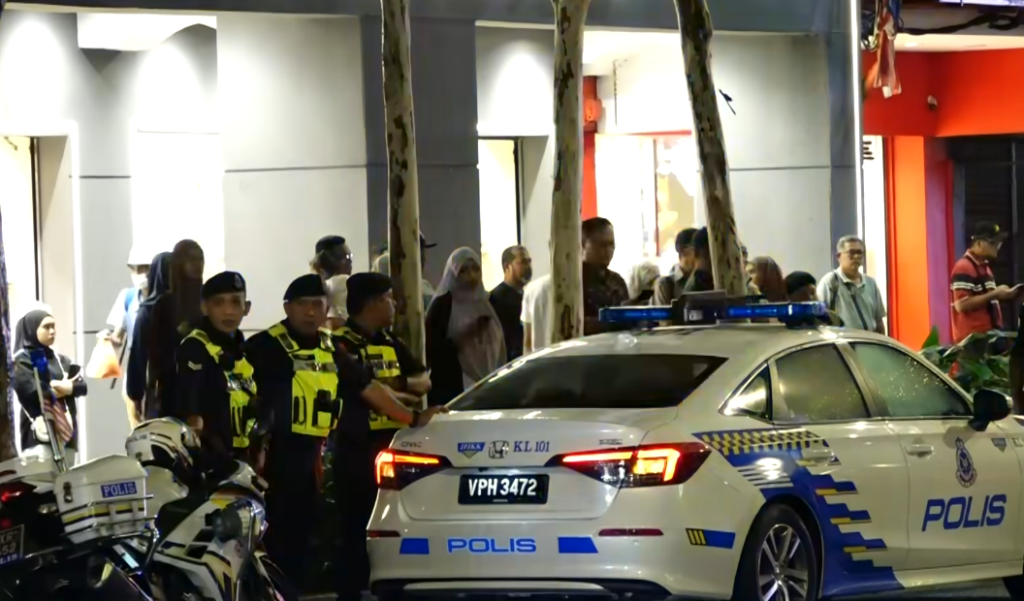
Police officers stood in neat formation outside the famous Sogo department store, and the city center of Kuala Lumpur was characterized by stillness rather than slogans. The man at the center of what was supposed to be a loud gathering led by independent preacher Zamri Vinoth was already in custody, so it ended up being a footnote.
Following his arrest earlier in the day in Kangar, where he is the head of a missionary organization, Zamri Vinoth was taken immediately to Dang Wangi Police Headquarters. According to police, his and a number of other people’s arrests were related to organizing a gathering against uncontrolled places of worship. Authorities said that the gathering threatened public order and that it coincided quite noticeably with Indian Prime Minister Narendra Modi’s official visit.
It was a very effective use of resources on the part of law enforcement to stop the event before it started. Officers were observed gently separating small groups of people while keeping strict control of the area and avoiding conflict. They demonstrated their readiness by deploying almost 200 soldiers, including Light Strike Force members, in preparation of an escalation that never materialized.
Vinoth’s internet persona had long alluded to this point. He is well-known for his passionate talks and analysis of religious matters. He had previously said on social media that the rally should go on even if he were detained or injured. The sentiment was provocative. Amazingly, though, the result was contained.
| Detail | Description |
|---|---|
| Name | Zamri Vinoth Kalimuthu |
| Occupation | Independent preacher and activist |
| Arrest Date | February 7, 2026 |
| Arrested By | Royal Malaysia Police (PDRM) |
| Location of Arrest | Kangar, Malaysia |
| Detained At | Dang Wangi Police Headquarters, Kuala Lumpur |
| Reason | Linked to organizing a rally against unregulated houses of worship |
| Context | Rally coincided with Indian PM Modi’s visit; raised public security concerns |
| External Link | Free Malaysia Today |
The rally caused more than just logistical stress. Communities were uneasy because the demonstration was framed as targeting “illegal” houses of worship. Critics considered the rally provocative, particularly at a time when the nation was receiving international notice, while Zamri’s supporters maintained that their goals were legal and based on current laws.
There was much less chance of rioting because to the police and government officials’ strategic collaboration. Anwar Ibrahim, the prime minister, had actually issued a warning to protesters hours prior to the event, making it very evident that any group that disobeyed security procedures would be “arrested and thrown out.”
Protests that turned into flashpoints have happened in Malaysia before. However, this transpired in a different way. They were preventative arrests. The audience obeyed despite their disappointment. Additionally, the streets returned to normal around 10 p.m.
Among those arrested were digital activist Tamim Dahari, political figures Shafiq Abdul Halim and Hishamuddin Abu Bakar, and attorney Haniff Khatri. According to reports, Zamri and co-organizer Tamim were placed under remand for a minimum of two days until additional investigation was completed, while a few others were released on bail.
I read the comment made by Jelutong MP RSN Rayer again later that night. In it, he urged authorities to make sure that “Zamri and his accomplices” be held accountable in court, not only by making a brief detention. It was the timing of his comments, not their harshness, that made me pause.
Despite being quiet, the rally itself poses more significant queries regarding Malaysian civic space. Faith-based action lives in a very fragile ecosystem, particularly when combined with nationalist overtones. Political actors frequently have to balance provoking conflict with appealing to belief systems. For many observers, Zamri’s words veered near, if not over, that boundary.
His defenders counter that political pressure, not legal need, is what led to his imprisonment. Instead of being a covert assault on religious minorities, some people think the event was a misinterpreted call for regulatory clarity. Others believe that because it evoked previous instances of religious tension, the messaging was more hazardous.
For viewers that are acquainted with Zamri’s past, this episode represents a component of a larger storyline. He became well-known on internet media after converting to Islam a few years ago, spreading his message through livestreams and public appearances. His combination of political storytelling and theological commentary drew him devoted audiences as well as unrelenting criticism.
Before things got out of control, authorities tried to neutralize the situation through targeted law enforcement and public outreach. The arrest’s long-term effects, however, are still unknown. Will this act as a cautionary tale for activists in the future, or will it merely encourage more complex forms of protest?
The case of Zamri Vinoth’s detention, which integrates media, policy, and popular opinion, is especially representative of Malaysia’s current balancing act between faith and governance, and between expression and enforcement.
Right now, all eyes are on the courtrooms as prosecutors attempt to determine if this was a violation of the peace that demands urgent restraint or an act of civic defiance.
Disclaimer
Nothing published on Creative Learning Guild — including news articles, legal news, lawsuit summaries, settlement guides, legal analysis, financial commentary, expert opinion, educational content, or any other material — constitutes legal advice, financial advice, investment advice, or professional counsel of any kind. All content on this website is provided strictly for informational, educational, and news reporting purposes only. Consult your legal or financial advisor before taking any step.
