

Like any typical late morning in Chinatown, it started with incense wafting through alleys, umbrellas unfurling to soften the sun rather than to rain, and camera flashes from interested tourists. Then the heavy hush that always follows impact, followed by a scream and a sudden braking.
The news was on almost every TV by the early afternoon. A six-year-old girl was strolling with her mother close to the Buddha Tooth Relic Temple when she was hit by a car. They were both sent to Singapore General Hospital immediately. Only one went home.
According to reports, the car, which was driven by a 38-year-old lady, approached the crossing at a regular speed. However, as is frequently the case, everything was defined in a single second. The charge of driving without reasonable thought, which now bears both legal and emotional weight, led to the driver’s subsequent arrest.
Social media, which was sometimes criticized for seeming aloof, turned out to be unexpectedly sensitive. Videos showed strangers using umbrellas to protect the victims from the sun. While others consoled the mother, who lay hurt and stunned, one man held the infant tenderly. The city’s inclination to care before passing judgment was reflected in that silent, responsive, and intensely human moment.
| Detail | Information |
|---|---|
| Date of Incident | February 6, 2026 |
| Location | South Bridge Road, near Buddha Tooth Relic Temple, Chinatown, Singapore |
| Victims | Six-year-old girl (deceased), 31-year-old woman (injured) |
| Vehicle Involved | Private car driven by 38-year-old female driver |
| Driver Status | Arrested for driving without reasonable consideration causing death |
| Time of Accident | Around 11:50 a.m. |
| Emergency Response | Both victims taken conscious to Singapore General Hospital |
| Official Source | CNA – Chinatown Accident Report |
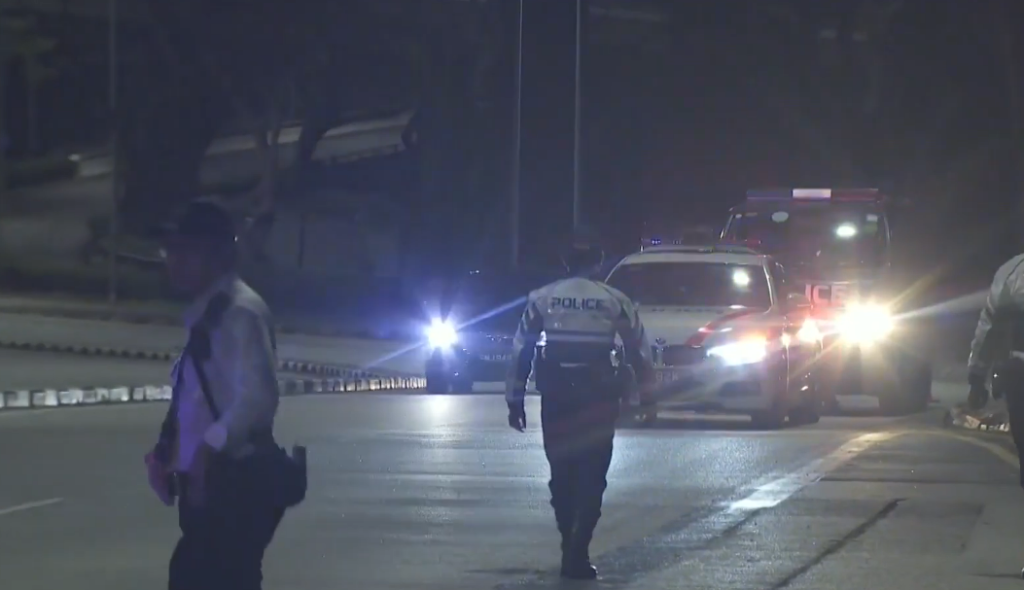
That straightforward picture of people kneeling in the street without roles or uniforms kept coming to me. It made me realize how frequently tragedy brings out the best in us, even if only briefly.
According to official statistics, the number of traffic incidents that resulted in injuries or fatalities increased by 7.4% between January and September of 2025. That figure belongs in quarterly reporting. However, percentages become meaningless when the person behind that figure is a toddler whose morning stroll turned deadly.
Singapore has significantly improved its enforcement, crossing monitoring, and traffic zone regulation over the last ten years. However, systems have a limit. On paper, vigilance can be extremely clear, but on asphalt, it can still be horribly imperfect, as accidents like this one demonstrate.
The site itself is quite important. South Bridge Road lies in the center of Chinatown, where delivery vans, buses, and private vehicles contend with pedestrian traffic. It is neither a freeway nor a rural intersection. The line between danger and safety is much closer during peak hours.
This balance might be further enhanced by incorporating more visible pedestrian infrastructure, such as speed deterrents, elevated crossings, or even AI-powered monitoring tools. When it comes to remodeling environments, Singapore has always demonstrated exceptional versatility. After this, it might happen once more.
Numerous sources do not identify the woman who was charged. Her spouse informed the local media that she has been “overcome with guilt,” unable to eat and speaking hardly at all. It serves as a warning that collisions disturb everyone in their path, including the unintentional offenders, and do more than simply break lives.
The disaster sent a new warning to weekend market-goers and early-morning commuters. Now, there’s a weight on that specific corner. Some claim that they pause when they get close to the curb. Some stay off the street completely. Despite being invisible, trauma frequently persists in the familiar.
Singapore’s streets were calmer during the epidemic, and there was a temporary decrease in pedestrian injuries. However, the difficulty of balancing cars and pedestrians resurfaces with greater stakes as the city reawakens. Designing mechanisms that make such loss remarkably uncommon is more important than merely preventing it.
Cities can develop in a proactive rather than reactive manner by implementing planned improvements in public education and traffic control. Smarter design may be sparked by what transpired on South Bridge Road, especially in busy cultural districts where SUVs were never intended to be parked.
In places like Tokyo and Copenhagen, incredibly adaptable solutions are already in place, such as smart crosswalks that pulse or illuminate when pedestrian activity occurs. They successfully combine elegance and safety, which perfectly captures Singapore’s character.
However, technology arrives too late for the impacted families. Little rituals that have been changed, like avoiding certain walking routes, packing school bags for a child who no longer needs them, or making dinners with fewer plates, are the source of the sorrow.
Nevertheless, optimism is not misguided. Even though they are tragic, civic tragedies frequently bring about change. How swiftly and openly institutions react will be crucial. Singapore’s performance in this area gives cautious optimism.
New standards that are based on empathy rather than efficiency can be established by working with citizens, civic planners, and transportation authorities. On that day, bystanders acted responsibly without being told to do so. The same instinct that directs a stranger’s hand should also direct urban design.
Over South Bridge Road, the temple bells will ring once more. The restored movement will cause lanterns to swing. However, somewhere, someone will still stop before moving forward, scanning both directions for memory as well as traffic.
Disclaimer
Nothing published on Creative Learning Guild — including news articles, legal news, lawsuit summaries, settlement guides, legal analysis, financial commentary, expert opinion, educational content, or any other material — constitutes legal advice, financial advice, investment advice, or professional counsel of any kind. All content on this website is provided strictly for informational, educational, and news reporting purposes only. Consult your legal or financial advisor before taking any step.
