

The silence during the men’s big air final at Livigno was more telling than any cheer when Kira Kimura flew into his final run. Even though the crowd had been raucous all day, you could practically feel their breath being held when his board slipped down the snow-covered ramp’s lip. The elegance with which Kimura landed after spinning a switch backside 1980 was a calculated explosion of chaos. A few seconds later, the scoreboard verified what his body language had already indicated: Japan won gold.
The 2026 Winter Olympics in Milano-Cortina served as a platform for snowboarding, showcasing the sport’s rapid evolution in addition to its unadulterated athleticism. It was much more technical than it had been four years prior, especially in the big air and slopestyle competitions. In addition to pushing themselves, athletes are also redefining their own boundaries.
In the last ten years, snowboarding has evolved from a countercultural adrenaline rush to a striking demonstration of artistic accuracy. This was never more apparent than in the matchup between Kimura and Ryoma Kimata, who placed second in silver. I was reminded of the tension of ancient Olympic figure skating duels by their amicable yet intensely competitive competition. But this time, air took the place of the ice.
This year, Chinese snowboarder Su Yiming, who won gold at Beijing 2022, took home bronze. He scored 88.25 points with a strong 1980 spin to start, but on the next runs, he struggled to make his landings. The maturest lesson from his performance, however, was probably his poise, which was characterized by a modest pride in resiliency. Later, instead of talking about loss, he talked about transition and growing older in a sport where young people frequently take the top spots.
| Detail | Information |
|---|---|
| Venue | Livigno Snow Park, Valtellina, Italy |
| Dates | February 5 – February 18, 2026 |
| Events | Big Air, Halfpipe, Slopestyle, Parallel Giant Slalom, SBX |
| Standout Athletes | Kira Kimura (Japan), Su Yiming (China), Ollie Martin (USA) |
| Memorable Moment | Kimura’s switch backside 1980 for Big Air gold |
| Medal Leaders (so far) | Japan (2), China (1) |
| Official Source | Olympics.com – Snowboarding 2026 |
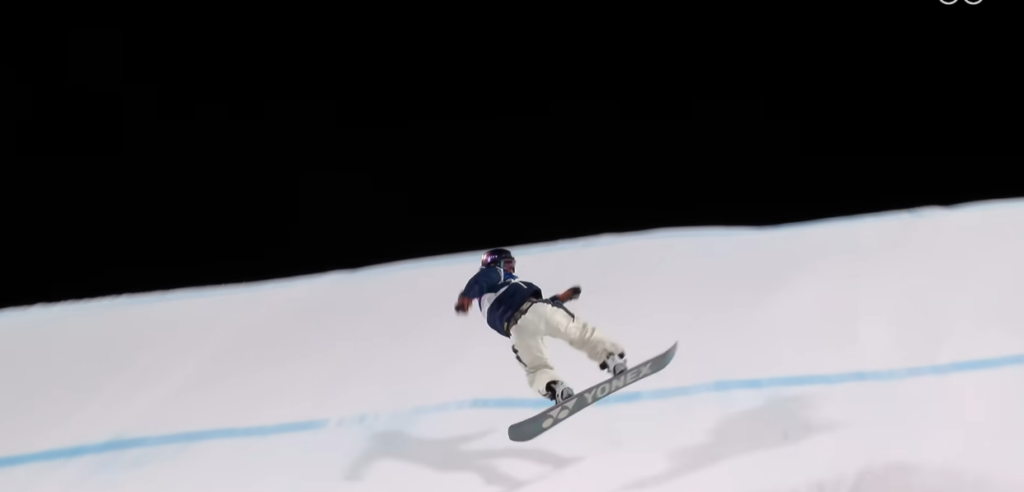
By placing a strong emphasis on mentoring and demonstrating a willingness to motivate, Su is quietly changing the definition of snowboarding success. His comments regarding the multifaceted nature of sport struck an especially deep chord. It was more than just the medals. The movement, the message, and the next steps were all important.
For young competitors like Ollie Martin of the USA, who came just short of winning a medal, the performance was groundbreaking in and of itself. Though not perfect, the 18-year-old’s runs were audacious and full of purpose. As I watched him hit a cork 1620 with quiet conviction, I was momentarily taken back to my own first snowboarding experience, which was awkward, icy, and utterly thrilling.
The location in Livigno, which is located in the Valtellina area of northern Italy, provided breathtaking scenery the night before the competitions started thanks to a lot of snow. Temperature variations did not affect the mountain terrain’s remarkable durability. Overnight, crews worked to maintain the takeoff zones’ uniformity and cleanliness. A surface that was extremely effective for speed and lift—two essential components for big air competitions—was made available to competitors as a result of their hard work.
Snowboarding and other outdoor sports acquired popularity during the epidemic because of their outside appeal, but the 2026 Games have transformed that popularity into true artistic expression. In the public’s mind, what formerly seemed like a niche delight now stands proudly next to figure skating and downhill skiing. The availability of full-event recordings on streaming services, along with commentary that is gradually catching up to the intricacy of the tricks being performed, has further enhanced this trend.
Todd Richards, a former Olympic snowboarder, was unreserved in his criticism of the men’s big air final, calling it “boring.” It was evident that Richards was evaluating inconsistency rather than physical ability. Ironically, it might be especially helpful in igniting change in the scoring system for snowboarding competitions. There has never been a more obvious contradiction between the sport’s creative side and the mathematical rigidity of point systems.
Incorporating digital performance tracking could help organizers overcome some of these discrepancies in judging. Tools for real-time trick recognition are being silently tested in parallel circuits. The subjective artistry of each rider’s style could be enhanced by an incredibly transparent layer of objectivity if these prove to be successful.
Not only did Kira Kimura win gold, but it was also Japan’s first-ever Olympic top finish in men’s large air. The country had, up until now, almost sealed it, but never completely. For comparison, large air is a very new sport at the Olympics, having only been introduced in 2018. This newness creates a sense of urgency; each year seems to usher in a new era. Each winner creates cultural as well as competitive advancements.
In snowboard disciplines that were formerly controlled by North America, nations like China and Japan are becoming dominant forces through national investments in youth development and smart coaching. The change is both aesthetically pleasing and geographical. With every generation, riding has evolved to become more floaty, more flowing, and slightly riskier.
Slopestyle, big air, and even halfpipe are among the many disciplines that today’s incredibly adaptable athletes prepare for, balancing skill sets that need both spontaneity and accuracy. The distinction between a slopestyle line and a single-launch big air run cannot be overstated, but more racers are figuring out how to switch between them with ease.
There will probably be a more thorough blending of various forms in the upcoming years. Particularly on digital platforms where highlight reels predominate, spectator demand is increasing. Shorter and more engaging formats are possible. And snowboarding might be among the first Olympic activities to use immersive viewing, with augmented reality overlays already being tested in other sports. This would allow spectators to see spins, flips, and scores in real time from the comfort of their own homes.
Disclaimer
Nothing published on Creative Learning Guild — including news articles, legal news, lawsuit summaries, settlement guides, legal analysis, financial commentary, expert opinion, educational content, or any other material — constitutes legal advice, financial advice, investment advice, or professional counsel of any kind. All content on this website is provided strictly for informational, educational, and news reporting purposes only. Consult your legal or financial advisor before taking any step.
