

Snowfall that falls straight down seems controllable, almost systematic. It changes completely when it travels sideways, lifted and thrown by gusts of up to 80 km/h. Routine trips in southern Ontario have recently become patience and accuracy tests due to Environment Canada’s snow warning.
As an Alberta Clipper passed through, pulling Arctic air behind it, yellow-level advisories were issued for the Waterloo Region, Simcoe County, and portions of southwestern Ontario. The system moved quickly and effectively, spreading loose snow from one municipality to another with remarkably comparable force on rural roads and highways. What started out as light buildup soon turned into a visibility issue, and vision is crucial throughout the winter.
Blowing snow reshapes drifts in a matter of minutes, acting more like an unruly torrent than falling flakes as it surges across roadways and open fields. Wind gusts of up to 80 km/h were recorded by mid-afternoon on Friday, lifting and redistributing the snowfall that had fallen earlier in an unpredictable manner. By 3 p.m., roads that appeared to be passable at midday had all but vanished, leaving cars to stare into a white haze that seemed to be designed to confuse.
The cold was just behind it. Conditions became not just uncomfortable but dangerous as wind chills dropped to -30°C and, in some areas, even -35°C. Since frostbite can appear on exposed skin in a matter of minutes, it becomes a serious risk, especially for delivery drivers, outdoor workers, and people without access to adequate shelter.
| Item | Detail |
|---|---|
| Issuing Agency | Environment and Climate Change Canada |
| Alert Type | Yellow-Level Blowing Snow Advisory |
| Affected Regions | Southwestern Ontario, Waterloo Region, Simcoe County, Muskoka, Guelph |
| Wind Gusts | 70–80 km/h |
| Visibility | Near zero at times |
| Risk Factors | Frostbite, traffic hazards, exposure-related illness |
| Advisory Duration | Feb. 6–8, 2026 (ongoing updates) |
| Source | Environment Canada |
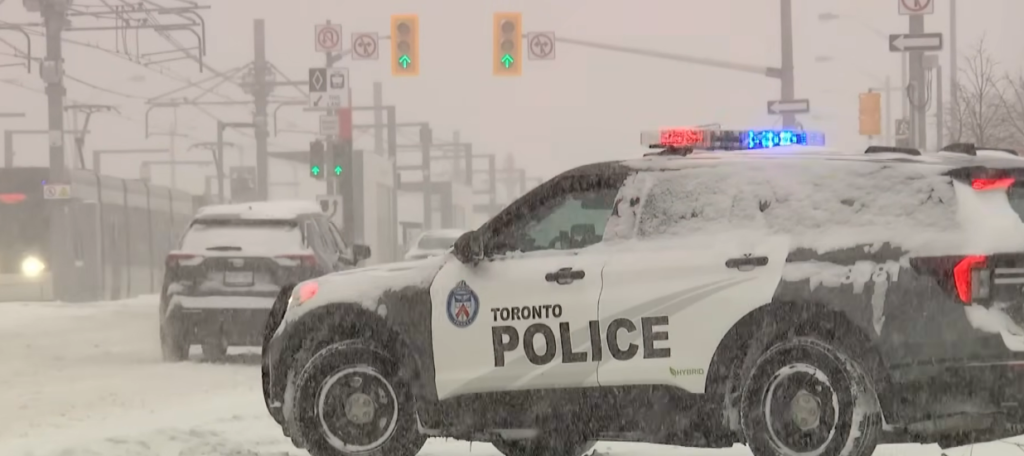
The warning caused a domino effect for towns. Methodically, snowplows rolled out, salt trucks kept running, and emergency services coordinated like a bee swarm in response to an unexpected disruption. Environment Canada produced extraordinarily clear forecasts by using localized wind modeling and updated radar, enabling municipalities to plan ahead rather than respond haphazardly.
Road closures increased in Lambton County and the vicinity of London as visibility plummeted, leading Ontario Provincial Police to declare a major weather emergency. Drivers were advised to refrain from non-essential driving, and portions of the highway were closed. The system’s communication has significantly improved over the last ten years, as seen by the authorities’ measured but stern language.
Canada’s warning systems have improved dramatically over the last ten years, with color-coded notifications providing direction without being alarmist. Red indicates an urgent need for attention, orange indicates seriousness, and yellow indicates caution. This multi-layered strategy has been especially helpful for communities juggling daily responsibilities with prudence.
During a comparable storm, I remember thinking how confidence rapidly evaporates when the horizon disappears as I stopped into a small wayside gas station outside Barrie and watched snow blast across the pavement in sharp, horizontal lines.
Working closely with local officials, Environment Canada made sure that as wind speeds changed and snow squalls grew more intense, updates were released regularly, often on an hourly basis. That informational rhythm was incredibly dependable, providing just enough clarity to enable workers to conclude late shifts or families to plan nighttime drives to make well-informed decisions.
The dispersal of snow across open territory, rather than the actual amount of snowfall—which is frequently only four to eight centimeters—is what makes blowing snow particularly disruptive. Straight roadways are transformed into confusing corridors of light and shadow by winds that accelerate across farmland and lake-effect corridors, producing brief but severe whiteouts.
When communities view advisories as signals for concerted action rather than as disruptions, preparedness remains especially creative in the context of winter safety. In addition to weather data, schools modified bus timetables, employers promoted remote work whenever feasible, and neighbors inquired about the well-being of senior citizens.
Social media feeds were flooded with images of drifts swirling and headlights dimly shining through the fog during the storm’s height. There was a calm resilience, nevertheless, despite the upheaval. Drivers that were stranded received assistance. Plow drivers put in long hours. The number of people in need of warmth was increased by local shelters.
Real-time radar images and cellphone notifications have grown much faster and noticeably more accurate since the development of digital forecasting techniques. Dynamically updating warnings in response to minute changes in wind direction has shown to be quite effective in clearing up confusion and boosting public confidence.
These cautions are not just theoretical notices; they are essential lifelines, particularly for rural regions where open land intensifies wind. Small yet incredibly resilient habits developed over generations include avoiding abrupt movements on snow-covered roadways, properly layering clothing, and running motors sporadically to save fuel.
The cold itself took a backseat as temperatures stubbornly remained below seasonal averages. Sunday morning’s wind chills of -33°C served as a reminder to locals that winter, however familiar, nevertheless requires deference. While outdoor workers modified their schedules to reduce extended exposure, hospitals reported small increases in cold-related illnesses.
It is anticipated that climatic variability may complicate winter patterns in the years to come, occasionally resulting in shorter seasons but more severe cold snaps. Because of this potential, it is especially crucial to keep investing in forecasting technology to make sure that notifications continue to be highly adaptable and geographically accurate.
The National Weather Service has created a system that is surprisingly inexpensive in comparison to the safety rewards it generates by combining localized observation data with sophisticated atmospheric models. Reducing emergency response strain, preventing crashes, and informing susceptible people before conditions worsen are all made possible by accurate early warnings.
Seeing a yellow advisory show up on your phone hours before the wind starts howling is subtly comforting. It indicates readiness rather than reaction, preparation rather than panic. It lets you know that someone is keeping a close eye on the radar and converting whirling data into useful advice.
Snowbanks will gradually recede beneath the pale winter sun as towns return to their daily routines as the system slowly travels eastward and temperatures are predicted to moderate the next week. The lessons are still the same, though: timely information is a necessity rather than a luxury, cooperation is crucial, and visibility can go rapidly.
Although blowing snow may make it difficult to see the path ahead, communities may continue to move forward with confidence when readiness is properly stated and collaboratively addressed.
Disclaimer
Nothing published on Creative Learning Guild — including news articles, legal news, lawsuit summaries, settlement guides, legal analysis, financial commentary, expert opinion, educational content, or any other material — constitutes legal advice, financial advice, investment advice, or professional counsel of any kind. All content on this website is provided strictly for informational, educational, and news reporting purposes only. Consult your legal or financial advisor before taking any step.
