

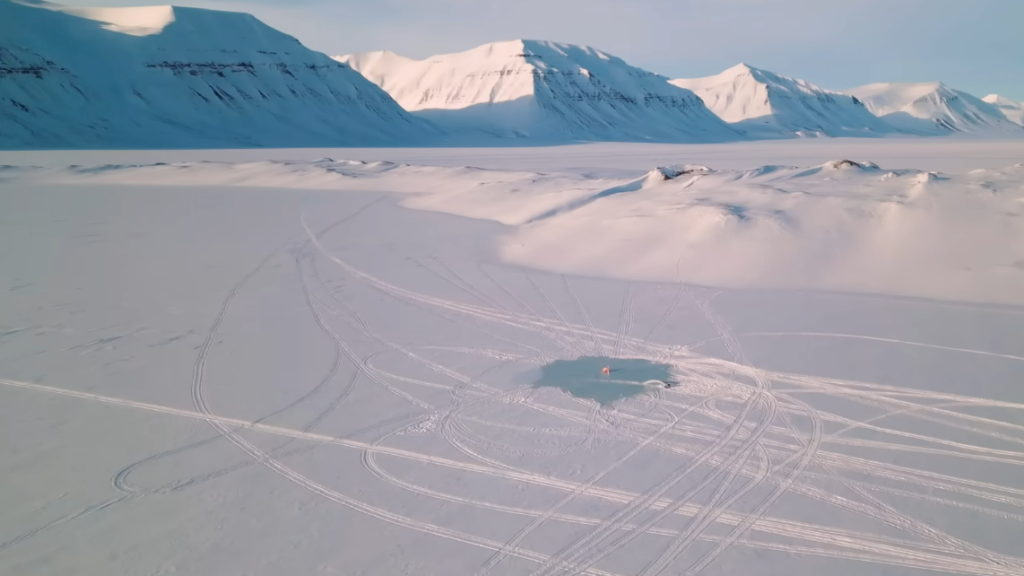
There is a false quiet that lingers over the Barents Sea, a silence that normally means nothingness. An unbreakable barrier of eternal ice, a white fortress that kept the disputes of empires at away, imposed this silence for the majority of human history. However, the shield is breaking. We are seeing the destruction of the planet’s air conditioner, and in its stead, we are erecting a checkerboard. The ice cap’s swift disappearance is a geopolitical catalyst as well as an environmental disaster.
The data is harsh and uncompromising. The Arctic is warming four times faster than the rest of the earth, changing what was once a frozen buffer zone into a navigable ocean. This physical phase change has generated a strategic one. Naval strategists see the Northern Sea Route, but climatologists perceive a feedback loop of methane emission and albedo loss. With a journey from Shanghai to Rotterdam that is almost 6,400 kilometers shorter than the conventional trek through the Suez Canal, this route, which hugs the enormous Russian coastline, provides an alluring economic shortcut.
For the maritime industry, that difference is quantified in fuel expenditures and days at sea—potentially slashing two weeks off the route. But for defense planners in Washington and Brussels, it poses a nightmare of vulnerability.
Russia has not been shy about its ambitions. Controlling over half of the Arctic coastline, Moscow regards the melting north not as a disaster, but as a resurgence of national destiny. They have carefully repaired Soviet-era military sites on the Kola Peninsula and deployed hypersonic missiles built to operate in the deep freeze. The Kremlin’s fleet of nuclear-powered icebreakers—the only such fleet in existence—patrols these waters with a possessiveness that suggests they consider the Northern Sea Route less as an international thoroughfare and more as a private toll road.
Key Factual Context: The Changing Arctic
| Feature | Details |
| Warming Rate | The Arctic is warming at four times the global average. |
| Primary Competitors | Russia (53% of coastline), USA/NATO (security), China (“Near-Arctic” ambition). |
| New Trade Arteries | Northern Sea Route (NSR) and Northwest Passage; NSR cuts Asia-Europe transit by ~10-15 days. |
| Strategic Resources | Estimated $1 trillion in unexploited minerals (rare earths) and significant oil/gas reserves. |
| Military Shift | Accession of Sweden and Finland to NATO; reactivation of Russian Soviet-era bases. |
| Key Reference | Modern Diplomacy: The Arctic Geopolitics |
Then there is the “Dragon” pointing north. China, despite being geographically separated from the region, has declared itself a “near-Arctic state,” a terminological fabrication that symbolizes its intent to be a player in the “Polar Silk Road.” Beijing sees the melting ice as an opportunity to diversify its trade routes away from the Malacca Strait, a choke point they have long feared may be blockaded by the U.S. Navy. Hungry for the rare earth minerals that the retreating glaciers have exposed, they are investing in expensive icebreakers and looking at mining ventures in Greenland.
The sheer amount of the resources waiting beneath the thaw is astonishing. We are talking about an estimated 90 billion barrels of oil and trillions of cubic feet of natural gas, together with the metals required to make the batteries of the green transition. It is a painful irony that the very resources needed to tackle climate change are buried in the region most ravaged by it, and that obtaining them requires burning the fossil fuels that started the cycle.
I recall standing in a drafty conference hall in Reykjavik a few years ago, listening to a diplomat explain that the Arctic had traditionally been a “zone of low tension,” and feeling a clear, sinking understanding that he was describing a world that had already ceased to exist.
That period of “Arctic Exceptionalism”—the assumption that the High North is immune to the friction of the rest of the globe—is dead. The invasion of Ukraine destroyed the diplomatic arteries of the Arctic Council, the principal platform for cooperation. Now, with Sweden and Finland joining NATO, the alliance has encircled the European Arctic, leaving Russia isolated and increasingly anxious. The “Ice Curtain” has descended, but this time, the water between the enemies is liquid and accessible.
However, the rush for the north is not without its wild optimism. The story of a seamless, ice-free expressway typically ignores the turbulent reality of the shift. Instead of disappearing smoothly, the ice is breaking up into erratic, floating floes that make navigation dangerous. The infrastructure is inadequate, search and rescue resources are overextended, and the arctic winter’s darkness is unbeatable. A significant oil spill or a stranded vessel in these seas would be a logistical impossible to control, yet the traffic increases every year.
We are headed into a moment where environmental stewardship is being steamrolled by hard power. Arguably a latecomer, the United States is now scrambling to catch up, revising its Arctic strategy and attempting to use force in an area it has mostly disregarded since the fall of the Soviet Union. The contemporary discourse around Greenland, which sees it as a strategic asset to be “secured” rather than as a cultural entity, demonstrates how rapidly we have returned to imperial mentality from the 19th century.
The melting Arctic is a mirror. It illustrates our incapacity to put national advantage ahead of collective survival. As the physical geography of the Earth changes, the political geography is contorting to accommodate it. We are painting lines on water that refuses to sit still, making claims on a seafloor that was never meant to see the sun. The ice is leaving us, and what is revealed underneath is not simply ocean, but the raw, unfiltered ambition of nations preparing for a hotter, tougher world.
Disclaimer
Nothing published on Creative Learning Guild — including news articles, legal news, lawsuit summaries, settlement guides, legal analysis, financial commentary, expert opinion, educational content, or any other material — constitutes legal advice, financial advice, investment advice, or professional counsel of any kind. All content on this website is provided strictly for informational, educational, and news reporting purposes only. Consult your legal or financial advisor before taking any step.
