

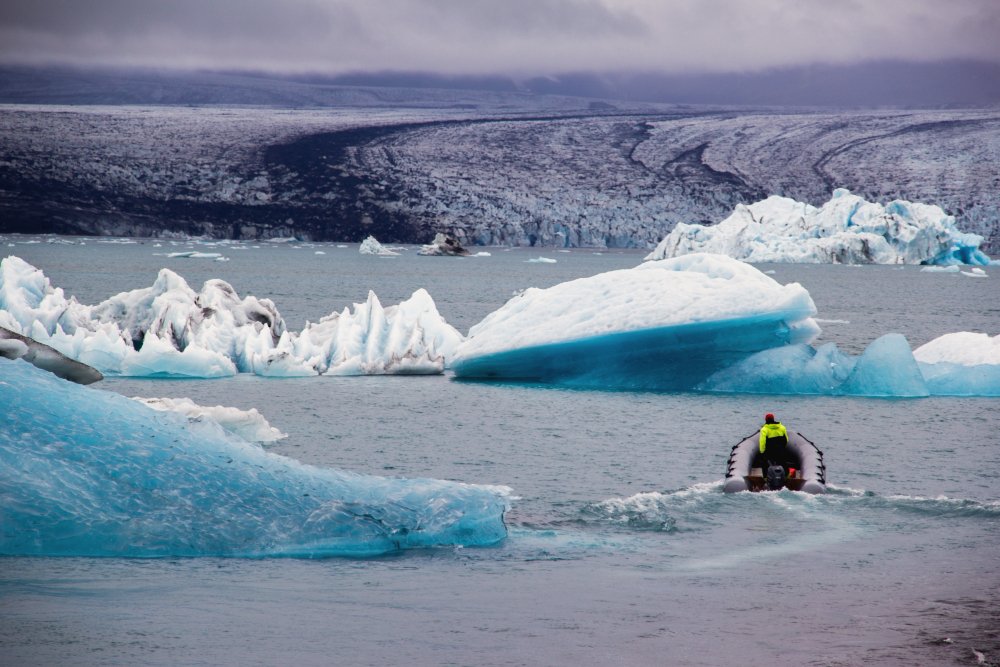
The first time I heard a diplomat refer to the Arctic as “blue territory,” I halted. In actuality, that supposedly poetic sentence was prophetic. New shipping lanes are physically emerging as a result of the ice melting so quickly. They are also strategic flashpoints rather than merely picturesque excursions.
In recent decades, Arctic amplification has intensified climate transitions at an amazing pace. The North is warming more than twice as rapidly as the rest of the world, melting more quickly than any other region. By 2035, scientists expect that vast areas of the Arctic will be ice-free in summer – changing the top of the earth into a bustling trading route. This change is subtly changing global expectations of what borders signify.
| Element | Description |
|---|---|
| Ice-Free Summer Projection | Estimated by 2035 |
| Strategic Routes Opening | Northern Sea Route (NSR), Northwest Passage (NWP), Trans-Arctic Corridor |
| Main Nations Involved | Russia, Canada, United States, China, Norway |
| Valuable Arctic Resources | 13% of oil reserves, 30% of natural gas reserves (undiscovered estimates) |
| Legal Frameworks in Use | UNCLOS, Polar Code, fragmented regional agreements |
| Key Environmental Risks | Oil spills, black carbon emissions, ecological displacement |
| Indigenous Impact | Disruption to traditional migration, fishing, and ice-dependent livelihoods |
| Major Infrastructure Expansion | Arctic ports, military bases, icebreakers, research stations |
| Geopolitical Tensions Emerging | Sovereignty disputes, military patrols, transnational crime risks |
| Primary Source for Data | Arctic Institute – www.thearcticinstitute.org |
The Northern Sea Route, skirting Russia’s Siberian coastline, is already luring ships away from the clogged Suez Canal. The Northwest Passage, once the stuff of frozen mythology, is beginning to throb with commercial interest. Cargo traffic that completely avoids conventional chokepoints may soon use both routes, cutting transit times between Asia and Europe by weeks. For industries obsessed with efficiency, these new lanes are incredibly effective.
However, legal certainty has not kept pace. Under the existing terms of UNCLOS, jurisdiction over the NSR and NWP remains highly contested. Russia argues the NSR falls within its territorial seas, requesting authority. Canada echoes that argument for the NWP. The United States and some European governments disagree, contending that these passes qualify as international straits – thus protecting freedom of navigation.
What complicates this further is the patchwork of unratified accords, ambiguous enforcement mechanisms, and escalating geopolitical rivalry. The Arctic Council, previously seen as a model of peaceful multilateralism, has been split since 2022. In response to Russia’s invasion of Ukraine, seven member states halted cooperation, effectively stopping 128 joint projects. That quiet reverberate strongly in Arctic airspace.
Russia has notably beefed up its Arctic presence, rebuilding over 50 Soviet-era military installations, investing in icebreaker fleets, and creating polar infrastructure with a defensive tilt. China, despite physically remote, has increasingly positioned itself as a self-declared “near-Arctic state,” sponsoring joint ventures, research missions, and port development. Their coordinated naval patrol near Alaska’s waters in mid-2023 raised more than a few eyebrows.
During a meeting on Arctic security, I remember a retired admiral remarking, almost casually, that “we may soon have more ships than seals in these waters.”
To anchor this change, new ports are being developed in locations like Qikiqtarjuaq, Nunavut, and Nome, Alaska. Their strategic positions, formerly deemed distant and inhospitable, are now crucial entrance points to a thawing commercial frontier. For policymakers, this presents economic opportunities. For Indigenous groups, it symbolizes a cultural and ecological reckoning.
Oil, gas, and mineral reserves — previously buried beneath kilometers of permafrost — are now within reach. Arctic waters may house as much as 22% of the planet’s undiscovered fossil fuels. That number alone is enough to increase both foreign investment and military interest. By utilizing satellite monitoring, Russia and China are charting these prospects with precision. Though more carefully, other nations are catching up.
Yet the threats remain deeply underappreciated. Arctic search-and-rescue capacity is still restricted. The Polar Code, aimed to regulate ship safety in cold circumstances, depends on broad principles rather than prescriptive enforcement. This allows for patchwork interpretation – a problematic weakness in a place with variable weather and vulnerable ecosystems.
In the context of environmental fragility, even a single oil leak could spark decades of catastrophic damage. Cold temperatures delay natural breakdown, while distance from major ports inhibits emergency response. For early-stage climate resilience, the Arctic is extremely vulnerable.
Black carbon from diesel engines, already a worry on land, is more detrimental here. When it lands on snow and ice, it darkens the surface, reducing reflectivity and accelerating melt. Each ship contributes to a feedback loop that’s gradually undermining the region’s climate defenses.
Criminal networks might take advantage of these open waterways in the interim. Illicit fishing, smuggling, and unregistered vessels are already being tracked. Sovereign patrols now serve not simply to demonstrate influence, but to defend against threats formerly considered inconceivable in such chilly zones.
Despite these worries, depicting the Arctic solely as a battlefield would be naive. This area presents fresh opportunities for innovation for countries who are open to working together. There is an opportunity to rethink marine governance for the twenty-first century by incorporating cutting-edge Arctic monitoring systems and encouraging inclusive treaty creation.
Some countries are already developing cooperative frameworks that match Indigenous knowledge with satellite technology – a particularly creative approach that integrates traditional understanding with cutting-edge instruments.
The Arctic, bereft of its ice, is becoming a site where global power, environmental responsibility, and economic ambition collide in dramatic ways. The metamorphosis is not a far-off hypothesis. It is emerging steadily, ship after ship, treaty by treaty.
As the blue replaces the white, one thing becomes extremely clear: the future of borders may depend less on fences or checkpoints, and more on sea lanes, resource claims, and the balance between preservation and power.
Disclaimer
Nothing published on Creative Learning Guild — including news articles, legal news, lawsuit summaries, settlement guides, legal analysis, financial commentary, expert opinion, educational content, or any other material — constitutes legal advice, financial advice, investment advice, or professional counsel of any kind. All content on this website is provided strictly for informational, educational, and news reporting purposes only. Consult your legal or financial advisor before taking any step.
