

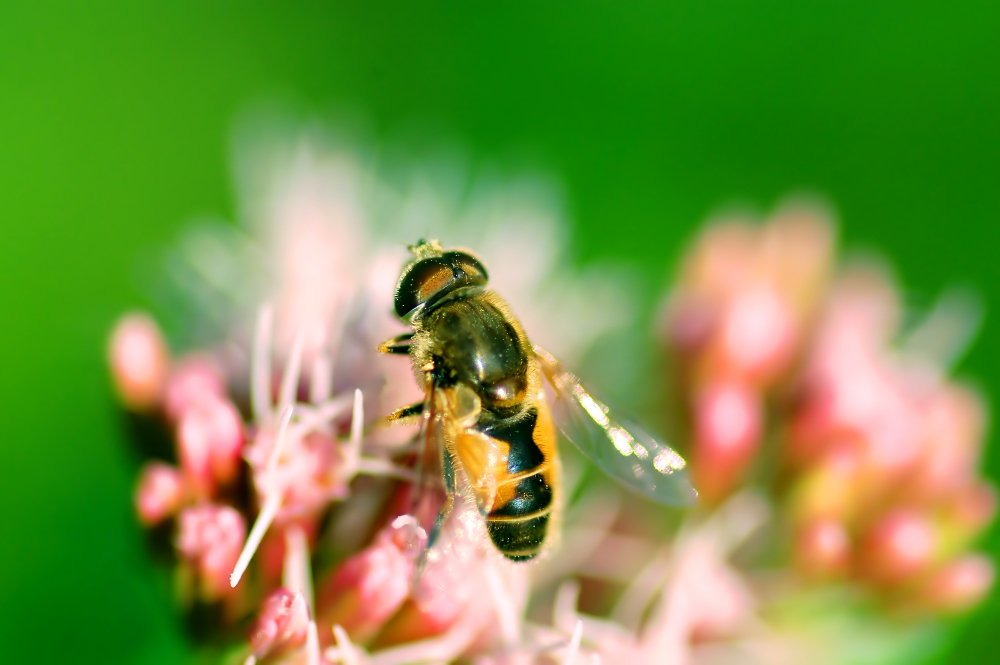
The soft, patient petals of flowers open before sunrise. There was a time when the garden outside my window buzzed with bees long before any machines hummed in laboratories, and I can still remember the soft shimmer of golden light on nectar‑laden wings. However, as pollinator populations declined, engineers started to wonder if humans could mimic and eventually supplement nature’s most productive workers.
The quest was prompted by a dramatic but gradual crisis: disease, chemicals, habitat loss, and stress were causing bees to die, sometimes painfully swiftly. Crop yields for almonds, apples, berries and many veggies become highly unreliable. Scientists predicted that three‑quarters of our food crops counted on insects to carry pollen, and that loss of these pollinators could translate into nutritional deficiencies and higher prices at grocery shops.
| Topic | Key Points |
|---|---|
| Crop Dependence | About 75% of major food crops rely on animal pollination |
| Bee Decline | Honeybee colonies are losing up to 40–50% annually |
| Technological Response | AI‑enhanced hives, autonomous drones, robotic pollinators |
| Benefits | Higher yields, precise targeting, resilience in extreme conditions |
| Challenges | High costs, best fit for controlled environments, integration hurdles |
| Agricultural Leaders | BeeHero, Beewise, Arugga, WSU projects, ETH Zurich research |
| Future Vision | Hybrid systems combining natural and AI pollination |
| Broader Context | Pollination underpins billions in annual agricultural production |
That’s where advanced systems, driven by artificial intelligence and robotics, began filling a gap that traditional ecology could no longer cover on its own.
Companies like BeeHero and Beewise deployed hives that don’t simply sit in orchards, but think. Equipped with temperature and humidity sensors, sound monitors, and machine learning algorithms, these smart hives detect small alterations in bee behavior that a human eye could miss until it’s too late. Patterns in sound frequencies, hive heat changes, and foraging habits get evaluated continually, delivering unusually obvious early signs of stress or sickness.
In one place where these procedures were used, colony losses reduced sharply—remarkably effective considering the astounding collapse rates in uncontrolled apiaries. Not only were there fewer fatalities, but output also increased. For farmers whose crops used to sit idle when bees faltered, healthy colonies increase pollination capacity.
Yet adaptability wasn’t the sole method. Scientists also constructed devices that behave like a swarm of bees transporting not nectar, but data. These drone and robot pollinators utilize instructions from computer vision models to detect flowers ripe for fertilization and distribute targeted pollen with precision that can match, and in some trials even exceed, natural pollination. Watching them at work seems weirdly beautiful: little drones hover over blossoms, their rotors creating soft air currents that dislodge pollen in a way that’s startlingly similar to a bee’s wing vibration.
At a Washington State University orchard, a robotic ground unit led by powerful object‑detection systems learnt to recognize “king flowers”—the blossoms most crucial for maximizing fruit sets—and apply pollen with success rates above 80 percent. That efficiency not only helps rebuild lost bee populations but delivers regularity that farmers can plan around at scale.
In tightly sealed greenhouse farms where natural bees struggle and temperatures increase beyond their viability limitations, AI‑assisted pollination proved particularly effective. These systems don’t fatigue or take breaks; they work under tremendous temperatures, and in environments where insects can’t. It’s not only additional; it is vital for crops that such settings nurture.
Despite this promise, price tags remain high, especially for smaller farms with limited money. Not all tomato farmers or orchards spanning large landscapes are early adopters; instead, they are frequently well-funded producers or experimental stations with controlled environments. And while robotic bees might buzz endlessly through rows of flowers, they don’t replace the precise biological balance that natural pollinators support across meadows, woodlands, and riparian corridors.
However, making bees obsolete is not the aim. The goal is to create a hybrid resilience in which technology enhances rather than replaces the natural systems on which we rely. Think of it as an orchestra—where live pollinators are the major players and AI systems are the amplifiers, cues, and directors that ensure the performance continues even when key contributors struggle.
I once sat at a test orchard, watching robotic units glide between apple trees while the light warmed early‑bloom petals. A farmer nearby, eyes riveted on the robots’ calm, controlled movements, mumbled that if this technology had existed earlier, he might not have witnessed half his hives collapse through the drought years. He didn’t talk with despair, but with the type of hopeful pragmatism a lifetime in agriculture cultivates.
These systems excel in terms of accuracy and flexibility. Classic pollination is a bit like letting a crowd loose in a library—some books get studied, others ignored. AI pollination is similar to directing each reader directly to the pages they require. The result can be better yields and much faster results, with less guesswork and fewer surprises.
Moreover, robots don’t spread disease between plants, don’t carry mites, and don’t succumb to chemicals or climate stress. They merely perform a duty with unrelenting consistency, enhancing crop viability when natural pollination falters. This helps protect food supplies from the kinds of shocks that have historically resulted in unstable markets and localized scarcity.
Still, there’s a poetic tension here—the concept of replacing a creature born of evolution with something created. And in some instances, watching a drone hover over a fragrant blossom is like observing the future take wings. It’s a world where meticulous engineering might stand side by side with precious life forms, where computers let researchers analyze bee health more profoundly than ever before, and where food systems acquire an extra layer of resilience against the uncertainties of climate and habitat change.
Technology doesn’t repair every aspect of ecological pressure. But by blending AI with a deep appreciation for biological pollination, this method enhances our power to nurture the roots of agriculture. It doesn’t ask us to sacrifice nature; rather, it invites us to design tools that assist both crops and pollinators thrive.
For farmers coping with unpredictable seasons and insurers scared of crop failures, that promise is more than academic jargon. It is a guarantee that even when the natural buzz fades, productivity can continue. And for all of us who like strawberries in winter, almonds in our morning granola, or apples picked straight from tree limbs, it’s an optimistic indicator that innovation can help perpetuate the bounty we’ve long taken for granted.
For bees, the Bee Solution is not the end. Biology and technology are working together more closely than ever in this new phase. That cooperation, as subtle as the flutter of petals in spring, is helping secure a future where food supply chains remain vibrant, adaptable, and remarkably robust.
Disclaimer
Nothing published on Creative Learning Guild — including news articles, legal news, lawsuit summaries, settlement guides, legal analysis, financial commentary, expert opinion, educational content, or any other material — constitutes legal advice, financial advice, investment advice, or professional counsel of any kind. All content on this website is provided strictly for informational, educational, and news reporting purposes only. Consult your legal or financial advisor before taking any step.
