

A documentary headed by an almost-silent protagonist ended up making the greatest noise at the February box office. “Melania,” Amazon’s finely packaged depiction of the former First Lady, arrived with the composure of a soft-spoken statement—and yet its first three days garnered $7 million in domestic ticket sales. That is remarkably uncommon for a political documentary.
Although reviewers instantly trashed it, calling it everything from “a glorified wedding video” to a “plush propaganda reel,” spectators were apparently pulled to something else. Maybe it was curiosity. Perhaps nostalgia. Or maybe it was the sheer force of Amazon’s marketing juggernaut, which employed everything from bus wraps to special popcorn tins, pulling stunts normally reserved for Marvel films.
Orlando, Dallas, and Phoenix theaters filled up more quickly than analysts had anticipated. The turnout was referred to as “a long-tail opportunity” by Amazon’s distribution leader, alluding to potential future returns once the movie goes live. That may be a fair bet: despite its harsh ideological edge, the documentary garnered a “A” grade from CinemaScore, signifying great word-of-mouth potential.
| Title | Melania: Twenty Days to History |
|---|---|
| Subject | Melania Trump, former First Lady of the United States |
| Box Office Opening Weekend | $7 million (U.S. Domestic) |
| Production Cost | $40 million |
| Marketing Budget | $35 million |
| Distributor | Amazon MGM Studios |
| Director | Brett Ratner |
| Streaming Platform | Prime Video (TBA release) |
| External Reference | Business Insider |
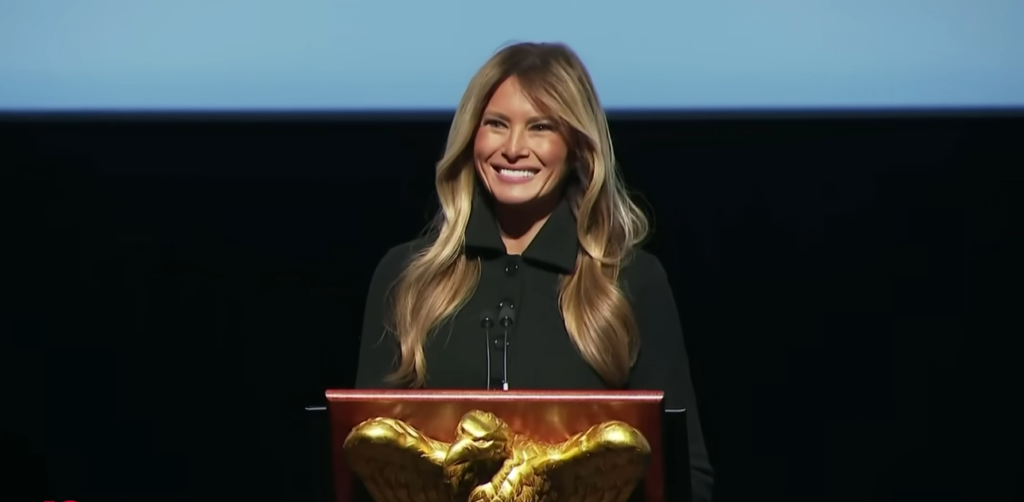
It’s worth noting that Melania Trump, whose public presence remains extremely muted, did not directly promote the film. That became part of the mystery in and of itself. Her perceived distance added a bizarre feeling of realism to a project otherwise oozing in polish. People came not to hear her speak, but to watch her not speak—in slow pans, soft lighting, and behind velvet doors.
For a moment in the middle of the film, I remember glancing around the theater and realized that no one was reacting vocally. There were no laughs or gasps, just a strangely respectful silence.
The economy was less tranquil behind the scenes. Amazon paid $40 million for rights, with another $35 million put into marketing. The rumored $28 million payoff to Melania Trump has raised eyebrows across the industry. While her husband’s supporters welcomed the film’s debut as a “blockbuster,” opponents questioned the intentions behind such a hefty investment.
Was this a planned investment in cultural cachet? A peace offering to an administration infamous for weaponizing loyalty? Amazon executives vehemently refute any such claims, saying, “We licensed the film for one reason and one reason only – because we think customers are going to love it.”
Love it or not, the amount of attention is apparent. This is currently one of the highest-grossing documentary premieres in almost a decade—outpacing recent challengers by a substantial margin. For reference, “Becoming Led Zeppelin,” a music-based documentary with greater appeal, only achieved $10.4 million in its complete run.
The director, Brett Ratner, returned to filmmaking here after a years-long layoff characterized by controversy. His presence behind the camera offered another degree of provocation. Yet the film’s framing steers clear of anything sharp-edged. Instead, it went toward admiration, casting Melania as the serene navigator of a tumultuous political sea.
From a strategic sense, Amazon clearly considered this documentary as an event release. They skipped the typical slow-burn path—no festival circuit, no luring drip-feed of trailers. Rather, they imitated the strategies of blockbusters, condensing attention into a focused moment. That strategy, amazingly, worked.
Interestingly, the geographic breakdown of box office performance paralleled the cultural landscape of modern America. Liberal-leaning cities exhibited scattered attendance. But across conservative suburbs and Republican-leaning metros, the film performed impressively. The gap wasn’t simply political—it was spatial, cultural, emotional.
Beyond the stats, “Melania” provides studios a case study in what happens when you marry public mystique, vast pockets, and high-stakes branding. It also resets expectations for what political documentaries may achieve—at least, when wrapped in silk and sold like entertainment.
However, there is still uncertainty about this gamble’s profitability. Theater runs, especially for high-performing nonfiction films, rarely provide long-term revenue. International licensing and Prime Video streams will probably be key factors in Amazon’s comeback. But by generating buzz, they may have already taken the value they wanted: attention, data, headlines.
Now, other studios will keep a careful eye on it. The takeaway here isn’t necessarily that political docs sell—it’s that political individuals who defy overexposure may nonetheless captivate, especially when presented in unusual ways. Melania Trump, famously private, is now the inadvertent face of a documentary renaissance. Not by speaking, but by letting others tell her silence.
And silence, amazingly, is proving to be quite profitable.
Disclaimer
Nothing published on Creative Learning Guild — including news articles, legal news, lawsuit summaries, settlement guides, legal analysis, financial commentary, expert opinion, educational content, or any other material — constitutes legal advice, financial advice, investment advice, or professional counsel of any kind. All content on this website is provided strictly for informational, educational, and news reporting purposes only. Consult your legal or financial advisor before taking any step.
