

Instead of a beep or a badge, it starts with a glance—a silent flash while a camera scans your face and matches it. The Transportation Security Administration is implementing facial recognition lanes at an increasing number of major U.S. airports, which promise to make identification as easy as a blink.
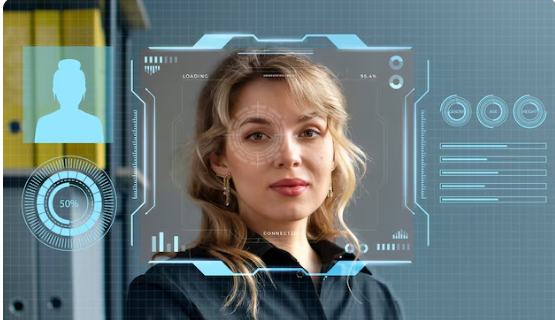
This isn’t hypothetical tech. It’s operational at over a dozen airports and set to reach 65 by next year. Rolled out through the TSA PreCheck Touchless ID program, it’s already transforming how identity is validated at security checkpoints. The change is especially helpful for passengers who are enrolled in PreCheck and have uploaded a valid passport to their airline profile.
TSA Touchless ID Facial Recognition Program
| Feature | Details |
|---|---|
| Program Name | TSA PreCheck Touchless ID |
| Technology Used | Biometric facial recognition |
| Rollout Plan | Expanding to 65 airports by mid-2026 |
| Airlines Participating | Alaska, American, Delta, Southwest, United |
| Requirements | TSA PreCheck, valid passport uploaded to airline profile |
| Data Retention | Photos deleted within 24 hours post-departure |
| Current Locations | JFK, LAX, DFW, ATL, ORD, SEA, DEN, and others |
| Privacy Safeguards | No law enforcement or surveillance use |
| Source |
Travelers can now pass through some checkpoints without ever touching a paper by simply opting in. No boarding pass. No license. Instead, their face becomes the credential. TSA’s cameras snap a photo and compare it quickly to photographs maintained by the government—typically from passports or Global Entry data. If matched, clearance is granted. When it comes to easing traffic during rush hour, it works incredibly well.
TSA has made great efforts to reassure the people. Your facial data, they underline, is not utilized for monitoring or law enforcement, and it’s erased from the system within 24 hours of leaving. That timescale, while modest, is aimed to alleviate worries about privacy and longer-term data retention.
The present deployment focuses on the five largest domestic carriers—American, United, Delta, Alaska, and Southwest. These airlines are integrating the technology into their existing operations, allowing passengers with active airline profiles and PreCheck membership to participate. But not everyone can just stroll up and utilize the face lane. You must opt in beforehand, and a small Touchless ID icon has to display on your mobile boarding pass to signal eligibility.
I saw a man boldly enter the authorized lane during a recent layover at SEA. No paperwork exchanged, no questions asked. Just a stop in front of the lens, a green signal, and he was through. I couldn’t help thinking how dramatically different that moment felt from the traditional practice of digging through wallets at security.
Touchless ID doesn’t replace regular lanes, but it surely presents a tempting option. Passengers still need to carry physical ID just in case. That protection is necessary, especially as biometric systems are not flawless. Lighting concerns, face alterations, or technical glitches could always need a backup.
What makes this method particularly interesting is how unobtrusive it feels. By integrating the innovation directly into the PreCheck experience—already associated with speed and convenience—it encourages adoption without pressure. And by working with big airlines, the system silently nests itself into platforms that travelers already use, rather than establishing a new hoop to jump through.
Yet, the rise of biometric authentication also brings issues regarding long-term impact. Airports have gradually transformed into high-surveillance settings over the last ten years, frequently due to security concerns. The introduction of facial recognition, even for voluntary use, increases that framework. It feels more normalized the more streamlined it gets.
TSA’s commitment to remove photographs after 24 hours may be immensely reassuring to some, but others wonder whether today’s limits will hold tight tomorrow. What happens when such technologies become common not just in airports, but in stadiums, stations, and schools? The rationale of efficiency rarely stops at transportation.
The advantages are obvious from a usability perspective. The lanes are incredibly efficient. Less time spent queuing, fewer contact points, and fewer delays during ID checks. These improvements feel like significant advancements, especially for families, senior citizens, and regular flyers—like a long overdue fix for bottlenecks that have existed for decades.
Touchless ID is also fairly economical from an infrastructure standpoint, thanks to its interaction with existing TSA systems and mobile boarding pass platforms. That makes expansion feasible throughout mid-size airports, not just major hubs.
However, what remains is the stillness around it all. There is little formality when you go through the scanner. The line keeps moving. The interaction feels effortless, perhaps even soothing in its rhythm. But beneath that simplicity lurks a network of permissions, algorithms, and assumptions—about identity, access, and trust.
In the next years, as facial recognition becomes more familiar across sectors, public expectations will evolve. What seems futuristic now might become the norm in the near future. Airports have long spearheaded such shifts, serving as testbeds for security protocols that ultimately spread into ordinary life.
TSA is developing a paradigm that is both highly adaptable and potentially revolutionary through low-friction rollout and strategic alliances with airlines. But for now, it remains optional—though the convenience is obviously persuasive.
The next time you’re in a security line and see someone breeze through without displaying anything at all, you may feel a twinge of curiosity or even adoration. It’s a glimpse into a future that’s already here—just not fairly dispersed.
Disclaimer
Nothing published on Creative Learning Guild — including news articles, legal news, lawsuit summaries, settlement guides, legal analysis, financial commentary, expert opinion, educational content, or any other material — constitutes legal advice, financial advice, investment advice, or professional counsel of any kind. All content on this website is provided strictly for informational, educational, and news reporting purposes only. Consult your legal or financial advisor before taking any step.
