

The classic image of a university—a calm retreat of researchers leafing through leather-bound volumes—feels increasingly obsolete. Research is currently humming beneath the surface of many campuses like a living electrical grid. Labs run around the clock, ideas travel seamlessly between disciplines, and business accelerators now exist directly across the courtyard from lecture halls. Once conservatively theoretical, universities are now remarkably practical.
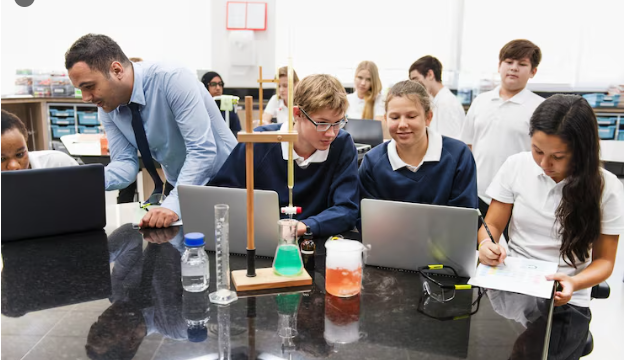
Across continents, they’re taking up a wonderfully effective position as launchpads for invention. At MIT, ideas don’t gather dust in drawers—they migrate immediately into product prototypes. Venture capitalists lurk at the outskirts of academic panels, knowing that the next breakthrough in quantum computing or synthetic biology might emerge before the semester ends.
Universities Driving Global Innovation (2025 Landscape)
| Region | Leading Institutions | Key Contributions |
|---|---|---|
| United States | MIT, Stanford, Harvard, UC Berkeley | AI research, patents, startup ecosystems |
| China | Tsinghua University, Peking University, Zhejiang University | STEM investment, AI labs, government-industry alignment |
| Europe | Oxford, Cambridge, EPFL, Université Paris Cité | Interdisciplinary labs, sustainability R&D |
| Asia | Nanyang Technological University, City University of HK | Tech infrastructure, regional partnerships |
| Emerging Economies | IITs (India), Koç University (Turkey), University of Cape Town | Industry collaboration, STEM advancement |
| Common Themes | Interdisciplinary research, AI investment, startup support | Innovation, agility, international talent mobility |
This trend isn’t confined to American soil. Beijing’s Tsinghua University has developed into a strategic research center thanks to targeted government financing and industry partnerships. Its laboratories are not only creating tremendous numbers of peer-reviewed publications but are also launching AI models and patented technology at a speed that would’ve appeared unimaginable just a decade ago.
What’s really novel is how these institutions are altering the innovation pipeline itself. Instead than waiting for industry to pick up scattered discoveries, colleges are increasingly serving as the front end of the product cycle. They’re testing, refining, and, in some cases, commercializing directly.
In recent months, I chatted with academics from EPFL in Lausanne who were co-developing urban cooling materials alongside architects and computer vision specialists. Their lab didn’t appear like a standard science department—it resembled a shared studio, with 3D models, climate simulation maps, and a whiteboard scrawled with both calculations and construction plans.
That image remained with me—not because it was dramatic, but because it mirrored a fundamental truth: creativity now originates from intersections.
By dissolving the silos that formerly constituted academic departments, universities are becoming particularly fruitful locations for ideas that don’t exactly fit into neat classifications. Robotics is influenced by biology. Climate modeling and economics come together. Even ethics is no longer a distinct course—it’s being incorporated in engineering decisions.
The 2025 Global Innovation Index revealed this transition with surprising clarity. Institutions in India, South Africa, and Turkey have notably enhanced their ability to interact with industry. This isn’t just a box-checking exercise. It’s materially changing the speed at which research becomes actual.
At IIT Delhi, a predictive health AI model that began as a student thesis is currently being field-tested across rural clinics in Northern India. It took months, not years, to make the change. That kind of momentum is especially helpful for early-stage innovations because it keeps them from withering before they gain traction.
However, not all institutions are keeping up. Even the most talented researchers are constrained if AI infrastructure—servers, GPUs, and scalable data access—is not invested in. A university with only basic compute capabilities can’t train a next-gen model, no matter how innovative the technique. This disparity, already obvious, risks becoming a structural split.
Some are creating strategic partnerships to combat this. EPFL, for instance, is co-building AI facilities in growing regions. The idea is shared infrastructure, distributed access, and talent streams that don’t rely on migration alone.
For institutions in smaller nations, this concept is highly adaptable. It lessens capital pressure while still immersing them in fast-moving global networks. And for students, it assures access to initiatives that matter—not just academically, but economically.
The notion of “academic success” has subtly broadened during the last ten years. Publishing in journals is vital, but universities are increasingly rated on patent filings, startup output, and their ability to recruit industrial partnerships. That transition, while often challenged, has considerably minimized the lag between knowledge and application.
Harvard, Stanford, and Cambridge are still significant in citations—but their impact now stretches far beyond paper. They mentor founders, license technologies, and produce policy briefs. The campus has evolved into a hub for change.
This shift is becoming more and more entrepreneurial. In recent years, colleges have opened numerous of accelerators, incubators, and venture co-labs. While still in school, students start their own businesses. Professors file patents whilst assessing essays. The tone is practical rather than opportunistic.
For teachers under pressure to publish and finance, this dual role is both challenge and opportunity. Some departments are growing rapidly; others remain slow-moving, impeded by bureaucratic legacy systems that haven’t yet adapted to the pace of current science.
But even inside those limits, adaptability is slipping in. At the University of Cape Town, a biofuel research center adopted a rolling funding cycle, allowing proposals to acquire seed capital within weeks. That tiny structural alteration resulted in three spinouts in a single year.
Through strategic alliances, cross-border collaboration is also rising. Cambridge collaborates with Singapore. Stanford joins forces with Tel Aviv. This expanding mesh of joint degrees, research funds, and dual-lab arrangements is substantially improving the quality and diversity of outputs.
In the context of global warming, AI ethics, and public health, such networking is vital. No single institution can handle planetary-scale challenges alone. However, universities are well-positioned to propel significant, long-lasting progress when they work together—through pooled resources, shared talent, and linked goals.
The road ahead isn’t smooth. Funding remains volatile. Student exchange programs are at risk due to geopolitical concerns. And the AI gap could increase before it narrows.
Disclaimer
Nothing published on Creative Learning Guild — including news articles, legal news, lawsuit summaries, settlement guides, legal analysis, financial commentary, expert opinion, educational content, or any other material — constitutes legal advice, financial advice, investment advice, or professional counsel of any kind. All content on this website is provided strictly for informational, educational, and news reporting purposes only. Consult your legal or financial advisor before taking any step.
