

There was a crisp stillness over Bentonville as John Furner stepped into his new office. With little fanfare but unmistakable gravity, he began his tenure as the chief executive of Walmart—a company so vast it moves economies and shapes entire industries.
Furner’s professional trajectory bears a remarkable resemblance to those classic tales of employees who become leaders. He stocked shelves. He ran stores. He listened to clients before ever sitting in a boardroom. His three decades of lived experience now influence his leadership style.
He doesn’t arrive as a disruptor or visionary outsider. Rather, he ascends with calm authority as someone who has internalized the pace, nuance, and pulse of Walmart’s operations. This transition suggests not reinvention, but refinement—an evolution founded in institutional memory.
| Detail | Information |
|---|---|
| Name | John Furner |
| New Role | President and CEO, Walmart Inc. |
| Effective Date | February 1, 2026 |
| Predecessor | Doug McMillon (retired after 10 years as CEO) |
| Previous Roles | CEO, Walmart U.S.; CEO, Sam’s Club |
| Started at Walmart | Hourly associate in Bentonville, Arkansas |
| Employees Overseen | Approximately 2.1 million globally |
| Stores | Nearly 11,000 locations in 19 countries |
| Education | University of Arkansas (Marketing Management) |
| Reference | corporate.walmart.com |
Doug McMillon, his predecessor, leaves behind a record of digital acceleration, particularly during the pandemic, when internet sales skyrocketed and new operational tactics were rapidly applied. Furner, notably, was not simply nearby throughout the storm—he was inside the engine room. As head of Walmart U.S., he helped redesign fulfillment systems and reoriented the firm amid one of its most tumultuous periods.
The success was tangible. In 2021 alone, U.S. net sales surged by $29 billion, while e-commerce recorded a 79% spike. These weren’t theoretical improvements. They translated straight to stores stocked, packages delivered, and customers retained.
By investing substantially in pick-up infrastructure and supply chain resilience, Walmart became stunningly more agile—a firm long known for big-box domination suddenly operated with surprising nimbleness.
Furner’s managerial style originates from his childhood, specifically the time he spent working with his grandfather on a farm. There, he learnt early that cows don’t wait for weekends. The fences still require inspecting, no matter the calendar. This hands-on practicality formed a pattern for how he addresses difficulties.
He takes the same practicality into executive decisions. He prefers surgical changes over ostentatious ones, such as increasing retail productivity, rewarding employee loyalty, and boosting customer service. Through this strategy, he notably boosted morale and retention among store managers.
Walmart has announced improved reward packages for top-performing store executives in recent months. Base pay were dramatically hiked to between $130,000 and $160,000. With bonuses and stock options included, some packages climbed as high as $620,000. This was not only a retention strategy—it was a recalibration of what frontline leadership is worth.
Furner’s logic was very clear: supervisors ought to have a sense of ownership. This idea in shared accountability, rooted in his own climb through the ranks, is particularly convincing to employees who rarely see themselves mirrored in executive offices.
The corporation recently restored a bonus scheme for hourly workers, allowing some long-serving staff to earn up to $1,000 annually. Such adjustments, while not revolutionary in scope, are astonishingly efficient in conveying respect and reward.
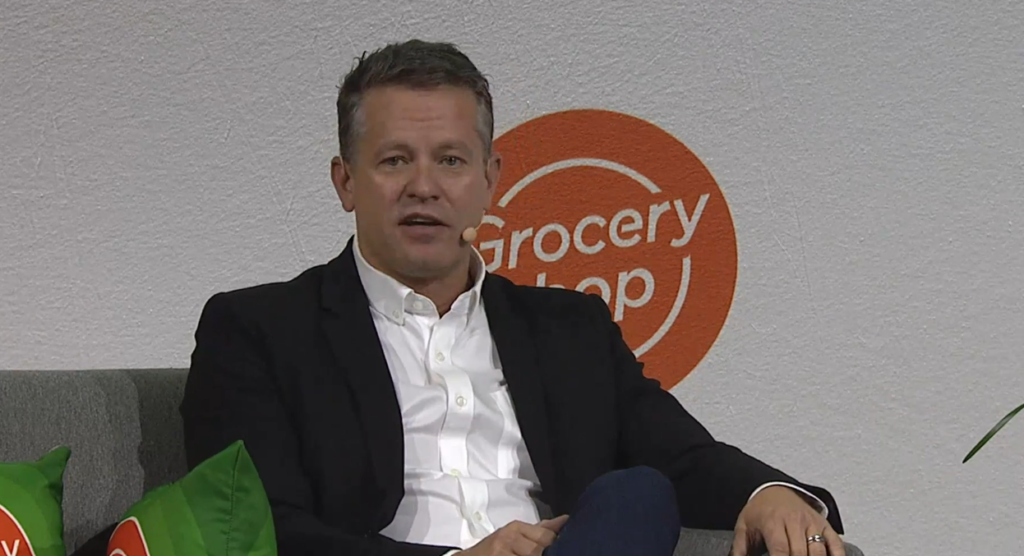
During a recent panel at the Brainstorm Tech conference, Furner addressed automation anxieties head-on. He stated that although AI would unavoidably disrupt workflows, it would not diminish Walmart’s overall employment over the next five years. Instead, roles would shift, evolve, and typically pay more.
“We’re extending people’s careers,” he remarked. “And those jobs pay better.” It was a grounded statement, free of jargon yet rich in reassurance.
I found myself nodding as he stated this—there’s something particularly reassuring when a leader speaks simply about transitions without reverting to corporate euphemisms.
Furner’s record at Sam’s Club was a glimpse of this focused leadership. He led the chain through growth for 11 consecutive quarters. He streamlined operations, shuttered lagging locations, and emphasized the brand’s emphasis. He fortified the core instead of following trends.
In the context of today’s expanding retail sector, that constraint is extremely novel.
Walmart today sits at a $1 trillion valuation, behaving more like a data-driven logistical organism than a normal retailer. It is calibration, not a crisis, that lies ahead. Furner’s aim isn’t to rebuild; it’s to fine-tune and scale.
The expectations are huge, but so is the trust put in him. He is not expected to copy McMillon, nor renounce his legacy. He is expected to manage Walmart’s next chapter with firm hands, clear eyes, and a deep awareness of how it all began—with people, procedures, and a shelf that needed stocking.
As he traverses the same floors he once scrubbed, that memory doesn’t just shape his leadership—it silently defines it.
Disclaimer
Nothing published on Creative Learning Guild — including news articles, legal news, lawsuit summaries, settlement guides, legal analysis, financial commentary, expert opinion, educational content, or any other material — constitutes legal advice, financial advice, investment advice, or professional counsel of any kind. All content on this website is provided strictly for informational, educational, and news reporting purposes only. Consult your legal or financial advisor before taking any step.
