

Some stories refuse to settle. They come back to the surface, drawn by something more subdued—an unsolved tension—rather than scandal. That’s exactly what Apsana Begum’s council flat has become. Of course, it’s a home, but it’s also a symbol that currently straddles the line between justice and law.
She gets £94,000 as an MP. That sum alone, considerably higher than the average UK wage, generates a logical question mark when set against the reality she stays in social housing in Tower Hamlets—one of the most densely inhabited and housing-strained locations in the country.
The problem revived again in late January 2026, when it was verified that Begum still lives in the same council flat she acquired years ago—despite declaring as early as 2021 that she “probably” no longer needed it. That word—probably—lingers. It’s the kind of word people use when honesty and diplomacy meet halfway.
There is a lot of housing stress in Tower Hamlets. According to municipal figures, over 19,000 people are now waiting for social housing. The wait time for a single-bedroom property is above 2,000 days. In that scenario, every unit matters. Public trust is particularly vulnerable when one of those units is still inhabited by a serving MP.
| Name | Apsana Begum |
|---|---|
| Date of Birth | 25 May 1990 |
| Role | Labour MP for Poplar & Limehouse |
| Salary | £94,000 (plus MP expenses) |
| Council Flat? | Yes – Tower Hamlets |
| Legal Status | Acquitted of housing fraud (2021) |
| Controversy | Still lives in council flat despite high income |
| Reference | BBC Profile – Apsana Begum |
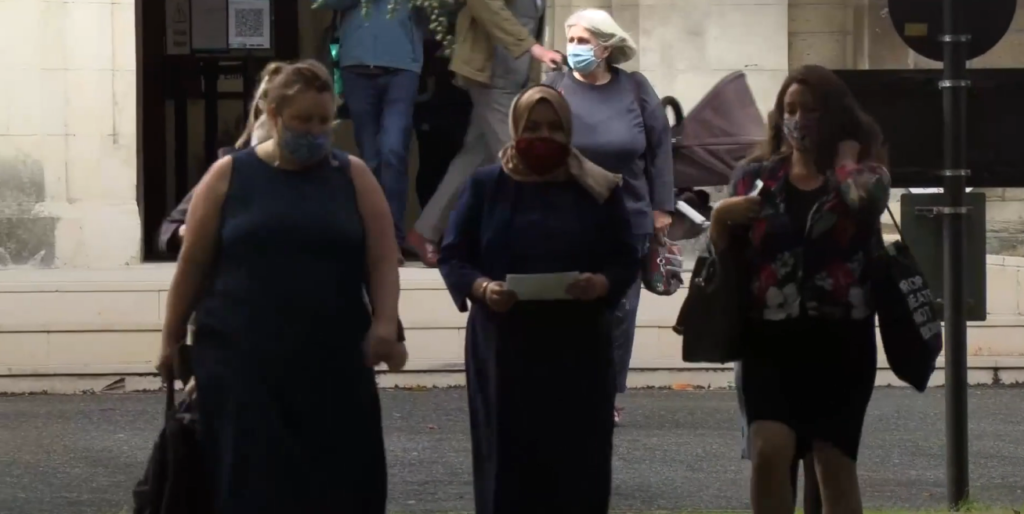
To be clear, there is no violation of the regulations. Once someone is awarded a council flat, Tower Hamlets Council does not reevaluate their income later on. It’s a mechanism created to ensure housing stability, not to regulate rising fortunes. This strategy was first founded on compassion—protecting residents from punitive displacement only because their circumstances improved.
However, that same provision now feels more like an oversight than protection in situations like Begum’s.
During her 2021 interview with The Guardian, Begum reflected on her shifting circumstances. She conceded, with deliberate hesitation, that perhaps the flat was no longer necessary. That sort of criticism, especially from a public authority, doesn’t go unheard. It gains credibility when detractors, such as Conservative chairman Kevin Hollinrake, accuse her of being hypocritical by advocating for housing fairness while holding a position that many regard as a valuable and limited resource.
Begum has, throughout her political life, spoken out passionately about housing injustice. She has denounced gentrification, demanded significant funding for public housing, and chastised successive administrations for abandoning vulnerable communities. Her lectures often resound with clarity and urgency. She’s not unclear about where she stands.
And yet, it’s her own story that now muddies the waters.
Between 2013 and 2016, she was investigated for potential housing fraud—accusations she fiercely disputed and was later cleared of in 2021. The case dragged through courtrooms and tabloids alike, only for the verdict to reaffirm what many had hoped: that no misconduct had happened. Yet the hubbub surrounding the case never totally disappeared. It just changed.
Since then, Begum has kept sitting in Parliament, been momentarily suspended and returned by Labour, and earned a record as a left-leaning voice unafraid of internal criticism. Her vote against the two-child benefit cap in 2024 was another indication of her defiance—one that cost her politically, if not publically.
Her defenders claim this latest criticism is thinly veiled bias. Dr. Charlotte Proudman, a barrister and ally, views the retaliation as part of a pattern—targeting a woman of color, a survivor of abuse, and the country’s first hijab-wearing MP. That framework ties into bigger issues about representation, resilience, and the increased scrutiny often experienced by prominent individuals who don’t fit the usual mold.
Still, Begum’s issue is not just about identity or legal borders. It’s about trust.
She has unintentionally caused a rift in the larger discussion about who should get what during a crisis by refusing to move out or even make a commitment to do so. Her continuing stay, though legal, appears to violate the very values she so often supports.
And yet, when I look back to that single phrase—“probably not something that I need”—I can’t help but wonder whether she feels trapped between two irreconcilable expectations.
One expectation says: lead by example, even if it means sacrificing comfort. The other says: don’t allow the politics of perception rob you of hard-won stability, especially after surviving tragedy and personal attack. It’s a dilemma not readily remedied with headlines or hashtags.
Tower Hamlets is ground zero for the UK’s housing debate. Rents are sky-high, affordable homes are rare, and the borough’s population expands faster than its housing stock. The Centre for London labels it one of the most housing-stressed places in the country. Such statistics are a real burden for local families who have been waiting years for a place to call home.
By criticizing systemic failings while keeping housed under the same system, Begum has become a type of mirror for a flawed structure. She did not design these policies, nor did she manipulate them. But she epitomizes their conflicts now.
Perhaps that’s why this narrative continues to stir people so strongly. It’s not just about one flat. It’s about fairness, perception, and whether the policies we have still serve the communities they were designed to protect.
In the following months, the public debate will undoubtedly move on—drawn toward another name, another issue. However, the unsolved tension around Apsana Begum’s council flat will remain in the air like a warning flag and question mark.
If housing is, as Begum once remarked, “a right,” then certainly the rights of those still waiting need similar clarity. And maybe it’s time to reevaluate what justice actually looks like when resources are limited, patience is exhausted, and trust is in jeopardy—not just for one renter, but for the entire housing system.
Disclaimer
Nothing published on Creative Learning Guild — including news articles, legal news, lawsuit summaries, settlement guides, legal analysis, financial commentary, expert opinion, educational content, or any other material — constitutes legal advice, financial advice, investment advice, or professional counsel of any kind. All content on this website is provided strictly for informational, educational, and news reporting purposes only. Consult your legal or financial advisor before taking any step.
