

There was a moment, soon after the Discord message was sent, when the mood among fan circles shifted almost imperceptibly. It was annoyance with problems and PvP balance one moment, incredulity the next, and finally resignation. The founder was gone. The layoffs were formally announced.
Ashes of Creation wasn’t just another unpolished early access project. It had been, from its conception in 2016, incredibly ambitious. Fueled by an especially motivated Kickstarter community in 2017, the game positioned itself not only as an MMORPG, but as a kind of growing society—one in which your actions will impact politics, cities, even economics. For many backers, it promised more than a game. Legacy was promised.
Over the past decade, few titles attempted such dynamic interaction between players and virtual settings. By employing node-based technologies that allowed civilizations to grow—or fall—based on human behavior, Ashes of Creation featured an idea that felt almost dangerously creative in a genre notorious for playing things safe.
And then things started to unravel.
The retirement of Steven Sharif, the studio’s founder, represented a turning point that even long-time critics hadn’t anticipated. In his carefully-worded message, Sharif said he stood down after the board of directors began issuing directions that he could not “ethically agree with or carry out.” The phrase was especially reserved. But underneath it? A silent uprising.
| Topic | Detail |
|---|---|
| Project Name | Ashes of Creation |
| Developer | Intrepid Studios |
| Founder & CEO | Steven Sharif |
| Initial Funding | $3.25M+ crowdfunded in 2017 |
| Platform | Microsoft Windows |
| Engine | Unreal Engine 5 |
| Alpha Releases | Closed alpha 2021; Steam alpha 2025 |
| Current Status | Founder resigned; mass layoffs underway |
| Key Reason | Board decision conflicts, ethical disagreement |
| Team Affected | ~200+ developers laid off |
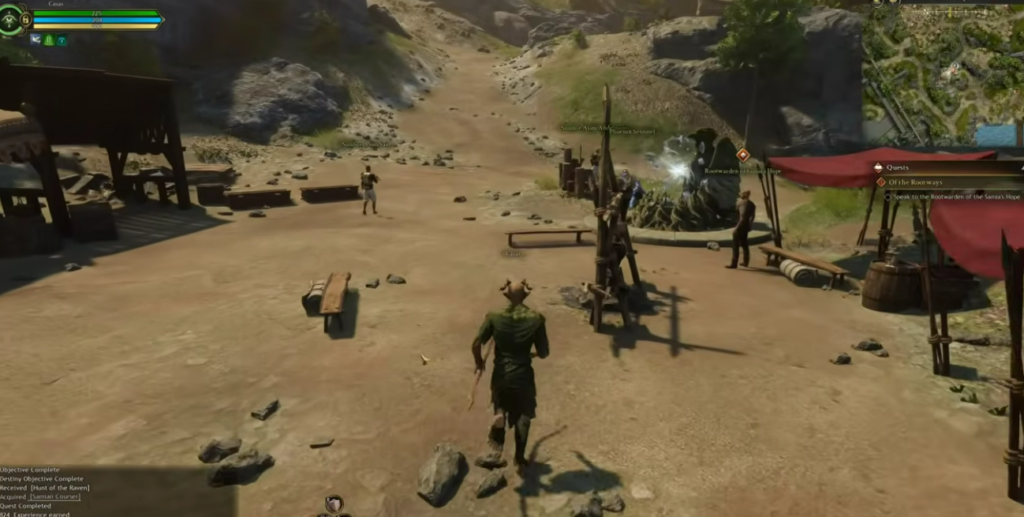
By the following day, multiple top personnel had followed suit. WARN notices—legally necessary advance layoff notifications in the U.S.—were issued. By all accounts, more than 200 people lost their jobs. A studio that once dreamed aloud about permanent worlds and player-powered kingdoms had come to an unexpectedly human halt.
This type of structural collapse is not novel in the context of contemporary game creation, where volatility is almost a part of the process. But here, it felt very abrupt. Sharif had long been the face of Intrepid Studios—visible, responsive, regularly seen on livestreams explaining mechanics in extraordinary depth. His absence quickly left a vacuum.
Even now, going through the game’s Steam page reveals a peculiar paradox. Over 13,000 reviews have given the book a “mostly positive” grade. Recent entries, however, paint a different picture. Complaints concerning performance issues, inequity, and unmet systems began accumulating in recent weeks—many of them timestamped just before the announcement.
In a recent podcast, a fan explained how her guild had spent months planning their in-game settlement strategy, including alliances, economic strengths, and influence zones. “We didn’t just play,” she remarked. “We imagined a future inside it.” I thought about the sentence for longer than I had anticipated.
Ambition postponed has an eerie quality. Ashes of Creation didn’t fail because it lacked talent. Nor because players rejected its vision. It faltered, perhaps, because the engine of its creativity wasn’t built to sustain the weight of corporate politics and financial instability simultaneously.
Still, the technical achievements shouldn’t be lost. The switch to Unreal Engine 5 was no small accomplishment. It significantly enhanced performance potential, dynamic lighting, and visual fidelity. These improvements weren’t just aesthetic; they contributed to the game’s sense of tangible life. The goal of Intrepid Studios was scope rather than simplicity.
In recent days, the studio acknowledged a postponed developer update—rescheduled to mid-February. It’s unlikely the broadcast will yield definitive answers. But even that tiny move, a public attempt to clarify priorities, carries a thread of optimism for those still paying attention.
It’s simple to make fun of internal disputes and unsuccessful launches, particularly in online environments. But for every social post criticizing the breakdown, there’s another written with genuine reflection. “We wanted this to be different,” commented a moderator on the game’s subreddit. We wanted this to be ours.”
That ownership—shared between developers and community—is rare. And it doesn’t evaporate just because a studio publishes a layoff notice. In fact, in some circumstances, it sharpens. For a while, Ashes of Creation was a co-authored vision rather than merely an entertainment offering.
The architecture promoted long-term thinking by incorporating systems such as decentralized economics, political dynamics, and real-time node evolution. It penalized greed and rewarded collaboration. Those blueprints are nevertheless informative even if they are not completed.
In the following months, it’s feasible another team may attempt to pick up the remnants—salvaging code, reworking mechanics, repackaging promises. But something intangible may be tougher to retrieve: the momentum of a following that once built spreadsheets and lore wikis out of nothing but hope.
Through smart planning and transparent communication, other small MMOs may still learn from what Ashes attempted. Early access games rarely show so obvious architectural ambition at such an early stage. That clarity, even if compromised, may become a case study in what strong design looks like when propelled by grassroots energy.
And yet, there’s a part of me—perhaps the writer part—that admires the unfinished more than the perfect. Ashes of Creation didn’t close with a nice epilogue. But neither did it depart without a trace. Questions, code, and a community still congregating around flames were left behind.
Its future is dubious, yes. For those who witnessed even a small portion of it, however, its effects are remarkably enduring.
Disclaimer
Nothing published on Creative Learning Guild — including news articles, legal news, lawsuit summaries, settlement guides, legal analysis, financial commentary, expert opinion, educational content, or any other material — constitutes legal advice, financial advice, investment advice, or professional counsel of any kind. All content on this website is provided strictly for informational, educational, and news reporting purposes only. Consult your legal or financial advisor before taking any step.
